Geography Nerds Rejoice!

Lynn: Weprisoners of geography have a treat for all the map-loving kids you know! Each of the books we’re highlighting today bring a fascinating new look at maps, the impact of the often arbitrary lines drawn to created country boundaries and so much more.

The first is Prisoners of Geography: Our World Explained in 12 Simple Maps (The Experiment, 2021) by Tim Marshall. The book is a Young Reader’s adaptation of Marshall’s best-selling adult book. Marshall, a globe-trotting reporter for many years, takes a fascinating approach to providing an introduction to the geopolitics of our world. He touches on history, physical geography, resources of the region, trade, politics, and their impact today. The maps are engagingly drawn and packed with information presented in a way to interest kids and draw them into exploring more. It is a book to read a few pages at a time in order to linger over the wealth of information on each map. Choices had to be made for an adaptation so not all countries are included but those chosen are of definite current interest. As a life-long map nerd myself, this is a book that would have enthralled me as a kid and still does today. Don’t miss it!

Africa Amazing Africa by AtinukeCindy: We have raved here in the past about Atinuke’s beginner reader books featuring Anna Hibiscus, a young girl from Africa, amazing Africa, but this book was completely off the map for me in 2020 and we want to make sure you don’t miss it as well. Africa, Amazing, Africa: Country by Country (Candlewick, 2020) by Atinuke is just that, a look at Africa, country by country. After a few pages of introduction and a full colorful continent map, the book is arranged by region with a regional map accented with images of foods, animals, and other features, a short text introduction to the area as a whole, and the word “Welcome” in each of the languages spoken in that region. Each country in the region is then presented in alphabetical order with a page that includes illustrations, information that varies depending on the country, and highlighted facts of interest. Throughout, Atinuke shares the traditions and history, but also is sure to highlight the large cities, technology, and contemporary features of Africa and its people today. Did you know that some nomads of Eritrea now “use GPS and cell phone apps to check where the rain and the grass are?” A must purchase for all libraries and a great addition to elementary classroom resources.
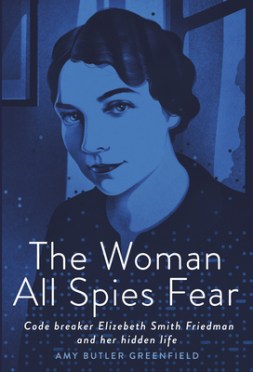
Code Breaking: The Woman All Spies Fear

Woman All Spies Fear by Ann Butler GreenfieldCindy: We realize that many of you are already familiar with this 2022 YALSA Excellence in Nonfiction for Young Adults finalist, but we have to talk about The Woman All Spies Fear (Random House Studios, 2021) by Amy Butler Greenfield anyway. Years ago, Lynn and I had a middle school girl who would only, and I mean ONLY, read books that featured math. In that pre-STEM publication world we struggled to keep her in books. Greenfield’s biography of code breaker Elizebeth Smith Friedman would have pleased that student immensely. If you’ve ever struggled to solve a coded message, you’ll appreciate Friedman’s talent.

Elizebeth left Indiana in 1916, after earning a degree in English Literature and with a need to distance herself from a controlling father. Offered a strange job at a tycoon’s estate in Geneva, Illinois, the work at Riverbank would change the course of her life and help her discover her talent for code breaking. Colonel George Fabyan, the bizarre and also controlling millionaire, had many research teams working on his estate, but Elizebeth was put to work helping a team seeking to prove that Francis Bacon was the true author of Shakespeare’s plays and sonnets. The work involved looking for ciphers within the text and also introduced Elizebeth to the man she would marry and work alongside the rest of her life as cryptanalists. Shakespeare’s authorship was never debunked, but the work sparked an interest provided a valuable training ground for understanding ciphers.

As Greenfield sheds light on Elizebeth’s growing skills in code-breaking, she also throws some challenges to her readers as she explains the various types of codes. I found myself pulling out paper and pencil to work some of them myself, and I’m sure teen readers will do the same. Elizebeth and her husband William made a great team as code-breaking involves multiple skills and Elizebeth had a talent for intuition that was invaluable in their work. Working in the first half of the 20th century, she faced bigger challenges than the codes she untangled, that of being a working female in a man’s world. Many of her accomplishments went unrecognized, the credit claimed by the FBI or other agencies as the Friedman’s escaped from Fabyan’s grips and became successful code-breakers working for the government and military the rest of their careers. Her intelligence, tenacity, and dedication to her work are inspiring.

Lynn: Cindy is so right about how inspiring this incredible woman is! Amy Greenfield does a masterful job of presenting the many facets of Elizebeth’s life and abilities, and she had to decipher this information often from the smallest of hints or comments from Elizebeth’s letters and diaries. She and William spent a lifetime dealing with the weight of world-shaking secrets, life or death discoveries, and the binding need for utter secrecy—even from each other. For much of their later working life, they each carried this enormous mental weight alone. William’s mind crumpled at many times but Elizebeth soldiered on, always supportive of him and her family. That their love for each other only strengthened despite this wall of secrecy amazes me.

The treatment of Elizebeth in the workplace, the lack of recognition for her brilliant work and the ultimate outrage of the NSA’s seizure of their personal records is something that will horrify any reader. The fact that Elizebeth persevered, achieved marvels with her work, and remained steadfast, humble, and courageous is truly inspiring. I hope young readers will be as inspired by this woman as they are outraged by the obstacles she overcame.

This is a masterfully crafted work and a well-deserved finalist in the YALSA Award for Excellence in Nonfiction for Young Adults. Greenfield carefully cited her sources, attributions, and conclusions—something of a work of crypto-analysis itself due to the intense secrecy surrounding Friedman’s work and life. It is a compelling story to read  as well. A perfect choice for any high school collection and ideal for STEM collections as well.

Help Mom Work From Home!

Help Mom Work From Home by Diana MurrayCindy: Almost two years into the pandemic and many families may have set up work and school areas at home and figured out technology needs and apps, but it really hasn’t gotten any easier and the novelty has definitely worn off. Help Mom Work from Home (Little, Brown, 2021) by Diana Murray is just the humorous look at the situation that might ease some stress.

With Dad and baby out of the house, Mom sits down to work with help from her toddler “boss.” After fixing mom’s hair and organizing her office supplies—crayons and glitter can’t be ignored—mom’s helper mimics her work and provides snacks and yoga breaks. It’s a looooong day but the evening together with the whole family, and some takeout pizza to let mom relax, is as good as a paycheck. The jaunty rhymes and fun illustrations by Cori Doerrfeld work well together.

Lynn: Oh the stories!!! From tales from my son and daughter-in-law, to young colleagues at work, I’m convinced that my own frustrations with my spouse pale in comparison! Although why he thinks it’s OK to read his morning newspaper articles with me when I’m deep in trying to write something intelligible at 8am is a mystery to me. But it’s nothing like dealing with a 4-year-old intent on “helping.”

This little one in our story clearly wants to help but as all parents working from home know well, those efforts often create nothing but chaos. Concentrate?? Yeah, right! It’s only when Mom finds tasks the toddler can manage like moving boxes, sticking on labels or assisting in some relaxing yoga stretches that she can get anything done. Nap time anyone???

This is a totally charming story and illustrations and it clearly comes from true experience. The underlying truth is that there are benefits from working from home but productivity may not be one of them. This timely picture will please both grown-ups working remotely and their helpers.

Doing the Impossible – Neal Bascomb’s The Race of the Century

Lynn:race of the century Did you know that 70 years ago most people believed that running a mile in 4 minutes was impossible and beyond the limits of the human body? “It was something that God himself had established as man’s limit,” said one writer. But suddenly in 1952, three runners were poised to do just that. It did happen, of course. Two of the three broke the 4 minute mile in 1954. Today’s record is 3.143.13 seconds. How did mankind achieve this “unbreakable” speed? I am not a runner. My idea of exercise is a daily walk with my camera. But it is amazing the unfamiliar paths that a wonderful nonfiction writer will coax a reader to trod and thanks to Neal Bascomb’s latest book, The Race of the Century: the Battle to Break the 4 Minute Mile (Scholastic, March 2022), I have become fascinated with the amazing story of this ongoing battle of man running against the clock.
Bascomb chronicles the stories of 3 individual racers, Roger Bannister of England, Wes Santee, a Kansan and Australian John Santee. Each one found himself poised on the threshold of a ground-breaking achievement. All were amateurs in the strictest sense of the word. Bannister was finishing his medical training to become a physician, Landy was studying science at university and Santee was working his way through Kansas University while running on both the track and cross country teams. All three expected their athletic efforts to end on graduation. Suddenly all three were facing intense attention from the press and huge national expectations.Who would break the record first and how would he do it?

Bascomb follows each runner through their unique racing careers and experiences, detailing each man’s training regimes. Even to a non-runner, this was fascinating as each runner was remarkably different from the others. Imagine trying to do elite intense training in the little free time left available to a medical student in his last year of training and working as an intern! The moment by moment accounts of the pivotal races, each runner’s race strategies, physical struggles and mental preparations are presented in clear prose and for young runners, this part of the book will be especially absorbing.

For me as a non-runner, it was the individual personalities and their approaches to the challenge that were the most compelling. The stark contrast between the elite amateur runner in the ’50’s and the world class runners of today also stood out for me.

I read this book in galley and the included black and white photographs added so much. Bascomb, as always, does an excellent job of citing his sources in detailed chapter notes and the back matter also includes an Author’s Note and an intriguing bibliography.

Hand this book to young runners and to those teens who love historical nonfiction.

Digging for Words: Knowledge is Power

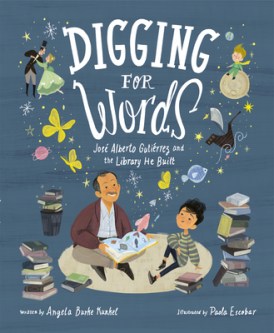
Digging for Words by Angela Burke KunkelCindy: Mr. Rogers said, “Look for the helpers.” Digging for Words: José Alberto Gutierrez and the Library He Built (Random/Schwartz & Wade, 2021) introduces children to yet another helper, working to make his corner of the world just a little bit better. A whole lot better, really. This is the story of two Josés. One a small boy who gets through the week anticipating the joy of Saturday when he visits the other José (based on the real José Alberto Gutierrez, who opens his house to people in his community to browse his books, his personal library, and borrow what they want to read for the next week.
Mr. Guiterrez’s library is not fancy and the books aren’t pristine leather-bound volumes. José Gutierrez drives a garbage truck route in Bogotá, Colombia. As he collects trash each night, he looks for discarded books and collects them to add to his library. The books he finds on the street were his education as he was too poor to attend school and didn’t finish his high school education until he was in his fifties. His “spark” book was Anna Karenina and he never looked back but did decide to share his treasures with others.

The young José and other community members don’t waste this opportunity and flock to Mr. Gutierrez’s home to exchange their books every week.  The power of books and reading and knowledge shines through the story, published in both English and Spanish editions.

Lynn: Librarians, teachers, and book lovers of all ages will be charmed by this story of an amazing man who takes his love of books and reading to a new level. José Alberto Gutierrez’s efforts to build and share a library are inspiring—especially when readers learn in the back matter that there are only nineteen libraries in the city of Bogata, Columbia, a city of ten million people! The Author’s Note provides more information about Gutierrez including the fact that he now also runs a foundation which provides books and reading material to schools and libraries across Columbia. And, portions of the proceeds from this picture book go to that foundation.

Rescatando Palabras by Angela Burke KunkelPaola Escobar’s digital illustrations are ideal for expanding and enhancing this wonderful story. I especially love the double-page spread of Gutierrez’s garbage truck journey across the city, showing him examining a discarded pile of books with his flashlight and the scenes of his library, books everywhere in towering stacks with happy readers making choices.

The back matter includes information on the featured books in the story and a selected list of online sources along with the Author’s Note in which Gutierrez reflects on on twenty years of creating his library, saying “My dream is to exchange my garage truck for a truck full of books and travel the country. I’m sure I can pull it off.” I think he can too!