See the Cat – Metafiction as a Primer

Lynn: I learned to read from the Dick and Jane primers and I remember Dick, Jane, Sally, and Spot to this day! We have come a long way since then, folks! I know that most of you out there came along after Dick and Jane but I know that David Rochelle’s new book, See the Cat (Candlewick, 2020), a delightful spoof of the classic primers will please all generations, most importantly the current crop of beginning readers.

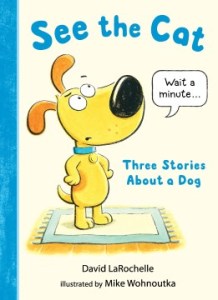
This three-chapter book opens with our hero, Max the dog, responding to the text, “See the Cat.” “I am not a cat,” responds Max, indignantly. Each page juxtaposes a Dick and Jane type statement and an illustration of  Max, reacting to the statements which get progressively sillier. As in any good beginning reader, there is ample repetition of the words and illustrations to assist in understanding. What sets this excellent book apart is the clever humor that works so well for the audience. Mike Wohnoutka takes the joke and extends it wonderfully. Readers will be giggling through the entire book as each page-turn offers another riff on the on-going joke.

Kids will read this adorable book over and over and start on the path to being happy lifelong readers. “Hurray for David, Mike, and Max,” said Lynn.

Cindy: With Covid quarantining and social distancing, it has become harder for Lynn and me to exchange books to review so we’ve had more solo posts than usual (my committee reading and birding obsession may have contributed to those increased solos as well) but we recently risked infection to share this delightful book. I need funny books right now and this beginner reader made me laugh out loud. I can sympathize with Max in the third story as he is denied a nap, but it is a new grandpuppy that is keeping me from my naps.  At any rate, Mike Wohnoutka’s comic illustrations add to the fun text and will delight the adults who are helping the young readers who are finding their way to the magic of reading. Great job, guys. You deserve treats…but I’ve run out while trying to keep my shoes from being chewed.
 

Elatsoe – Ghost Dogs, Murder, and a Lipan Apache PI for Teens

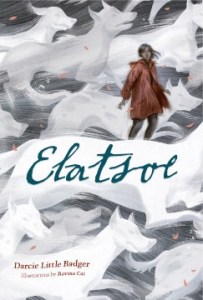
Lynn: It is rare to find a book that is wholly fresh and original with a voice at once authentic and unique. it is even rarer for that book to be a debut, yet masterfully crafted and uniquely plotted. In Elatsoe (Levine Querido, 2020), Darcie Little Badger’s power with story, character, world building, and setting took my breath away. In a year when I have struggled with focus, Elatsoe held my attention utterly and her voice and this story will stay with me. This is truly brilliant writing and its mix of mythology, Lipan Apache culture, fantasy, and murder mystery is like nothing I have ever read before.
This is set in an alternative American southwest. Seventeen-year-old Elatsoe plans to become a paranormal investigator when she finishes school but those plans get a kickstart when her cousin Trevor is killed in an apparent car crash. Trevor appears to Elatsoe as he is dying, begging her to protect his family. Elatsoe, her friend Jay, and her ghost dog Kirby investigate and are convinced that Trevor was murdered. Little Badger seamlessly weaves Lipan Apache culture and mythology into a gripping blend of mystery and carefully constructed fantasy, complete with daily magic and an array of monsters. Along the way, Elatsoe deals with her own grief and steps up to take her place in a long line of protectors for her people. Characters are richly developed and the portrayal of a supportive family and respect for traditions is especially heartening.

Little Badger breaks into the taut sense of the mystery with insertions of traditional stories, and while this slows the pace, it heightens the immersion into what makes Elatsoe the person she is. A reader’s patience is rewarded as all these pieces come together into a remarkable whole. The pleasure of this book is enhanced by the striking quality and beauty of the book design. Levine Querido has done an exceptional job, including the black and white sketches by Rovina Cai that begin each chapter.

I was reluctant to leave the book and while I see no indication that this might be a series, I hope that Darcie Little Badger will bring Elatsoe back in future PI cases.

Canyon’s Edge – a Literal Cliff-Hanger for Tweens

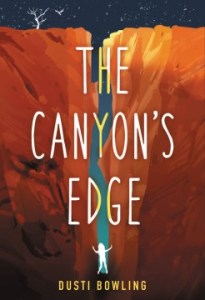
Lynn: My introduction to Dusti Bowling’s writing was with the wonderful Insignificant Events in the Life of a Cactus (Sterling, 2017) and I have enjoyed her books and desert country settings ever since. Her new book, Canyon’s Edge (Little, Brown, 2020) has just recently published and if ever there was a book guaranteed to hold a reader’s attention, it is this one!
It has been a year since the random shooting in a restaurant killed Nora’s mother. Both Nora and her father are suffering from PTSD and terrible grief and have pulled back from the world. Today is the first step back to attempting normal. Father and daughter are heading to the desert to rock climb and hike—a pastime the family has loved in the past. When a flash flood sweeps Nora’s father away along with her backpack and supplies, Nora is left to survive on her own in the aftermath. Determined to find her father and discovering a deep desire to live, Nora has to use all her skills, knowledge of the desert, and grit to survive.

The story is told partly in prose and partly in verse and it is quite literally a cliff-hanger! This short book was almost impossible to put down and it is going to make a terrific book talk. Nora’s journey to find her father is also a journey through the grief and anxiety that have been paralyzing her and this internal battle plays out starkly alongside her physical fight to survive. The setting is vividly portrayed and is almost a character as Nora battles the intensity of sun, harsh landscape, snakes, scorpions, the brutal conditions, and the “Beast” in her mind. Young readers will be rooting for her every step of the way.

I listened to this book on audio and the production was excellent.

How Kids Can Change the World

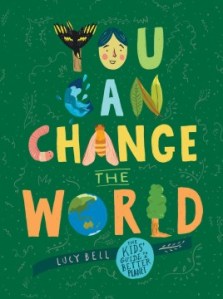
Lynn: Let’s set politics aside and admit that our world is in big trouble. Kids know it and are motivated to do something about it. But many also feel overwhelmed by the size of the problems and don’t know how to start. Happily, we have a book to help! You Can Change the World: The Kid’s Guide to a Better Planet (Andrews McNeal, 2020) by Lucy Bell is just what the planet doctor ordered. Practical and encouraging, this is a doable catalog of actions that kids everywhere can put into practice, backed up by solid information, interesting facts, and lists of resources.
The opening introduction says it perfectly:

“When we hear about these problems, most of us want to help, but it’s hard to know where to start. And some of these problems are so big, they can seem impossible for one person to fix. But we can fix them, if we each do our part.”

Bell next lists “Things to remember when you’re changing the world.” These are so encouraging, hopeful, and practical! The list reminds readers that change can’t happen in a day and you can’t change it all at once. She also advises kids not to feel they have to read the book cover to cover, but instead pick a topic they are most interested in and start there. The book is beautifully designed for kids to do just that. The table of contents lists 8 broad topics including plastics, food, energy, animal activism, and more. Each section lists simple easy-to-do activities, and why this matters. Bell includes fascinating facts on Did You Know pages that are easily shared and add to the reader’s knowledge. For example, did you know that there are more plastic flamingos in the world than living ones? Or that 85% of all textiles bought by Americans end up in landfills?

This book is an absolute treasure for libraries, teachers, groups, and individual kids! Librarians, buy two if you can! This book is going to get heavy use. I’m off to try the recipe for toothpaste!

Cindy: Certainly, in a book like this for tweens, I figured Greta Thunberg would make an appearance, and she does, but interspersed throughout the book are many other profiles of inspiring youth who are leading the way. Nine-year-old Milo Cress launched the Be Straw Free campaign in 2011, Adeline Tiffanie Suwana, concerned about the natural disasters hitting her town in Indonesia formed the group “Friends of Nature” at the age of 12 and is making a difference in a multitude of projects, Maya Penn (18) has been designing and selling eco-friendly accessories and clothing for ten years, and 14-year-old Solli Raphael of Australia is a writer and slam poet using his voice to fight for the environment and animal protection among other issues. These are just a few of the youth included in the book who are taking action to change the world. Websites and social media links for these youths’ projects are listed in the backmatter along with listings for other organizations, stores, charities, and parks mentioned in the book.

A few of the tips and ideas will have to be put on hold until the pandemic is under control (many stores don’t allow bringing your own bags or snack counters your own cups right now), but there are plenty of ideas that can be put into practice immediately. Parents who are looking for activities to get kids active off of devices and screens will do well to have a copy ready. The recipes, handicraft projects, and gardening ideas for all seasons indoors and out will provide hours of productive activity while helping to change the world for the better. I defy you to just read a few pages and not get sucked in for a longer read…unless you are immediately spurred to start your own project NOW.

Graphic Novels for the Beginning Readers

Lynn: Kids love graphic novels and I am always very happy when I find graphic novels written for our youngest readers. We have two fun new GN’s for you today that are perfectly designed for beginning readers.

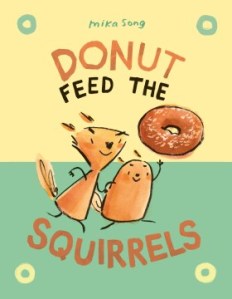
First up is Donut Feed the Squirrels (Random/RH Graphic, 2020) by Mika Song, a heist story with not one but two tails! Norma and Belly are determined to bring home donuts for everyone. They tried to pay with chestnuts but the human didn’t seem to understand. So now the two squirrels decide to crack open the little red truck and grab a cache for everyone. Easy Peasy, right? They even figure out a getaway driver and a car. No plan could ever be batter! So why is batter everywhere and how DO they get out of the truck?

Mika Song’s adorable drawings and easy to follow panels create a graphic novel that young readers will eat up. Word balloons are large and consist a few words. The simple vocabulary and short sentences easy to decode make this a very appealing choice for primary collections. Jokes abound, both verbal and visual.

Song’s illustrations use simple lines and warm colors. Belly resembles a plump gumdrop and Norma is shaped more sharply with two triangles. The characters are adorable and easy to root for. Five short chapters divide the story into easy sections and the happy resolution will have everyone cheering for a donut party!

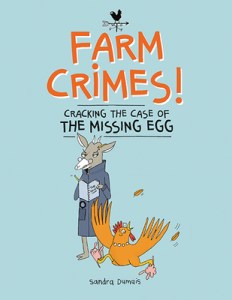
Cindy: My graphic mystery takes place on a farm with plenty of suspects. Farm Crimes! Cracking the Case of the Missing Egg (Owlkids, 2020) by Sandra Dumais. Hen raises a ruckus when she finds her egg is missing and begins to accuse the other farm animals of having stolen it. They ring cow’s bell to summon Inspector Billiam Van Hoof World’s #1 Goat Detective. His skills might be legendary, but not for their brilliance. Laughter and puns ensue as the Inspector enlists the help of the animals and the clues pile up to a final happy solution to the “crime.”
The text was translated from the French for this edition and the illustrations range from a few full-page spreads, to single page, to halves and quarters, making it an easy graphic novel for the youngest to follow, even if the text is being read to them. Early chapter book readers will have no problems with the text or following the panels. The brightly colored scenes are full of details for readers to enjoy on multiple reads. I do hope this might be the start of a series and I bet young readers will too!

Frog and Toad Are Friends – Fifty Years of Fun

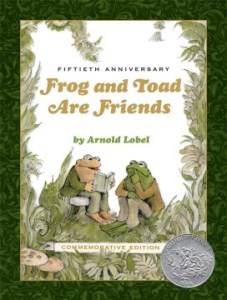
Lynn: I got a lovely surprise in the mail recently—a wonderful oversize new edition of Frog and Toad Are Friends (Harper, 2020) by Arnold Lobel. Particularly notable to me though is the fact that it is a Fiftieth Anniversary Commemorative Edition! Fifty years! What were you doing fifty years ago? I’m sure many of you weren’t even in this world yet and some of you were very young. I am also sure that no matter your age, you have been touched by Frog and Toad. As an elementary school librarian, I always purchased the Frog and Toad stories and as a mom, I bought them for my boys. And when my grandsons came along, it was a delight to find that they loved them too.
This new edition comes with a special set of bonus pages with archival photographs, sketches, information about Arnold Lobel, his creative process, and more. There is even a reproduction of Lobel’s draft of the first story written by hand on lined notebook paper. Something that made me smile is the tidbit that when the book went on sale in 1970, a hardcover copy with slipcase cost all of $2.50! This is such a sweet treasure of a book!

As Arnold Lobel created his wonderful first story, I was just married and working in my very first full-time library job as a periodicals clerk for the Purdue University Library system. I remember now with amazement that after opening the hundreds of magazines and journals that arrived every day, we recorded each one by hand in our Rolodex system and then in the main catalog. No computers for us yet. How things have changed! Let us know what you were doing fifty years ago or when you first met Frog and Toad.

Cindy: I got the same promotional package, complete with a Frog and Toad bookbag big enough to carry all 70+ titles written and/or illustrated by Arnold. I reread these stories in this new large format and Frog and Toad win my heart every time. In the back matter is a question once posed to Lobel, did he see himself more as Frog than as Toad. His answer? “Both, both. I think everybody is both.” And maybe that’s why these characters are so beloved.

Fifty years ago on the “book birthday” Lobel received a very different congratulation notice from his publisher, Ursula Nordstrom, and editor Barbara Borack than authors do today. A yellow Western Union telegram arrived for him at his hotel in Venice, Italy. Fifty years ago I was just a couple years beyond I Can Read books and was devouring another Harper & Row series by Laura Ingalls Wilder. I discovered those in my elementary school library where I worked almost every day. I got to see all the new books first and I was able to work as a librarian filing catalog cards (above the rod) for Mrs. Jean Ducey, my mentor. She was a published poet and nature essayist and even authored a few children’s historical fiction books, in addition to being a school librarian. She was everything I aspired to be and we kept in touch until her death a few years ago.  As Lynn requests, please share your connection with Frog and Toad and tell us what you were doing 50 years ago.

Every Good Thing about I Am Every Good Thing

Lynn: The current schism in this country often has me attempting to build a nest of blankets and bury myself in them. The only way to keep moving forward is to search for the good things and focus on them. One of the really bright spots in our dysfunctional culture the last few years has been the movement for diverse and “our own voices” in youth literature. The stories are powerful, heartfelt and important. They are also excellent examples of writing and illustrating. I love seeing these outstanding books that offer kids the chance to see themselves in books and for all of us to see and hear those stories.
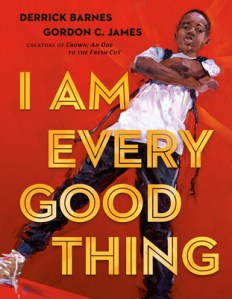
This year, in particular, we have a treasure trove of such books and my absolute favorite so far is I Am Every Good Thing (Penguin/Nancy Paulsen, 2020) by Derrick Barnes and Gordon C. James. We loved Crown: An Ode to the Fresh Cut (Bolden, 2017) by this same duo and I think I love this one even more. There is such joy in this exuberant picture book that celebrates all the good things about young boys of color. Barnes’ lyrical text soars. It is radiantly proud, dynamic and oh so tender. It is reassurance and it is a confident statement that goes straight to the hearts of readers.

Gordon James illustrations are a vibrant emphasis to the text. A rich energetic palette underscores the strength and the humanity of each scene. I would love to frame each and every illustration. I simply cannot say enough about this outstanding and deeply moving picture book. It demands to be read aloud and shared again and again.

Cindy: When I opened this book and saw the first spread of a young, black boy soaring through the air, superhero style, I thought, this should be a poster in every classroom and in every young boy’s bedroom. The words by Derrick Barnes are as powerful as the image painted by Gordon C. James:

I am
a nonstop ball of energy.
Powerful and full of light.
I am a go-getter. A difference maker.
A leader.

Imagine who these young black boys would grow up to be with those words in their heads instead of slurs and demeaning dismissals of their worth? Political yard signs were popping up this fall in West Michigan where we live with the slogan: “Joe and a Hoe, Vote NO.” Is this who we are as a nation? Do we want our young people growing up thinking this is okay? Do we want young people to internalize this message about the first woman Vice President?

What I want is the message on the final page of this book. The rival for a poster for every classroom and kid’s bedroom: A  young black boy smiling, eyes sparkling, hugging himself, with these words:

And without a shadow
of a doubt,
I am worthy
to be loved.

I am worthy
to be loved.

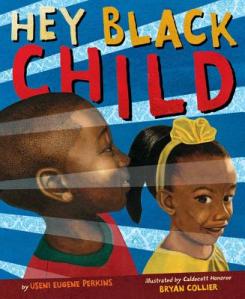
Pair this book with Hey, Black Child (Little, Brown, 2017) by Useni Eugene Perkins for another empowering book that features both boys and girls.

It Took the World to Rescue All Thirteen – A Riveting Account

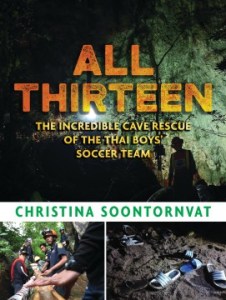
Lynn: Thai-American author Christina Soontornvat was visiting her family in Thailand not far from the Cave of the Sleeping Lady when the news broke about the trapped soccer team. She and most of us throughout the world watched with our hearts in our mouths as the 18-day rescue event dominated the news. Soontornvat, a mechanical engineer and science educator, realized after the rescue that she wanted to know more about this incredible effort and to share the story.

All Thirteen: The Incredible Cave Rescue of the Thai Boys’ Soccer Team (Candlewick, 2020) is a masterful account—gripping, suspenseful and inspiring, and almost impossible to put down. But Soontornvat does much more than simply relate the events. She brings a wealth of background and related information that makes this book an outstanding reading experience. Without ever slowing the narrative, readers learn about the country of Thailand, its culture, religions, food, and everyday life. We learn about the geology of the cave system, climate and weather, the physical barriers facing the rescuers, and the difficult art of cave or sump diving. And especially we learn about the hundreds of people whose heroic efforts resulted in the rescue of the boys, all of whom we come to care about. It is no small feat to maintain a real sense of suspense when readers already know the outcome but this book achieves that wonderfully.

The book itself is a terrific example of great book design and production too. It is a pleasure to read with clearly laid out text, carefully managed sidebars, and beautiful color photographs.

This really is a shining example of excellent nonfiction writing. Soontornvat’s prose is clear, understandable, and immediate. The science, as is all the information, is woven into the suspenseful story seamlessly. Readers will come away with a real understanding of all the many factors that made the task and the rescue so remarkable. Soontornvat’s appreciation and admiration for the rescuers, and the Wild Boars and their coach, is clear and readers will end the book feeling the same. There is extensive and excellent back matter, as well, including a section of what happened with the team and their travels after the rescue.

Cindy: Shortly after the Wild Boars were rescued I was booktalking Trapped: How the World Rescued 33 Miners from 2,000 Feet Below the Chilean Desert to my middle school students. That book always circulated well after booktalks, but these students no longer had knowledge of this 2010 event. They had heard of the Thai cave soccer team rescue and I was able to tell them that the same author, Marc Aronson, was hard at work on a quick publication about this amazing rescue. Rising Water: The Story of the Thai Cave Rescue (Atheneum, 2019) will pair nicely with Soontornvat’s excellent book. All three of these titles highlight the cooperation between locals and people from all over the world. They celebrate how we can overcome tragedy and work together to achieve insurmountable odds. And the booktalking and the connections all worked. Both of my copies of Trapped went out that day and I had a list of students who wanted Rising Water as soon as it published. All Thirteen will be just as popular. Success stories all around!
Love, Jacaranda: A Sweet Nod to Daddy-Long-Legs

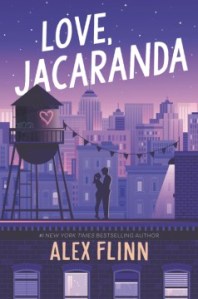
Lynn: Bookends readers know well that I am an escapist reader. I love humor, happy endings and books that make me smile. Back in my working days as a school librarian, I realized that many of my young readers craved the same sort of diversions. “Can you help me find a fun book?” was such a common request that I kept a list ready to hand out. All that is to say that Alix Flinn’s latest book would fit perfectly on that list. Love, Jacaranda (Harper, 2020) has all the elements that I and so many teen readers love. There is a hard-working, lonely protagonist struggling against life’s challenges, an engaging set of secondary characters, an intriguing setting, a romantic tangle, and a sweet happy ending. What more could you want? Well, in my case there is more icing on the cake—it is an epistolary novel (a form I love) AND it is a charming re-telling of one of my all-time favorite childhood books, Daddy-Long-Legs by Jean Webster published in 1912. And no, I am not that old that I remember the original! However, if you want an interesting look at book covers, take a look at how this one has changed over the years.
Jacaranda Abbott has lived in a series of foster homes since her mother was sent to prison for attempted murder. The talented sixteen-year-old dreams of a theatrical future but the reality seems dim until one day a video of her singing to a customer at her Publix market job goes viral. Out of the blue arrives an offer by an anonymous benefactor to pay her way at a prestigious art academy in northern Michigan. In a wonderful blur, she suddenly finds herself studying what she loves, living in a room of her own, and having real friends. Ashamed of her background though, Jackie (as she now calls herself) conceals her family history. Deeply grateful for her opportunity, Jacaranda writes to her unknown benefactor calling him Mr. Smith and pours out her experiences, dreams, and struggles in letters that are heartfelt, frank, and delightful.

Readers will root for Jacaranda, cheer her hard work and her sweet budding romance with a roommate’s wealthy cousin. Along the way, there are some thoughtful themes about class and opportunities, mother-daughter relationships, and forgiveness. It isn’t necessary to have read the classic Daddy-Long-Legs to love this story but those who have will find many delightful embedded references. And perhaps those who haven’t will seek out the original. Either way, lace up your dancing shoes, get ready to make of list of wonderful Broadway shows to visit or meet for the first time with Jacaranda. Readers are in for a treat!


Absolutely Everything About How We Got to the Moon

Lynn: This is a soaring triumph—stellar in every way!

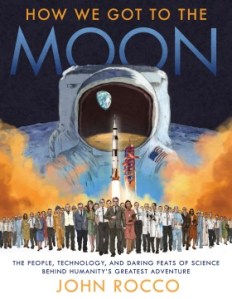
John Rocco set out in How We Got to the Moon: The People, Technology, and Daring Feats of Science Behind Humanity’s Greatest Adventure (Crown, 2020) to explain how every part of the Apollo/Saturn machine worked and how it was built. He especially wanted to show young readers the science and problem solving that was involved along the way. And he wanted to introduce some of the thousands of unsung people who contributed to this monumental achievement. He does all that in this fascinating, detailed, and visually magnificent chronicle.

He begins with the origins of the Space Race in 1957 and a brief history of rocketry and then plunges into the nitty-gritty of designing, building, testing, and flying to the moon with all the steps, problems, and triumphs along the way. As someone who has read many histories of this period AND lived through it, the early history was bit slow but I understand the necessity for young readers. The book becomes deeply interesting quickly in Chapter 2 with the discussion of the process of designing a rocket.

While this is a solid historical account of the Apollo effort, the focus is on the science, technology, and engineering achievements. Rocco’s prose is clear and understandable as he carefully distilled oceans of information for young readers. He does an excellent job of providing a thorough explanation without overwhelming the text. The tone is just right: informative, concise, and filled with wonderful tidbits of related topics to heighten interest even for those only generally interested in the technical details. Space food, the disgusting but imperative issue of going to the bathroom in space, the history of the “human computers,” and, something I always wondered about, what are all those people in the command center doing at all those monitors.

A wonderful feature of the book is the many sections that show some of the scientific problems faced along the way and the solution. Often these also include a simple experiment that kids can do that demonstrates the science behind the solution.

A highlight for me is the many short biographical inserts that feature some of the people involved in the effort who contributed important ideas, developments, or work along the way. So many of these people were critical to the success of the mission but received very little public attention. Rocco includes people like Ann Montgomery, an engineer, and the only woman allowed on the launchpad, Charles Draper who developed the Guidance system, or Eleanor Foraker, the Seamstress Manager for the Apollo Spacesuits.

Rocco explains in an Author’s Note in the back matter that although there are a plethora of photographs, blueprints, and drawings available, he chose to create all the illustrations himself. He did that in order to make the concepts more accessible and understandable for readers without being overwhelmed by extraneous details. He also chose to use color as most of the original photographs and visual materials are black and white. The result is visually stunning as well as being deeply absorbing.

I read this in galley with only some of the planned back matter included. The Note on the Research was extremely interesting and even in galley form the visual impact of the book is outstanding. I am eager to see it in the finished copy. This is a must purchase for every library collection and a perfect choice as a gift book for every science-loving student.