Do You Know Dino…and the Scientific Process?

Lynn: Do you think you’ve added enough dinosaur books to your collections and don’t really need another? Think again! This new National Geographic book by Sabrina Ricci and Garret Kruger is not only great for dinosaur enthusiasts, but it is also an outstanding book for STEM and classroom use to illustrate the process of scientific inquiry. I Know Dino!: Amazing Breakthroughs, Mega Mistakes, and Unsolved Mysteries in Dinosaur Science (National Geographic Kids, 2025) is a roaring success in many ways.
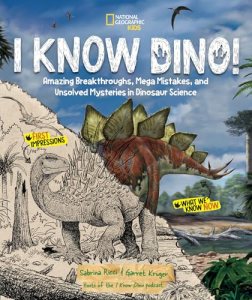
Organized into 6 chronological periods, each chapter introduces the history of that period, the discoveries made, and the evolution of theories about dinosaurs. Each chapter then features a series of 2-page spreads, each about a particular dinosaur. One page, First Impressions, discusses what scientists thought the dinosaur looked like, how it behaved, and even how the bones were positioned. The facing page, What We Know Now, shows what we understand now and how our knowledge has changed. And boy, have most of our first impressions changed!

The oversized book is beautifully designed and features illustrations by Franco Tempesta, period and contemporary photographs, and plenty of sidebars and charts with additional information. It is a dinosaur-lover’s treasure trove. And, importantly, readers will come away with a rock-solid grasp of how the nature of science is always changing as new information is discovered. The book ends with pages featuring “unsolved mysteries,” a Dino-Map, and a Glossary.

It is full of kid-appealing topics such as “Big Weapons Aren’t Just for Predators.” There is also “Majestic Crests” and “Dino Animation” that has a list of dinosaur animated movies. Young readers will delight in poring over the pages, but it would also be a terrific way to illustrate the scientific process in a classroom by featuring and discussing some of the pages.
Big Boy 4014 Roars Back to Life

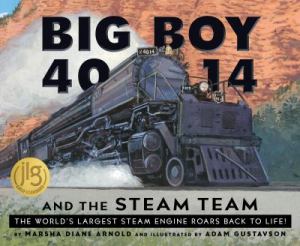
Lynn: Train-lovers, big and small, will love Marsha Diane Arnold’s new picture book, Big Boy 4014 and the Steam Team: the World’s Largest Steam Engine Roars Back to Life (Sleeping Bear Press, 2025). The Big Boys, 25 huge locomotives, were built between 1941 and 1944. They were used to pull extremely heavy loads through the Wasatch Mountains in Utah and were critical in hauling soldiers and military supplies during WWII. So long at 132 feet, the Big Boys had to be articulated to manage curves on the tracks. After the war, diesel locomotives began to replace steam, and Big Boy 4014 pulled her last load in 1959. Eventually, all but 8 were scrapped. 4014 sat in a museum in Pomona, California, for over 50 years.
But in 2013, something amazing happened. The Union Pacific Railroad wanted to celebrate the 150th Anniversary of the Golden Spike – the completion of the 2 ends of the first transcontinental railroad. A Big Boy was needed, and the “Steam Team” had only 6 years to get 4014 operational once more!

Since she sat more than a mile from any track, the first huge task was to move her somehow to the tracks. New tracks and a huge loader got 4014 connected to tracks, where two diesel engines then pushed and pulled her all the way to Cheyenne, Wyoming, and the Union Pacific Steam shop. The Steam Team went to work!

The story chronicles their efforts and ultimate success in getting 4014 rolling once again. Not only did she make the Celebration, she also started on a series of cross-country tours. allowing people around the country a chance to see her roaring past.

Adam Gustavson’s glorious illustrations take full advantage of the extra-wide pages with dynamic scenes and nearly steal the book. He uses perspective wonderfully, providing extraordinary views from above, below, close up, and far away.

Arnold’s text is perfectly suited for young readers but provides ample information for train fanatics. The sound effects make the book a wonderful read-aloud, as does the large size. A lengthy and fascinating Author’s Note with much more historical information and photos is included.

Let your readers roll with this outstanding book, which will be loved by readers of ALL ages.

Can Composting be Fun?

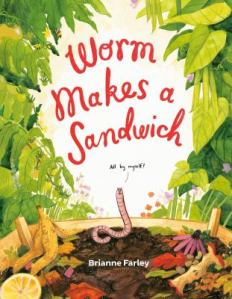
Lynn: I would have thought composting would be one of the last subjects that could make an engaging picture book but Brianne Farley has done just that with Worm Makes a Sandwich (Putnam/Penguin Random, 2025). Farley comes at the subject somewhat sideways but this approach takes a potentially muddy subject and makes it funny and appealing to a young audience.
Pink and very polite, little worm asks readers if he can make them a sandwich.

“I know what you’re thinking…Worms don’t have hands. Worms cannot make sandwiches!”

Worm starts making the sandwich with delectable garbage, Sorry – NOT for your sandwich, the garbage is for me he tells us. And over the next pages, worm narrates while a little girl goes through the processes of adding garbage to a compost pile, then insect poop and the resulting dirt to the garden. Seed planting is next, and a lot of waiting for the plants to grow.

At one dark moment, worm has deep self-doubts about the success of this sandwich, but a red ripe tomato on the vine saves the day. And, indeed, the child makes a delicious sandwich with the tomato, allowing the worm to preen. A comic little touch at the end is a perfect dessert to follow.

Kids will love the story and the illustrations, which are created in watercolors, gouache, and colored pencils, and have wonderfully varied perspectives. Along the way with all the giggles, kids will learn a LOT about composting and how to do it.

Helpful back matter includes more information on composting, how to do it, what to use, the equipment needed, and why we should all be doing this.

The story is a fun read-aloud for classrooms, story hours, and laptime reading, and is an ideal STEM book. If you had no hands, could you make a sandwich?

Outdoor Fun with Board Books

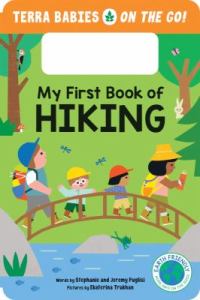
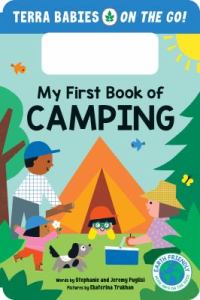
Lynn:  Families who love the outdoors are eager to introduce their little ones to the fun of camping and hiking. Many schools around the nation are integrating outdoor education into their curriculum. It’s not always easy to find books on these activities for pre-schoolers, so I am excited to write about two excellent board books from Duopress, an imprint of Sourcebooks. The series is Terra Babies on the Go, and the two titles I want to feature are My First Book of Hiking and My First Book of Camping.
Both are bright and appealing, with a charming set of diverse children. The text is simple and appropriate but introduces terms for gear, activities, places to go, and simple safety rules. Both mention animals and sights that might be seen. The camping title includes a recipe for S’mores and the Hiking volume has one for a healthy trail mix.

The books are sturdy and rugged enough to be taken along on a trip and are even constructed with a handle for convenient carrying by a child. These are really delightful and will certainly be read over and over.

I want to mention another book from Sourcebooks for older kids. Let’s Go Camping: a Journal & Logbook for Kids (Sourcebooks/Explore, 2025 by Stephanie and Jeremy Puglisi. This paperback journal and activities book is packed with ideas, puzzles, games, and suggestions for hours of fun related to camping and the outdoors. Kids can list animals spotted, review campgrounds, do word puzzles with camping terms, or connect the dots of constellations. There are many places to write or draw what they see and experience. They can do leaf rubbings, seed mosaics, or other fun activities. This journal publishes on June 3 and is perfect to take along for quiet moments, a rainy day in the tent or driving home in the car.

Get these soon! Summer is around the corner!

Become a Spider with Jumper and Jessica Lanan

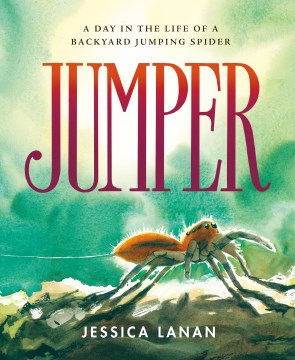
Lynn: Can you imagine ever being a spider? Many of our young readers would shout yes to thatJumper question. Author/Illustrator Jessica Lanan is right here to help with her new book, Jumper: A Day in the Life of a Jumping Spider (Roaring Brook, 2023) where readers can spend the day with Jumper, an impossibly cute Regal Jumper as she hunts in a backyard garden. A human child and her family work in the garden while Jumper also goes about her life, hunting and avoiding being hunted.
Jumper is a completely engaging little creature only the size of a bean but with some extraordinary abilities that Lanan demonstrates in brilliant and beautiful illustrations, giving young readers context and comparisons that make the little spider’s talents fully understandable. Jumper is shown, for example, making a leap after prey while in the background, the little girl also jumps. A double-page spread dramatically reveals what it is like to see with Jumper’s 8-eyed vision. Some scenes are spider-size perspectives and some are from the child’s perspective. Lanan has used ink, watercolor, and gouache and the illustrations are truly beautiful as well as being accurate, and extremely effective, helping children to comprehend a spider’s world.

Extensive back matter provides a plethora of additional information, including a 6-part guide for locating and observing spiders. Science has never been so fun! This is an ideal choice for a STEM classroom or to use as a writing prompt.

Sy Montgomery Introduces Kids to Turtles

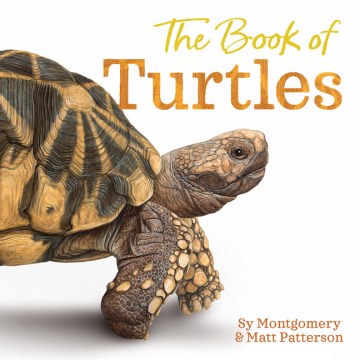
Lynn: book of turtlesThe publisher blurb for Sy Montgomery’s new book describes her as “part Emily Dickinson, part Indiana Jones” and I think that is not wrong. I am a huge fan of Montgomery’s many books and look forward to each new one. Often her books are filled with stunning photographs but this time, she teams up with wildlife painter Matt Patterson to bring one of my favorite creatures to kids with The Book of Turtles (Clarion, 2023).
Montgomery and Patterson take the basic concept of a nonfiction information book to a new level with this wonderful book. Excellent writing provides fascinating facts on turtles in a captivating way. Did you know that by 220 million years ago, turtles looked the way they look today—flourishing alongside dinosaurs? Different types of turtles are introduced along with many did-you-know additional facts. Did you know that Eastern Box Turtles can climb fences or that turtles are as smart as laboratory rats?

The Celebrity Turtle Profiles were my favorite part of the book. Here you meet some famous turtles such as Lonesome George, Myrtle the green sea turtle in the New England Aquarium who loves to photobomb film shoots, and the couple at the Austrian zoo, Poldi and Bibi, who after 115 happy years together, finally couldn’t stand each other. An excellent section on how to help turtles provides practical advice.

Matt Patterson’s beautiful and carefully accurate paintings illustrate the book. Turtles come to life with his skillful brush and the book is so visually enticing that it won’t stay long on the shelves.

All the stars for this must-purchase! Kids will love this one!

The Mona Lisa Vanishes – the REAL Story for Kids about the Theft of the Lady with the Mysterious Smile

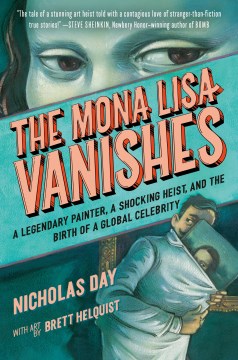
Lynn: Mona Lisa VanishesDid you know that the Mona Lisa is painted on wood and that it weighs over 200 pounds and that the thief could barely carry it down the stairs? Or that a locked and jammed door knob nearly stymied the thief—until a helpful Louvre plumber came along and opened it? Or that Da Vinci carried the Mona Lisa with him on the back of a mule on his journey over the Alps into France?
All this and much much more await readers of The Mona Lisa Vanishes: A Legendary Painter, a Shocking Heist, and the Birth of a Global Celebrity (Random Studio/Sept. 2023) by Nicholas Day. This nonfiction book for middle graders is as fascinating as its enticing cover suggests. Readers will love the flip and breezy style while inhaling a vast amount of history, science, biography and art information along the way. Day does an outstanding job of working so much important historical background into what may seem on the surface to be simply a caper/art theft plot.

The culture of Renaissance Italy, the history of policing, painting techniques, biographies of Da Vinci, Lisa Gherardini (as much as possible), Paris detectives, and even Pablo Picasso are woven into this fascinating tale. Told in thoroughly engaging text, the story is utterly compelling and kids will absorb information on every page. This is a “listen to this!” book, packed with facts to be shared.

Brett Helquist illustrates the book with black and white, slightly comedic drawings that perfectly match the tone of the text and they are as irresistible as the story.

Conspiracy theories and the ongoing belief in the most sensational theories (despite any facts to the contrary) and the issue of celebrity are serious and important threads that run through the entire book. These are timely themes in our world of social media gullibility and instant fame and hopefully ones that will have young readers thinking.

All the stars and more for this must-purchase!

Cindy: This is my first encounter with author Nicholas Day, but any author recommended by Mary Roach is going to get an audience with me. Roach is right, this book is “perfect” for its audience and funny to boot. I learned so much about Leonardo da Vinci, including the fact that he and I are kindred spirits—we much prefer learning something new and starting the adventure of a new project rather than finishing said projects! I don’t have his talent, but I resemble his method. Day handles the switches between the heist’s time period and Leonardo’s with aplomb and teens will be able to follow along easily. Who doesn’t love a heist caper and learning about the development of criminal ID from body measurements to fingerprints was fascinating. Lynn is so right about the “listen to this” moments in the book. I was reading it on a car trip and my husband heard half of the book! If I were an art teacher. Or a history teacher. Or a science teacher….I’d be reading this aloud to my students.

Tales of Motherhood – Leopard Variety in Photographs

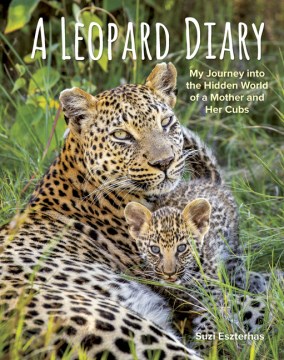
Lynn: leopard diaryMost of us think of gathering information for a book as a pretty safe activity. But not if you are nature photographer and author Suzi Eszterhas! In her recent book for young readers, A Leopard Diary: My Journey into the Hidden World of a Mother and her Cubs, (Owlkids, 2022), Eszterhas shares some really hair-raising adventures! Imagine sitting frozen in an open-sided vehicle with a snarling mother leopard just inches away after her playful cubs run under the vehicle. This was a leopard comfortable around humans but who became ferocious at a potential threat to her babies. Gulp! Or walking into the camp bathroom to discover a tiny leopard cub who had been hidden there by his mom—and who could appear any moment! These are just a few of the fascinating moments in this outstanding nonfiction book by acclaimed photographer Suzi Eszterhas (who is also a personal favorite of mine).
Eszterhas has always loved leopards so when she heard that a female leopard in the Jao Reserve in Botswana’s vast Okavango Delta had given birth to two cubs, she hurried there to photograph the family. Aided by a skilled guide she located the mother and cubs and over the next 15 months took pictures and wrote about the events.

This female dubbed Mom was quite relaxed around humans and allowed them to get close although they always remained vigilant and in the jeep. Leopards move their dens frequently to protect the babies from lions, baboons and other predators so Eszterhas and Kam often had to relocate the family, which sometimes took many hours in the hot sun. But the result is a wonderful chronicle of a leopard family illustrated by rare and breathtaking photographs.

The text is clear and packed with interesting facts and the entire effort was a true adventure and makes an extremely compelling story. The photographs alone make this a worthy read as they are a beautiful look at a rarely-seen event. The entire package is a must purchase and the cover alone will attract readers. Backmatter includes an interview with the guide, Kampongo, a glossary and additional information.

The Joy of Curiosity – New Nature Picture Books

Lynn: One of the great traits of humanity is curiosity. It blossoms in childhood as we absorb and wonder about the world around us. Encouraging and nurturing that ability is a focus of two new and outstanding picture books that I am reviewing today.

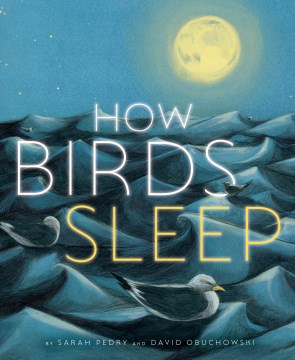
Howhow birds sleep Birds Sleep (Astra/Mineeditionsus, 2023) by Sally Pedry and David Obuchowski.
How DO birds sleep? It’s a question I’ve often thought about myself as the night settles in and the world quiets. Obuchowski was also curious about this question, later stumbling on a book in a used book store that examined the science around the question. Like most things about birds, it varies from species to species. This is a fascinating exploration of a question that many children ask too and done in a lovely bed-time book style. Sarah Pedry’s illustrations are beautiful and soothing. Using familiar and unfamiliar birds labeled on each page, the book takes readers through the world of sleeping birds and their fascinating ways of sleeping. Some sleep in huddles, some hanging upside down and some even fly in their sleep.

Back matter includes much more information about the subject, how the book came to be and suggestions of how to help birds being affected by climate change.

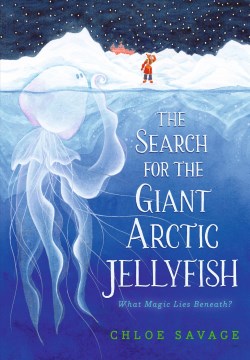
The search for the giant arctic jellyfishSearch for the Giant Arctic Jellyfish: What Magic Lies Beneath? (Candlewick, 2023) by Chloe Savage. This charming picture book celebrates the magic of following your curiosity.
Dr. Morley has always yearned to discover the truth about the fable of the Giant Arctic Jellyfish. Is it real or just a lovely sailor’s yarn? While this scientific journey is an imaginary tale, much about such a research effort is true. As Dr. Morley and her crew search the Arctic seas they encounter Narwhals, a pod of Belugas, freezing temperatures, monotony, frustration and even a Polar Bear. And, of course, there is something under the water all the time that trails the scientists.

Chloe Savage’s intricate whimsical illustrations reveal a cutaway view of the research vessel from top to bottom. The scientists and crew, clad in matching red and white sweaters, go about their tasks in labs, engine rooms, kitchens and bathrooms or out on ice flows and scuba diving into the icy seas. Each page is a delight, filled with small touches of humor that reward careful perusing. The book is one of those delightful gems that provides more each time it is read.

Do Images Tell the Truth? Seen and Unseen Takes on that Question for Kids

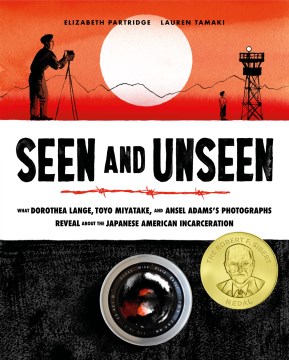
Lynn: Seen and UnseenDo photographs always tell the truth about history? I believe most students will answer yes to that question but Elizabeth Partridge’s brilliant book Seen and Unseen: What Dorothea Lange, Toyo Miyakaki, and Ansel Adams’ Photographs Reveal about the Japanese American Incarceration (Chronicle, 2022)  explores just how misleading photographs can be. Partridge presents a shameful part of American history as seen through the lenses of 3 outstanding photographers, each seeing those historic moments in a different way. Are any of them wrong? It is an extraordinarily effective way to help students look with a critical eye at images—historic and current—and one of the most necessary skills young people need to develop today.

Partridge chose three period photographers: Dorothea Lange, Toyo Miyatake, and Ansel Adams. All three took photographs at Japanese American Incarceration camps during WWII. Each brought a different focus to their work. Lange despised the whole concept of the incarceration of Japanese Americans. Famous for her Depression-era photos, the U.S. Government hired Lange to show that the program was being carried out in a “humane and orderly” way. Lange saw it differently, believing that what was happening was unfair and undemocratic. But the officials in charge disapproved of most of Lange’s photographs and from early in the project a soldier trailed her and she had to work within strict parameters. When she turned in her photographs, many of them were impounded and disappeared into archives for 50 years.

Toyo Miyatake was a professional photographer and after being incarcerated at Manzanar, he built his own camouflaged camera and took secret photos of the conditions of the camp. His photos showed much that Lange had been forbidden to photograph but those photos were rarely seen at the time and are still held in a private collection.

Ansel Adams, known for his incredibly beautiful landscape photography, was also hired to reassure the public. He came into the project not particularly opposed to the incarceration. Now close to the end of the war, there was great concern about how the Japanese Americans would be treated on release. Adams was asked to record images of hard-working, loyal, and cheerful people, which was how he saw them. Posing his subjects, Adams’ photographs concentrated on smiling people against a stunningly beautiful desert setting.

The work of all three photographers is used throughout the book but the book is also beautifully illustrated by the work of Lauren Tamaki, who is of Japanese descent. I wished strongly for more photographs to have been used but the book is nevertheless deeply effective and thought-provoking. It is the rare reader who won’t come away thinking about this book and the many issues it raises.

There is extensive and important back matter included too, with essays on issues such as the violation of rights of the Japanese Americans incarcerated, the issue of the official language used and its impact on the public, information on what happened to those incarcerated after the war, and biographies of the 3 photographers.

While understanding and evaluating images is the major focus of the book, Partridge also takes on other important issues such as the incarceration of Japanese Americans and the issues surrounding that action and its long impact. Seen and Unseen received many well-deserved accolades including the Robert F. Sibert Informational Book Medal for 2023.