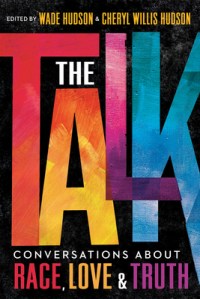
 Cindy: Can we talk? A few years ago when one of my white 8th-grade students read The Hate U Give (2017) by Angie Thomas, she talked with me about it afterward. She expressed her shock at learning about “The Talk,” the one that black parents need to have with their children as they become drivers to help keep them safe during traffic stops. She said to me, “My parents never had that talk with me.” It was an important awakening for her. The Talk: Conversations About Race, Love & Truth (Crown, 2020) edited by Wade Hudson and Cheryl Willis Hudson will cause similar awakenings for some children and teens, and for others, the experiences and stories related here will be all too familiar. This illustrated collection of stories, poems, and essays illuminates the need for many different “talks” as parents help their children navigate prejudice due to race, religion, gender, sexuality, and other ways that people find to categorize people as “other,” “less than,” and “dangerous.”
Renee Watson launches the collection with a powerful talk for black girls in “Remember This,” as she reminds them of the many black heroines who led the way, of the power of your voice, and the encouragement to be your best self even when others around you cannot be theirs. Grace Lin takes on Asian stereotyping and female diminishment in “Not a China Doll, an illustrated letter to her daughter at ten (five years in the future). “Why Are There Racist People,” was generated by a school visit question asked of Mexican author and illustrator Duncan Tonatiuh, one that he struggled to answer. This talk is the result of his research, reading, and thought. Tonatiuh illustrates his own entry, others are done by other talented artists. I read this in an advanced reader copy and I’m eager to see the finished copy including the unavailable backmatter. Talking to our children and to each other is a powerful way to build relationships. Let’s talk.
Lynn: This year especially has seen the publication of several outstanding books for teens on the subject of racism and authored by the voices of writers who have first- hand experience. All of them have informed and challenged me. Perhaps it is the teacher in me but this slim book tops the list for me. Its format of short contributions is perfect for reading aloud in a classroom where instructional time is often highly regimented. Each piece is powerful, moving, and absolutely ideal for use as discussion starters or writing prompts. The wonderful variety means that there is something here for every reader and every reader will find a favorite.
My own favorites start with Derrick Barnes’ story about a kitchen-table conversation with his young son while helping him with math homework. It is an experience most of us, young and old, have had and the commonality of it contrasts starkly with the racism the little boy has just experienced. For young readers of color it will be instantly recognizable and for white readers it will be, as it was for me, jarring. For all readers it will be incredibly moving and deeply memorable.
There are so many powerful pieces here and I also especially appreciated Tracy Baptiste’s driving lesson advice to her son, Nikki Grimes’ poem about choosing “not to pick up the hurtful words thrown like stones,” and Adam Gidwitz’s essay that brought a wholly different look at racism. The black and white illustrations are as varied and as effective as the text contributions and add greatly to the overall impact of the book.
This slim but important book should be in every classroom and library collection in the country. It is truly a gem and opens the door to conversations among all of us about racism, discrimination and the social condition of our country.
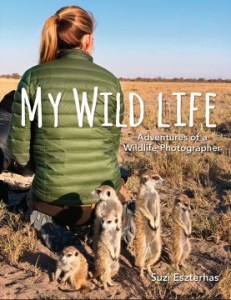 Lynn: Books for really young readers on careers are not easy to do well but a wildlife photographer/author that I especially admire, Suzy Eszterhas, has given us just that in
  I Voted: Making a Choice Makes a Difference

 AlphaBit: An ABC Quest in 8-bit
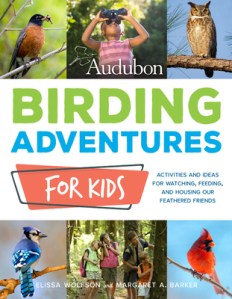 Cindy: At the public library, Lynn found this great new birding guide for children getting started in this rewarding hobby that gets them outside and active.
 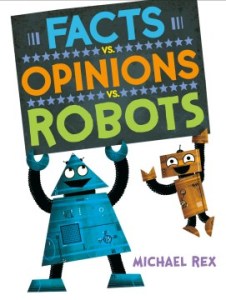 Lynn: You’d have to live in a cave in the wilderness not to know that far too many Americans have a very sketchy concept of what a fact actually is or how to verify it. The need to understand this important issue is one of national importance these days as it is clear that millions of adults don’t grasp the difference and the impact on our culture is stark. Here, with a great way to start addressing the issue, is Michael Rex with a fabulous picture book,
 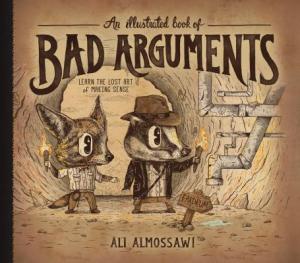 This book for the very young audience brings to mind a book for older students that we reviewed over at Booklist Reader during the last presidential election cycle and it’s worth mentioning again as the facts, opinions, and faulty logic arguments ratchet up. Read our blog post about
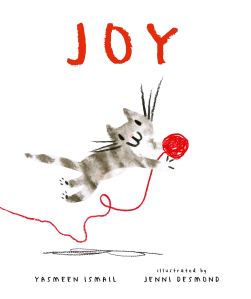 Joy
Joy
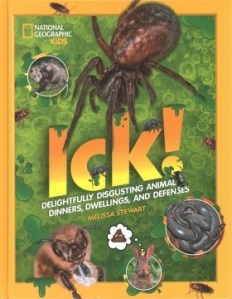 Lynn: National Geographic always does a great job of publishing books that kids love but Melissa Stewart’s new book,
 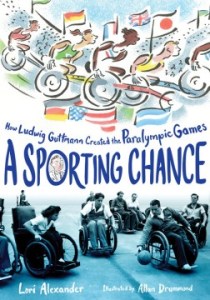 Lynn: I’ve seen a T-Shirt recently that proclaims, “I read. I know things.” I like that but what I want is a T-Shirt that says, “I didn’t know that!” I needed to wear that shirt when I read
 Excellent back matter includes an illustrated glossary and a page of additional facts about wrens. A perfect choice for a STEM classroom and one that would make a great writing prompt as well.
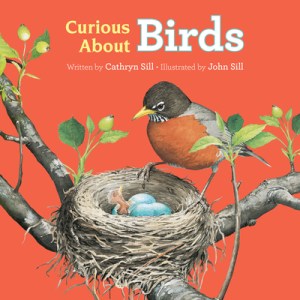 For the youngest children, try
  bookendsblog.net