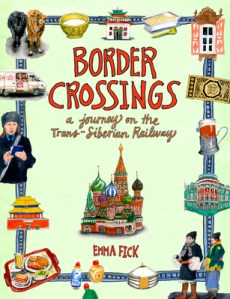
 I have never wished to be 20 years younger any more intensely than while reading Border Crossing: A Journey on the Trans-Siberian Railroad (Harper Design, 2022) by Emma Fick! Every page made me yearn to rush out, buy railroad tickets and set out on this Trans-Siberian journey. Fick ‘s unique and entrancing tale of the train journey she and her husband Helvio took from Beijing to Moscow made me yearn to pack my backpack and replicate this trip.
Travel books are hard to write! Too often they turn into a dull list of places seen, food eaten and history learned. Emma turns the genre on its head and this journal-style story is crammed with vividly evocative watercolor illustrations and hand-written observations. I learned an amazing amount while falling in love with the intrepid Emma and Helvio who saw, explored, tasted and enjoyed everything they encountered.
Somehow there is a wealth of information, history, geology, and culture shared but it is never boring! I loved the descriptions of the opulent interiors of the Mongolian Gers, etiquette for sharing train couchettes, visits to markets, the views from the train windows, Russian subway stations and the food – especially the food! I’m not sure I’d be as delighted as Emma with “Herring Under a Fur Hat” dish as Emma was but I loved her enthusiasm for sampling so much. I had no idea that the largest fresh water lake in the world is in Siberia or that Russia has ELEVEN time zones! The friendliness of the people was encouraging but there were also real challenges and bureaucratic roadblocks.
The charm of the story underplays a bit the actual demanding nature of the conditions but it is also guaranteed to amplify any traveler’s itch residing in readers everywhere.
This is a not-to-be missed book and I sincerely hope that Emma will undertake and chronicle another exotic journey! I am ready to travel with her and I think teens will be too,
I have never wished to be 20 years younger any more intensely than while reading Border Crossing: A Journey on the Trans-Siberian Railroad (Harper Design, 2022) by Emma Fick! Every page made me yearn to rush out, buy railroad tickets and set out on this Trans-Siberian journey. Fick ‘s unique and entrancing tale of the train journey she and her husband Helvio took from Beijing to Moscow made me yearn to pack my backpack and replicate this trip.
Travel books are hard to write! Too often they turn into a dull list of places seen, food eaten and history learned. Emma turns the genre on its head and this journal-style story is crammed with vividly evocative watercolor illustrations and hand-written observations. I learned an amazing amount while falling in love with the intrepid Emma and Helvio who saw, explored, tasted and enjoyed everything they encountered.
Somehow there is a wealth of information, history, geology, and culture shared but it is never boring! I loved the descriptions of the opulent interiors of the Mongolian Gers, etiquette for sharing train couchettes, visits to markets, the views from the train windows, Russian subway stations and the food – especially the food! I’m not sure I’d be as delighted as Emma with “Herring Under a Fur Hat” dish as Emma was but I loved her enthusiasm for sampling so much. I had no idea that the largest fresh water lake in the world is in Siberia or that Russia has ELEVEN time zones! The friendliness of the people was encouraging but there were also real challenges and bureaucratic roadblocks.
The charm of the story underplays a bit the actual demanding nature of the conditions but it is also guaranteed to amplify any traveler’s itch residing in readers everywhere.
This is a not-to-be missed book and I sincerely hope that Emma will undertake and chronicle another exotic journey! I am ready to travel with her and I think teens will be too,
Pack Your Bags! Border Crossings Will Have You Booking a Trip!
Lynn: I have never wished to be 20 years younger any more intensely than while reading Border Crossing: A Journey on the Trans-Siberian Railroad (Harper Design, 2022) by Emma Fick! Every page made me yearn to rush out, buy railroad tickets and set out on this Trans-Siberian journey. Fick ‘s unique and entrancing tale of the train journey she and her husband Helvio took from Beijing to Moscow made me yearn to pack my backpack and replicate this trip.
Travel books are hard to write! Too often they turn into a dull list of places seen, food eaten and history learned. Emma turns the genre on its head and this journal-style story is crammed with vividly evocative watercolor illustrations and hand-written observations. I learned an amazing amount while falling in love with the intrepid Emma and Helvio who saw, explored, tasted and enjoyed everything they encountered.
Somehow there is a wealth of information, history, geology, and culture shared but it is never boring! I loved the descriptions of the opulent interiors of the Mongolian Gers, etiquette for sharing train couchettes, visits to markets, the views from the train windows, Russian subway stations and the food – especially the food! I’m not sure I’d be as delighted as Emma with “Herring Under a Fur Hat” dish as Emma was but I loved her enthusiasm for sampling so much. I had no idea that the largest fresh water lake in the world is in Siberia or that Russia has ELEVEN time zones! The friendliness of the people was encouraging but there were also real challenges and bureaucratic roadblocks.
The charm of the story underplays a bit the actual demanding nature of the conditions but it is also guaranteed to amplify any traveler’s itch residing in readers everywhere.
This is a not-to-be missed book and I sincerely hope that Emma will undertake and chronicle another exotic journey! I am ready to travel with her and I think teens will be too,
I have never wished to be 20 years younger any more intensely than while reading Border Crossing: A Journey on the Trans-Siberian Railroad (Harper Design, 2022) by Emma Fick! Every page made me yearn to rush out, buy railroad tickets and set out on this Trans-Siberian journey. Fick ‘s unique and entrancing tale of the train journey she and her husband Helvio took from Beijing to Moscow made me yearn to pack my backpack and replicate this trip.
Travel books are hard to write! Too often they turn into a dull list of places seen, food eaten and history learned. Emma turns the genre on its head and this journal-style story is crammed with vividly evocative watercolor illustrations and hand-written observations. I learned an amazing amount while falling in love with the intrepid Emma and Helvio who saw, explored, tasted and enjoyed everything they encountered.
Somehow there is a wealth of information, history, geology, and culture shared but it is never boring! I loved the descriptions of the opulent interiors of the Mongolian Gers, etiquette for sharing train couchettes, visits to markets, the views from the train windows, Russian subway stations and the food – especially the food! I’m not sure I’d be as delighted as Emma with “Herring Under a Fur Hat” dish as Emma was but I loved her enthusiasm for sampling so much. I had no idea that the largest fresh water lake in the world is in Siberia or that Russia has ELEVEN time zones! The friendliness of the people was encouraging but there were also real challenges and bureaucratic roadblocks.
The charm of the story underplays a bit the actual demanding nature of the conditions but it is also guaranteed to amplify any traveler’s itch residing in readers everywhere.
This is a not-to-be missed book and I sincerely hope that Emma will undertake and chronicle another exotic journey! I am ready to travel with her and I think teens will be too,
 : My Swimming Life
  more than an underdog sports story! This GN delivers not only that but is also a story based on a true event featuring an all-girls hijab-wearing team from a Muslim high school in Milwaukee. Aliya’s family has moved from warm Tampa to freezing Wisconsin and she is missing her old home terribly. She is also missing her winning basketball team as the Salam High School team is pretty terrible. In fact, they’ve never had a winning season. Not only does Aliya’s team have to battle discrimination, both of their culture and their gender, but they have to figure out how to come together as a team. It all makes for a compelling story that will have readers racing to the end. I read this in galley but even in that format, the illustrations are expressive, dynamic, and vivid. Stock up!
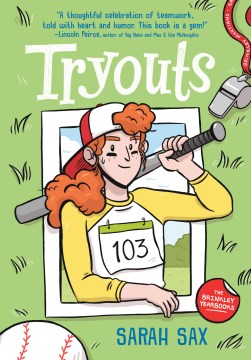 Brinkley Yearbook series expecting it to be a story about a female athlete battling to play on a male team. The surprise here is that the new coach welcomes Alexandra or Al delightedly. The baseball team looks to be a shoo-in to win its tenth season until Al captures the attention of the media and all their focus goes to her. Feeling jealous and left out, the rest of the team resents her fame and their winning season is in jeopardy. Bright colorful illustrations make this a fun, fast read and the topic of PR and social media is timely and important.
 es after the secret work at Bletchley Park, its long-hidden stories finally started to be revealed. I’ve read several accounts of pivotal people involved in cryptography but here, wonderfully, in
 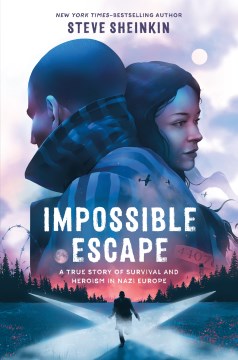 winner Steve Sheinkin’s new book for teens,
 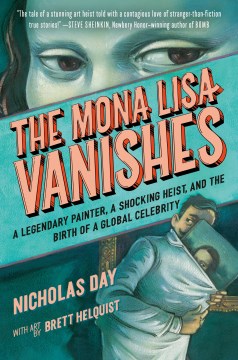 Did you know that the Mona Lisa is painted on wood and that it weighs over 200 pounds and that the thief could barely carry it down the stairs? Or that a locked and jammed door knob nearly stymied the thief—until a helpful Louvre plumber came along and opened it? Or that Da Vinci carried the Mona Lisa with him on the back of a mule on his journey over the Alps into France?
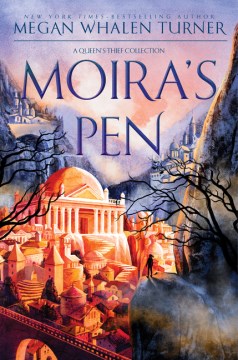 Just before the holiday, a package arrived from a publisher—a not unusual and yet always exciting event. Moira’s Pen (Harper/Greenwillow, 2022) by Megan Whelan Turner was inside. I saved it to savor till the quieter days of January and I’ve been sauntering blissfully through. It is a true gift for all readers who love the series, The Queen’s Thief.
  Lynn:
Lynn: 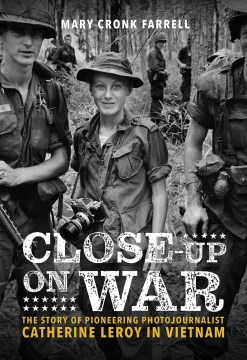 Did you ever wonder where the term “snapshot” comes from? Mary Cronk Farrell includes this tidbit (from the sound made as a picture was taken and the film advanced) in her outstanding new book, Close-Up on War: the Story of Pioneering Photojournalist Catherine Leroy in Vietnam (Abrams/Amulet, 2022). This fascinating book is also a snapshot – a captured picture of a pivotal time and the determined woman who recorded it on film for the world to see.
 Cindy: We realize that many of you are already familiar with this 2022 YALSA Excellence in Nonfiction for Young Adults finalist, but we have to talk about
  Did you know that 70 years ago most people believed that running a mile in 4 minutes was impossible and beyond the limits of the human body? “It was something that God himself had established as man’s limit,” said one writer. But suddenly in 1952, three runners were poised to do just that. It did happen, of course. Two of the three broke the 4 minute mile in 1954. Today’s record is 3.143.13 seconds. How did mankind achieve this “unbreakable” speed? I am not a runner. My idea of exercise is a daily walk with my camera. But it is amazing the unfamiliar paths that a wonderful nonfiction writer will coax a reader to trod and thanks to Neal Bascomb’s latest book,
  bookendsblog.net