Big Boy 4014 Roars Back to Life

Lynn: Train-lovers, big and small, will love Marsha Diane Arnold’s new picture book, Big Boy 4014 and the Steam Team: the World’s Largest Steam Engine Roars Back to Life (Sleeping Bear Press, 2025). The Big Boys, 25 huge locomotives, were built between 1941 and 1944. They were used to pull extremely heavy loads through the Wasatch Mountains in Utah and were critical in hauling soldiers and military supplies during WWII. So long at 132 feet, the Big Boys had to be articulated to manage curves on the tracks. After the war, diesel locomotives began to replace steam, and Big Boy 4014 pulled her last load in 1959. Eventually, all but 8 were scrapped. 4014 sat in a museum in Pomona, California, for over 50 years.
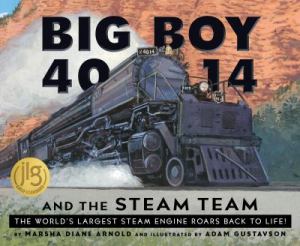
But in 2013, something amazing happened. The Union Pacific Railroad wanted to celebrate the 150th Anniversary of the Golden Spike – the completion of the 2 ends of the first transcontinental railroad. A Big Boy was needed, and the “Steam Team” had only 6 years to get 4014 operational once more!

Since she sat more than a mile from any track, the first huge task was to move her somehow to the tracks. New tracks and a huge loader got 4014 connected to tracks, where two diesel engines then pushed and pulled her all the way to Cheyenne, Wyoming, and the Union Pacific Steam shop. The Steam Team went to work!

The story chronicles their efforts and ultimate success in getting 4014 rolling once again. Not only did she make the Celebration, she also started on a series of cross-country tours. allowing people around the country a chance to see her roaring past.

Adam Gustavson’s glorious illustrations take full advantage of the extra-wide pages with dynamic scenes and nearly steal the book. He uses perspective wonderfully, providing extraordinary views from above, below, close up, and far away.

Arnold’s text is perfectly suited for young readers but provides ample information for train fanatics. The sound effects make the book a wonderful read-aloud, as does the large size. A lengthy and fascinating Author’s Note with much more historical information and photos is included.

Let your readers roll with this outstanding book, which will be loved by readers of ALL ages.
A Touch of Fun Helps the Learning Go Down – in The Iguanodon’s Horn

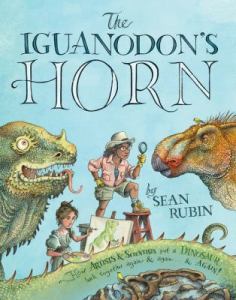
Lynn: If you describe a book as being a terrific educational book, most kids will RUN the other way! Happily, for all of us who hope kids will love science and learning, there are a lot of deeply educational books that are so much fun that kids will demand to read them over and over – even in the summer! Sean Rubin’s The Iguanodon’s Horn (Clarion, 2024) is a wonderful example of such a treasure. That it is about dinosaurs is a special bonus.
Author/illustrator Rubin examines a critically important issue in this appealing book: how does scientific thought work? In a time when so many people disdain science and the scientific process, this understanding is crucial for humankind. Rubin uses a child-favorite subject to illustrate the topic and kids will learn so much and hopefully come away with a firm grasp of the fact that science is a process that never ends.

In 1822  – not THAT long ago – Mary Ann Mantell was strolling the beach with her husband and she stumbled over a curious bone. Her husband shared the odd bone with other scientists and they concluded it came from something unusual, which they called an Iguanodon. As they found more bones, they wondered what a whole iguanodon would look like. Their guesses were wildly wrong as were the many scientists who tried to solve the puzzle. As more bones were found and more information gained over the years, theories about Iguanodons – and dinosaurs in general – changed drastically.

Rubin fills his pages with a glorious array of the many ways iguanodon’s appearance changed over time as scientists gained more information that altered their ideas. Full of comedic details, the illustrations are a delight that will entrance kids for hours. Rubin used graphite pencil, digital and physical watercolor washes, and paint splatter to great effect. Author Endnotes provide more information about what is featured on each page and is as much fun to read as the book itself. Rubin concludes the book with challenges to young readers to think about how what we know about the Iguanodon and other dinosaurs could change in the future. 

The book’s overall appearance is an irresistible kid magnet and is sure to fly off the shelves. I think kids will absorb the important teaching of the book while enjoying every page! This is a must purchase for libraries, STEM classrooms, and for little dinosaur-enthusiasts everywhere. 

The Artful Science of Cooking – Fannie Farmer Brings Measurement to Recipes

Lynn: I love how science can be found everywhere! The importance of ratio, reactions, and measurement is as important to great food as the ingredients themselves. But that understanding wasn’t considered important until a young cook named Fannie Farmer started thinking about recipes and culinary instruction in the late 1800s.
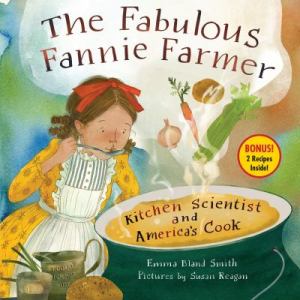
Emma Bland Smith brings Fannie’s story to readers in her fascinating new picture book, The Fabulous Fannie Farmer: Kitchen Scientist and American Cook (Astra/Calkins Creek, 2024). There is so much to talk about here, but I’ll try to stay with the best ingredients and let your interest rise. Fannie Farmer grew up in a time when home cooking was considered a woman’s activity and therefore not really worthy of the respect shown to the great male chefs. Girls learned to cook from their mothers with recipes passed down through the generations and cooking was considered a womanly instinct. A lump of this, a pinch of that, as many egg yolks as necessary were all the measurements anyone needed!

Young Fannie’s dreams were of becoming a teacher, but those evaporated when Fannie, at age 16, contracted polio and was bedridden for several years. Cooking was her therapy and Fannie became an excellent cook as she recovered. With encouragement from friends, 31-year-old Fannie decided to enroll in the Boston Cooking School in 1888, and there, her talents as a teacher, cook, and scientist came together. Wanting to help home cooks produce reliable, excellent, and nutritious meals, Fannie began to measure, test, observe, and record her recipes. Students flocked to her classes, and in 1894, Fannie approached publishers with the Boston Cooking School Cookbook, which she had revised and rewritten. The publisher was skeptical but Fannie’s cookbook was an instant success, selling over 300,000 copies in her lifetime and over 7 million to date.

Emma Bland Smith’s clear, age-appropriate writing manages to be fun and fascinating while incorporating historical background and making this a terrific book for starting discussions on the scientific method, women’s roles in history, and the science of cooking. The book’s appeal is heightened by the charming watercolor illustrations by Susan Reagan. As to be expected with a Calkin’s Creek book, the back matter is outstanding, providing additional information on Farmer and her legacy, the science of measurement, polio, the development of the American recipe, resources for young readers, a Timeline, and wonderful historic photographs.

This is a great choice for all elementary libraries and STEM classes while still being an excellent read-aloud and discussion starter. Enjoy!

Back with Chicken Pox!

Lynn:  Readers, I am back and so sorry for my absence! Life happens and I didn’t eke out time to write. But the books are still here to talk about and I hope to be a regular blogger again.
Do any of you remember having Chicken Pox??? I have vivid itchy memories despite it being years since the event. My sister and I had them during Halloween which was a deeply felt tragedy in our young years. My tightly-knit neighborhood loved Halloween and that was in the time when people could give home-made cookies and popcorn balls and ….! And we had CHICKEN POX and missed it all!

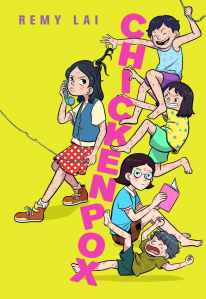
Remi Lai has a different, but similarly miserable, account in her new GN, Chicken Pox (Holt, 2025).

Abby is a 6th grader, oldest of 5, and flat-out sick of being the big sister in her busy “zoo” of a household! It’s bad enough when some misunderstandings cause tensions between Abby and her 2 besties, but then all five Lai kids come down with chickenpox! Abby is quarantined at home with her lively and annoying little brothers and sisters.

Remy Lai brings Abby’s growing pains emotions to vivid life as she struggles to find her own place in the household separate from the role of big sister, deal with friendships that are also changing and start to grow all at once. Funny, heartfelt and so authentic! Hey – I was a big sister too 🙂

Lai also does a nice job of explaining chickenpox, its symptoms, and the progression of the disease. It made me itch just remembering!!

A “Dam” fine book about the taming of the wild Colorado River

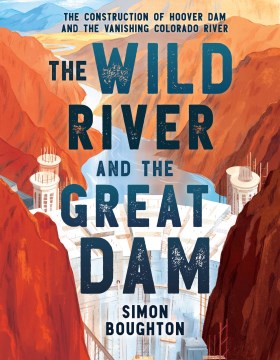
Lynn: wild riverThe iconic Hoover Dam is familiar to lots of us. Many  young readers have visited the dam, driven over it or heard about it in the current news about lowering water levels. It is so familiar that perhaps the astonishing details of its development, construction and impact have been overlooked lately. Happily, Simon Boughton has remedied those issues with his new and fascinating book, The Wild River and the Great Dam: The Construction of Hoover Dam and the Vanishing Colorado River (Little, Brown, 2024).
I’m one of those who has visited the dam, toured its visitor center and driven over it multiple times. I have always marveled at its sheer height and construction but lately my interest has increased. I have a sister who moved to nearby Henderson and on our trips to see them, we have gotten to learn some amazing history of the area at the Clark County Historical Museum, monuments, and state and national parks throughout the region. And what a history it is! The dam played a central role in shaping not only the physical landscape but also the area’s economic, social, and cultural aspects. I could go on and on about some of the amazing things we’ve discovered but I’ll spare you. What I do want to rave about is Boughton’s new book that brings much of this incredible history to life for young people.

He begins the book by reminding readers that the Colorado was indeed a wild and untamed river prior to the dam. It flooded often with disastrous results. It was the height of the Great Depression and the U.S. Government sought to not only control the river, but bring water and power to the agricultural industries of the California valleys and also provide jobs to the millions of jobless Americans. The book details the process that determined the site and chose the construction company that faced the incredible task that lay ahead. Not only did they have to take on an unprecedented engineering project but they had a relatively short timeline with monetary penalties!

I was fascinated with the sheer technical challenges of the project. Some of the advances in technology that made the dam possible were brand new and without them the dam could never have been built. The conditions for the workers were beyond hazardous with life-threatening heat, carbon monoxide levels, appalling work sites, rock falls, dynamite mistakes and more. If workers complained, there were hundreds more ready to take their places. Many workers brought their families to this hostile place where there were no living facilities ready for them. Throughout the book, I marveled that the dam was ever constructed at all, AND that it was finished 2 years early!

The book does an excellent job of describing the history of the time, the lasting impact of the influx of workers on the area, and the deliberate discrimination that occurred against Blacks and Native Peoples who owned the land for millennia. The concluding chapters address the serious water issues that over-use, climate change and seriously low river levels are bringing – a sobering next chapter in the great Colorado’s story,

Excellent backmatter includes a detailed timeline, lists and maps of other dams, and extensive notes. The book contains many archival black-and-white photographs that chronicle the dam’s construction. This is a terrific choice for middle and high school library collections.

Stinky Moose and the Scientific Process

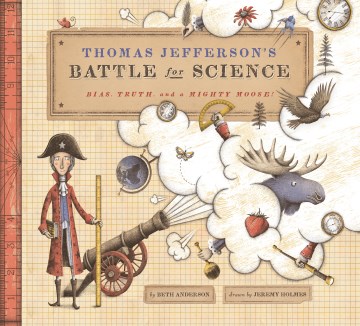
Lynn: What does a moose carcass and a picture book about Thomas Jefferson have to do with the scientific process? Beth Anderson’s new book, Thomas Jefferson’s Battle for Science: Bias, Truth and a Mighty Moose (Candlewick, 2024) explains!
Thomas JeffersonAmateur scientist Thomas Jefferson had a lot on his plate what with the Revolution, Declaration of Independence, a Constitution for a new country and all but he still found time to read scientific books such Comte de Buffon’s treatise on animals. Until, that is, he read the section on American wildlife! Comte de Buffon dismissed the New World as being cold and inferior with the bears smaller and wolves puny! Jefferson knew this wasn’t true and when he looked more carefully he discovered that de Buffon’s facts were inaccurate. In fact, the French scientist had never even been to America!
Jefferson was determined to set the record straight and to do so, he relied on the Scientific Process, being especially careful not to fall in the trap of confirmation bias. Over the years, he gathered statistics, specimens and information, sending these on to de Buffon who never responded. Jefferson wrote his own book based on scientific inquiry and finally got de Buffon to change his mind by sending him a huge and smelly carcass of an enormous moose.

The tone is full of humor which the illustrations, done in sepia tones, echo but the subject is an extremely important one and Anderson does an outstanding job of emphasizing this in a very entertaining way. Kids will thoroughly enjoy the tale AND take away this timely lesson about the importance of process and verification of information both then and now.

Jeremy Holmes’ illustrations are charming, funny and full of intricate details that are a delight to linger over.

Interesting back matter includes additional information on Jefferson and the scientific process, a Timeline, and bibliography. Don’t miss this one!!

Delightful D and More Letters by Daigneault

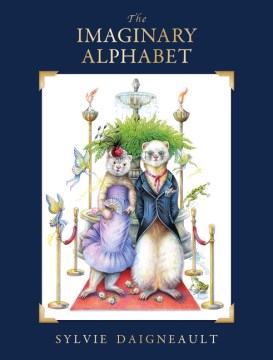
Lynn: Imaginary alphabetWhen you think of the letter B do you think of “Big Baboons Bathing in Blue Bubbles”? Or does the letter P evoke thoughts of “Perky Penquins Painting Pretty Pictures”? Well, I haven’t but after reading Sylvie Daigneault’s stunning Imaginary Alphabet (Pajama Press, 2023) those images will always be in my head.
Long-time readers may remember that alphabet books are a real favorite of mine. As I’ve said in the past, the infinite variety of them astonishes me. Each time I think there can’t be anything new to match, someone creates something that does. It’s a really basic premise, after all, so how inventive can people be? VERY inventive and Sylvie Daigneault joins the list of illustrators who have taken the ABC’s to new heights.

In the Preface, Daigneault tells readers that the idea had been in her mind for a long time and during the Pandemic, she began to really work on the book. Perhaps I should say play instead of work because playfulness is a huge part of this book, both in the bouncy alliterative text and in the exuberant whimsy of the illustrations. The book is slightly oversized and each 2-page spread features a letter and on the opposite page an intricate illustrative example of words beginning with the letter. All are done in colored pencil and full of exquisite details worked carefully into the overall illustration. For example, the letter R features a scene of “Reckless Raccoons Riding the River Rapid” and the scene shows not only a rowboat load of raccoons on a racing river but it also includes raspberry bushes, a reindeer, roses, rain, a rainbow, rabbits, a railroad, ropes, and a robin. Every letter is a new delight and each page requires and deserves careful examination and appreciation.

There is a list of over 300 items included in the pictures. I’m not sure if it is better to go through first and then look at the list or look at each letter, and then check the list. Either way is fun and awe-inspiring.

This book is a visual and imaginative treat and an absolute delight to read—even the endpapers are beautiful! A must-purchase for all elementary classrooms and libraries. I’m supposed to be winnowing my huge, out-of-control collection of books to fit in a proposed new home but I don’t think I can resist adding this one anyway! Enjoy!

Teaching the Past – Kwame Alexander and Dare Coulter

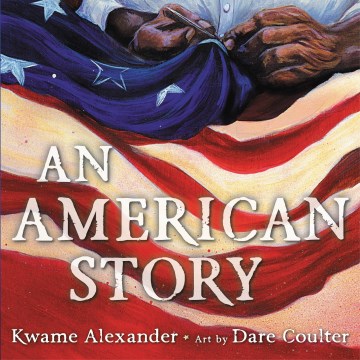
Lynn: American storyHow do you tell the story of our history to children when that story is a painful one – a story of slavery, cruelty and oppression for example? How do you tell a story that makes us uncomfortable? That is a question being debated across our country. Some ask it because they don’t know how to go about it like the teacher in this new book. Some ask it because they don’t want to upset their children and some ask it because THEY are uncomfortable about our history and prefer to pretend it didn’t happen. This same question has been asked about teaching the Holocaust. the Japanese Internment and other horrors of human history.
An American Story (Little, Brown/2023) is author Kwame Alexander and illustrator Dare Coulter’s answer to that critical question. You teach it because young people deserve the truth. You teach it in the hope that these events will not occur again. You teach it because our past shapes our future and the whole past deserves our understanding in order to move forward with hope.

Alexander and Coulter tell the story using the framework of a teacher starting to tell the story of a happy prosperous people stolen in the night from their land, forced into the dark holds of ships to be sold. She falters in the telling but her young students remind her that, “You always tell us to speak the truth, Mrs. Simmons, even when it’s hard?”

Dare Coulter’s stunning illustrations depict the visual history of slavery, of people cruelly treated but keeping the force of the spirit and hope alive, a people suffering but surviving. Coulter painstakingly sculpted figures, some of water-based clay and some of polymer clay and photographed them. She also created paintings with acrylic and spray paint on wood panels and drawings with charcoal. The combined results are vivid, dynamic and extremely powerful. One jolting page-turn shows manacled wrists against a blue background and another offers the hopeful sign of young hands raised, eager to hear the telling of our history.

The combination of the lyrical text and the unflinching but remarkable illustrations is unforgettable. An Author’s Note and an Illustrator’s Note provide additional information on the creation of this brave and necessary book. Look for awards on this one.

How To Draw a Duck – Mr. McCloskey’s Marvelous Mallards

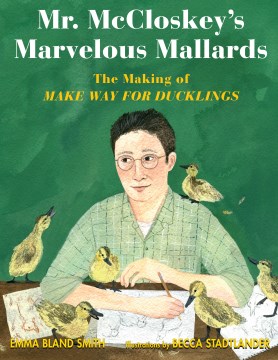
LyMr. McCloskey's Marvelous Mallardsnn:  November is Picture Book Month and what better way to celebrate than writing about a picture book that celebrates a classic and much-loved picture book? Robert McCloskey’s Make Way for Ducklings (Viking, 1941) won the Caldecott and is still treasured by children. The story behind McCloskey’s book has been told in Leonard Marcus’ book, Caldecott Celebration (Walker, 2008) and now Emma Bland Smith brings that inspiring story to children in Mr. McCloskey’s Marvelous Mallards (Calkins Creek, 2022).
Having published his first book, young Robert McCloskey was searching for an idea for a second book. He remembered watching a pair of Mallards and their ducklings waddling into Boston’s Public Gardens all in row. Bingo! But getting the illustrations right turned out to be much harder. He sketched and sketched, only to have his editor, the legendary May Massee reject them all. McCloskey was determined to do better! He started by first bringing home a box of live ducklings to observe and sketch. Still not satisfied, he next brought home adult ducks to add to the chaos in his apartment before finally setting them all free on a pond at a friend’s home. This time his editor loved the sketches and text and an enchanting picture book came to life.

Smith tells this story wonderfully for children with just the right touch of humor and stressing McCloskey’s persistence and hard work to get the drawings just right. Illustrator Becca Stadtlander does a lovely job depicting the famous author/illustrator and his signature illustrations working in gouache and colored pencils in place of McCloskey’s iconic warm brown tones. It is a charming look at the artistic process as well as a behind-the-scenes glimpse at how a book is created. A perfect pairing of books for any story hour or classroom.

And, if you missed our earlier post, To McCloskey’s Ducklings with Love, check that out as well as Nancy Schon’s book Ducks on Parade about the sculptures of McCloskey’s ducks created for the Public Gardens in 1987.

These Virus Picture Books Are Infectious Reading

Cindy and Lynn: we know, we know. We’re all really tired of hearing about “the virus.” But, after two years of COVID quarantines, infections, shut-downs, mask mandates, and remote work if you still don’t know how to explain what a virus is, how it works, and how scientists study them and try to defeat the bad ones, this round-up of nonfiction picture books may help you focus the microscope. If you have other virus books for a young audience to recommend, leave us a comment. 

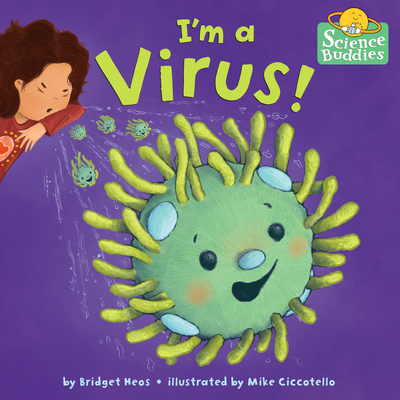
I’m a Virus! by Bridget Heos (Crown, 2022)I'm a Virus by Bridget Heos

From a sick girl’s sneeze to her friend’s nose, a common cold virus explains how it invades, multiplies, and attacks to spread from person to person. The science, which also covers the body’s immune response, is infused with humor and illustrations that help the information go down like a spoonful of sugar! Covid-19 is mentioned, as is Smallpox and Jenner’s first vaccine. A double-page spread introduces the many types of white blood cells and their jobs in defending you from illness. A glossary, suggested reading and bibliography round out this first entry in the Science Buddies Series.

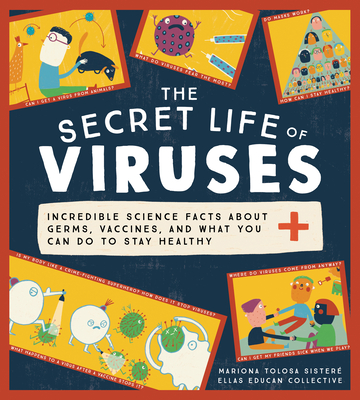
Secret Life of Viruses by Mariona Tolosa SistereThe Secret Life of Viruses: Incredible Science Facts About Germs, Vaccines, and What You Can Do to Stay Healthy by Mariona Tolosa Sisteré Ellas Educan Collective (Sourcebooks, 2021)

Vibrant and humorous illustrations complement solid information written by a women’s science collective about a wide variety of viruses. Topics include how the body defends itself, viruses in history, and the benefits of some viruses. A True/False quiz at the back reinforces important content.

Dr. Fauci by Kate MessnerDr. Fauci: How a Boy from Brooklyn Became America’s Doctor by Kate Messner (Simon & Schuster, 2021)

This picture book biography of the current director of the National Institute of Allergy and Infectious Diseases, begins in his childhood as a curious child of parents who owned a pharmacy and continues through his medical education and his work under seven U.S. presidents. Backmatter includes: How Do Vaccines Work?, Are Vaccines Safe?, and Dr. Fauci’s Five Tips for Future Scientists, a Time Line, Recommended Reading, and Fauci family photos.

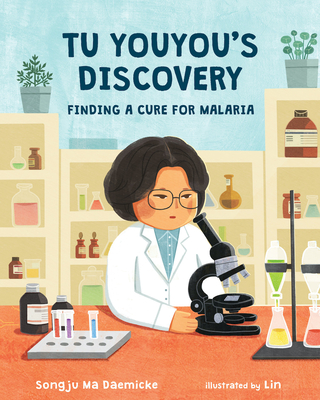
Tu Youyou's Discovery by Songju Ma DaemickeTu Youyou’s Discovery: Finding a Cure for Malaria by Songju Ma Daemicke (Albert Whitman, 2021)

Like Dr. Fauci, Tu Youyou was interested in medicine and research from a young age, partially due to her own struggle with tuberculosis as a teen. In 1969, an illness called Malaria, spread by mosquitoes, was killing people worldwide and became the focus of her research and experiments. This nonfiction biography picture book emphasizes the persistence needed in medical research as doctors search for answers and cures, and highlights the scientific process as well as gender discrimination. For her work, Youyou was honored with a Nobel Prize in 2015, the first Chinese woman to receive one.