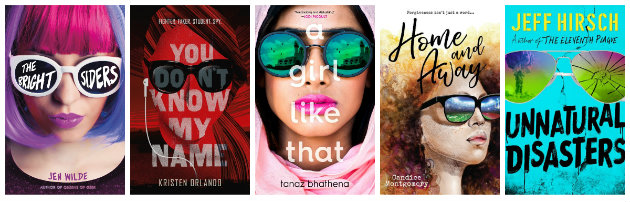
Cindy: It’s spring break time in Michigan…that season where bathing suits, sunscreen, and sunglasses are flying out of stores as students and their families prepare to clog the I-75 highway to warmer locations that actually have sunshine. I’ve noticed a trend in cover art featuring sunglass clad faces that are ready to join the sunny vacation fun. Pack one of these to read on the beach…or curl up with it at home if you are having a staycation! I’m sure I’ve missed some. Leave a comment if there are others you’ve written, published, or have in your libraries. This would make a great summer book display with some more titles in the mix!
Cindy and Lynn: How are your brackets doing? If you are a participant in the madness, we hope you filled out a Women’s NCAA basketball tourney bracket too! Their games are exciting as well! In the meantime, while you wait for another men’s or women’s game to tip, we are bringing you an interview with debut author Barbara Carroll Roberts. We featured her book, Nikki On the Line, recently but we wanted to know more. Read on for some women’s sports history you can share when you booktalk Roberts’ book.
1. Cindy: We love debut books. It’s fun to read an offering by a brand new author. What has the experience been like for you to BE the brand new author?
Barbara: It still feels a bit unreal. I worked on this book for many years, so to see it on bookstore and library shelves – or even better, in readers hands – is wonderful. The best part has been hearing from young readers who have enjoyed Nikki’s story.
2. Lynn: As I wrote in the review, it is rare to find a book about sports and a female athlete that actually has sports action in it. Nikki on the Line had such terrific and authentic game, practice, and tryout scenes. I also really loved the way you addressed the experiences of juggling practice schedules and homework and that struggle that many star players experience when they move to a higher level team with equal or better players. How did you decide to write a book with a sports focus and what personal experiences guided your writing?
Barbara: I love this question, because when I was trying to find books about girls who play sports for my sports-loving daughter, I noticed the same lack of actual sports action in the very few books I found that had a female protagonist and a “sports theme.” Instead, in most of the “sports books” about girls that I found, the sport was simply a background element of the story.
But my daughter and the other girls on her teams were passionate about playing sports. So I decided to write a book for and about those girls.
Though I didn’t realize it at the time, I began researching this book when I was in high school, playing competitive sports, feeling all the aches and pains of sore muscles and bruises, and juggling homework and family chores. But I also spent many years watching my son and daughter play team sports. Their experiences, and particularly the high levels of competition they faced, inspired much of the action in Nikki on the Line.
3. Cindy: When I booktalk Karen Blumenthal’s nonfiction book about Title IX, Let Me Play (S&S/Atheneum, 2005), my students don’t believe me when I tell them that as a forward playing junior high basketball in the early 1970s I wasn’t allowed to run the whole length of the court. We had 3 defensive players and 3 offensive players on each team that stayed at their respective ends of the court and only 2 guards on each team were able to run across the center line. What memories of playing sports in those days do you have?
Barbara: Oh, I love this question, too! I’ve also seen expressions of disbelief on the faces of young people when I tell them that “experts” used to believe that it was harmful for girls to run the length of a basketball court.
I started playing high school sports in 1970, two years before Title IX was passed. We wore our hideous, one-piece, seafoam-green cotton gym suits for every sport – no actual uniforms. We did play full-court basketball, but our team was only allowed to play in the gym if the boys weren’t using it. All the rest of the time, we had to practice and play outside on the blacktop. I grew up in northern California, so it wasn’t terribly cold in the winter, but it still made me angry that we were treated like second-class athletes.
I didn’t see a lot of changes right after Title IX passed in 1972, though our sports teams did get new gym suits. They were one-piece, pull-on polyester suits with gold and white stripes that snapped at the shoulders. They moved a lot better than our old cotton suits. But they were still hideous!
4. Lynn: The sports is a highlight but you do so much well in this story. I particularly appreciate the depiction of Nikki’s struggles with changing friendships and her relationship with her mother and little brother. Of course, we love the fact that Nikki’s mom is a reference librarian! Both Nikki’s mom and brother are such well developed and wonderful characters! Did you begin writing this story with both these characters so clearly defined or did they evolve as you worked on the book?
Barbara: Nikki’s brother, Sam, first “appeared” to me jumping on his pogo stick, asking a million questions, but he definitely evolved as I got farther into the book. I think the same is true of Nikki’s mom. I wanted her to be someone who wasn’t interested in sports, because I wanted Nikki’s achievements to be all her own, rather than influenced by a “sports parent.” I started out with a clear idea of who she was, but her character certainly developed and deepened as I kept working.
4.5Cindy & Lynn: Did you have a lovely cotton one-piece snap-up jump short gym outfit too?…Female athletes today don’t know how good they have it.
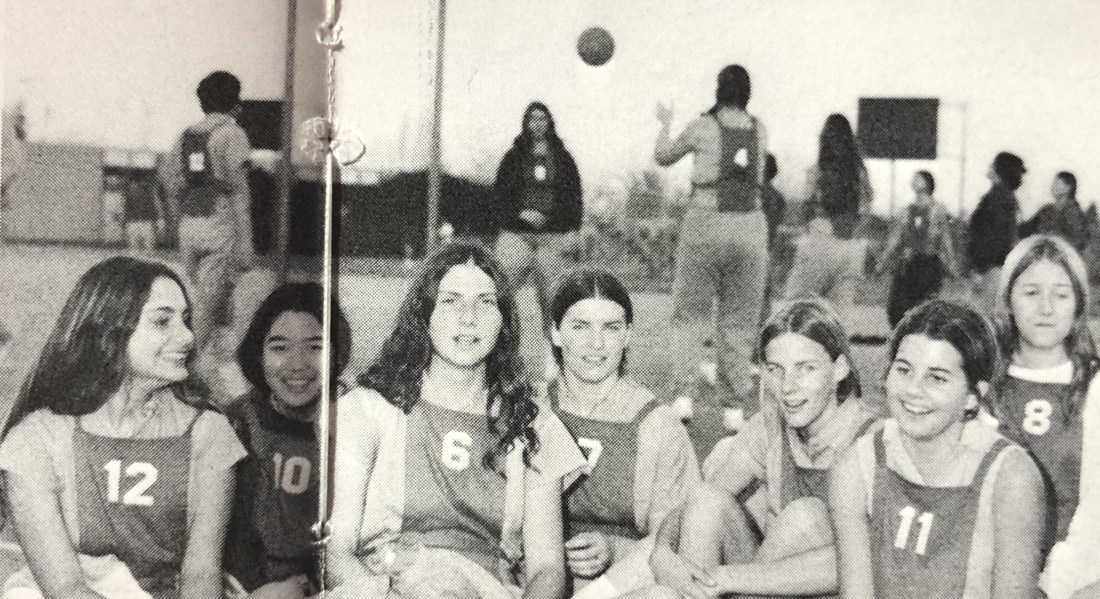
Barbara: I’ll answer that with a photo from my 1972 yearbook. I’m #11 and my sister, Kathleen Carroll Au, is #12. I cut the sleeves off my cotton gym suit to get a little more freedom of movement.
1972 Monta Vista High School (Cupertino, CA) yearbook photo
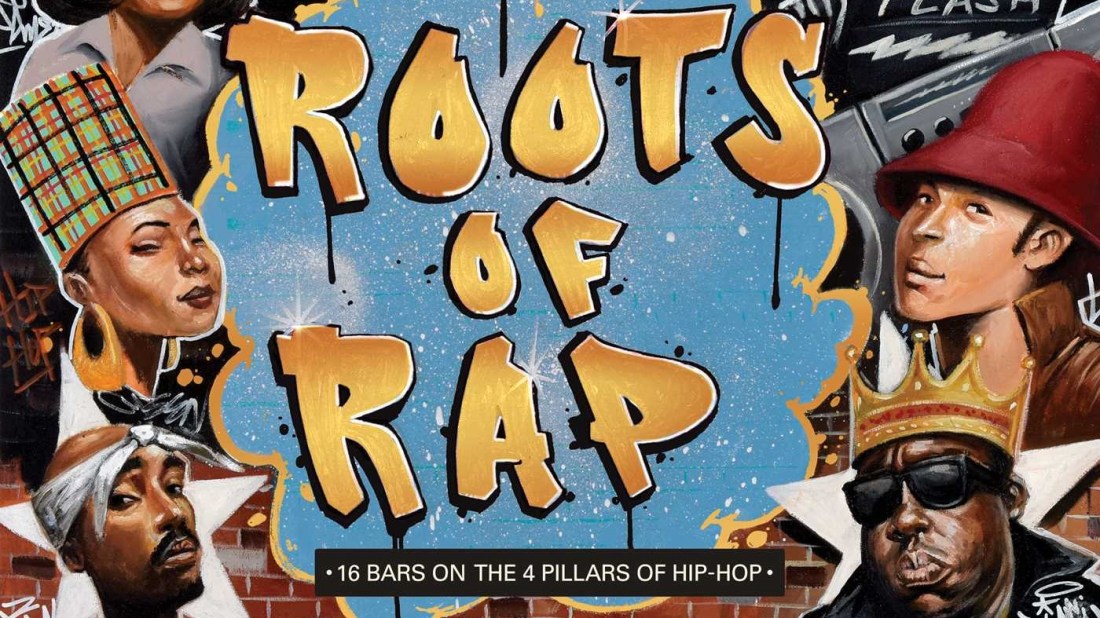
Cindy: What I know about Rap music I mostly learned by listening in the car as I drove my teen daughters to high school each morning a decade ago. I let them pick the music every day—”I Do It for Hip Hop.” Last year I listened to a delightful debate between my middle schoolers and visiting author Jason Reynolds as they quizzed him for his opinion on their favorites. I have some catching up to do! Meanwhile, I can’t wait to add this new picture book, The Roots of Rap: 16 Bars on the 4 Pillars of Hip-Hop ( Little Bee, 2019) by Carole Boston Weatherford to my middle school libraries.
“Folktales, street rhymes, spirituals—rooted in spoken word.
Props to poets Hughes and Dunbar; published. Ain’t you heard?”
So begins Weatherford’s rapping text on a spread that features images of the poets in the clouds and a skeptical black teen staring at the reader. On to James Brown, duel turntables, breakdancing on cardboard sheets, and female rappers like Queen Latifah, while “keepin’ the lyrics real.”
“A generation voicing stories, hopes, and fears
founds a hip-hop nation. Say holler if you hear.”
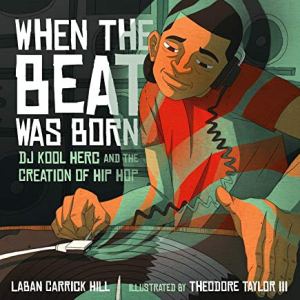
I’ll be adding this book as a choice in our 7th-grade nonfiction picture book research multimedia project and it makes a great pairing with When the Beat Was Born: D.J. Kool Herc and the Creation of Hip Hop (Roaring Brook, 2013), which we wrote about here. The Roots of Rap is a much-needed picture book to balance against the many featuring jazz and blues artists. It will be a huge hit with its intended early elementary school audience, but all ages will enjoy it as well.
Lynn: I know even less about rap and hip hop than Cindy! My kids were into They Might Be Giants and Barenaked Ladies. So this terrific book was a very welcome introduction/history. Not only is it a real joy to read but I feel like I have a much better understanding of this important musical form. I love Weatherford’s text but I’m blown away by Frank Morrison’s illustrations. (Now that we’re independent again, I’m adding “blown away” as a literary criticism term.)
Frank Morrison, Simon & Schuster, 2019
Morrison’s bold dramatic illustrations use every inch of the pages and practically pulse with energy. Strong colors and unusual perspectives make every page-turn a new treat while expanding the text and evoking the time. DJ Kool leans over the turntable out toward the reader on one 2-page spread while on another page, readers look down from high above at a break dancer surrounded by his audience.
Don’t miss the back matter either. There’s a helpful glossary of terms, a Hip-Hop Who’s Who, and personal notes from both the author and illustrator. This book is keepin’ it real!
Cindy: I have a librarian friend and reviewer who reads ONE book at a time. (I’m looking at you, Reading Rants.) I can’t seem to manage that. I became a librarian, in part, because I couldn’t narrow down a field of study and with librarianship, I could dabble in everything. Perhaps that accounts for why I always have multiple books going at a time. Here are the ones with bookmarks in them currently:
The Prodigy (Macmillan Young Listeners, 2018) by John Feinstein (audio)
There are more adult nonfiction and poetry books that I am sauntering through, but I’m embarrassed enough by this list so I’ll stop. Focus, Cindy. Focus.
Lynn: I’m as bad as Cindy! I usually have multiple books going. I especially like to have a short story collection, essay collection or nonfiction book that I can be working on along with a novel. I love audio books too and I have one audio going in my car and another on my MP3 player that listen to when I’m exercising or doing boring chores. I listen to a lot of youth books on audio but I often use audio to get some adult books into the mix. Here’s what I’m reading now:
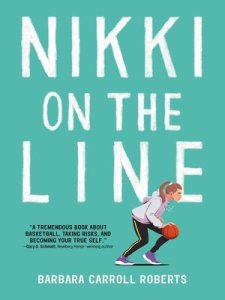
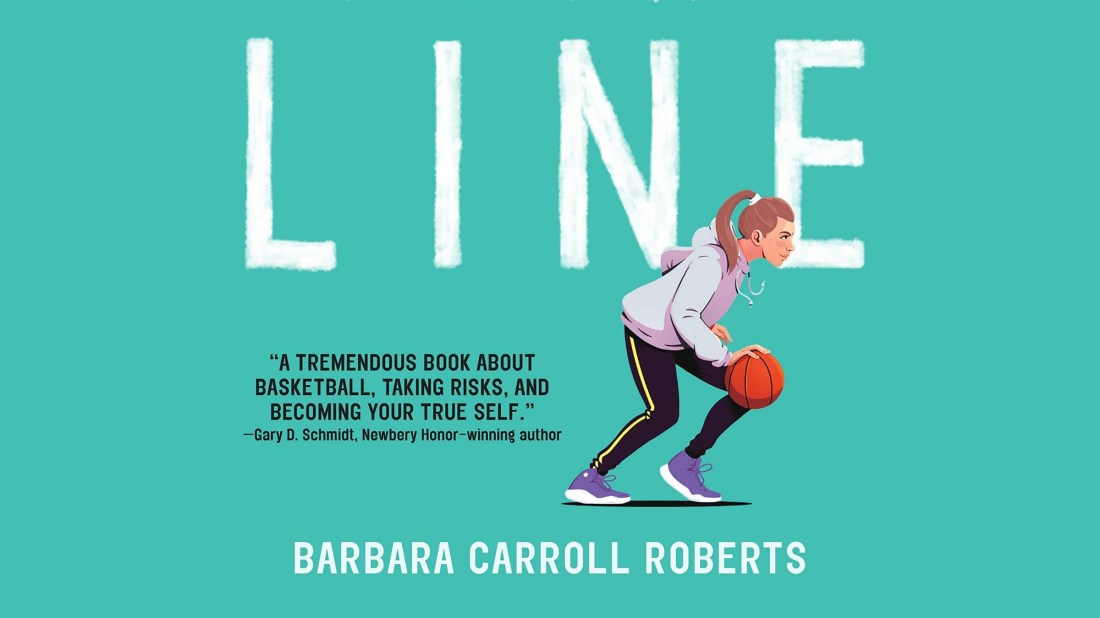
Cindy: March Madness is upon us and that always means a basketball book recommendation from Bookends! This year, we are excited to have one with a female player, a rare find, especially one with basketball play as descriptive and exciting as that in Nikki on the Line (Little, Brown, 2019) by Barbara Carroll Roberts. Many players, female and male, will relate to Nikki’s dawning realization that her status as a premier player is on the line as she moves up to an elite club team in 8th grade where she is just one of many talented players. Nikki is forced to find where she fits now, both on the team, and with her friends, along with handling the expense of the team and additional struggles at home and at school with a troublesome genetics-related science project. Roberts not only understands basketball but also middle school girls.
I sat a mean bench on my school basketball team in the 70s
and read lots of basketball fiction featuring boys,
but this is the book I wish had been on my school library shelves.
The scenes at the tryouts, the grueling practices, and the exciting games are full of basketball written by someone who knows the drill. I sat a mean bench on my school basketball team in the 70s, and read lots of basketball fiction featuring boys, but this is the book I wish had been on my school library shelves.
P.S. Go Indiana Hoosiers!!!!
Lynn: One of my pet peeves is a sports book with little sports action, something that happens way too often in sports books featuring girls. So this terrific book has made me very happy! As Cindy says, not only are the game scenes great, but Roberts captures the tryouts, practices, drills, and aching muscles too. Present, too, are the related experiences of the too-intense parents, fierce competition, and the significant expenses of these elite travel teams.
While the sports action was a highlight for me, there are a lot of other elements to admire. The characters are richly developed, especially Nikki, who is struggling to balance school, family responsibilities, and her practice schedule as well as new pressures on friendships and family finances. Nikki’s family is a charming feature and I loved her research librarian mother who is baffled by her daughter’s love of sports and her super high-energy little brother and his pogo stick.
A sweet first crush, the minefield of middle school, and the challenges of evolving friendship provide additional elements that keep the pages turning for readers not basketball-obsessed. This is a dynamite debut and I can’t wait to see what this author does next!
Lynn: Do you believe in fate or coincidence? Maybe you think it’s a divine hand at work, or pure coincidence or perhaps there really is a touch of magic loose in the universe. No matter which way you lean, these are fun concepts to play with, especially in books. Early 2019 has brought us two delightful books that will get kids wondering about fate, magic, and connections.
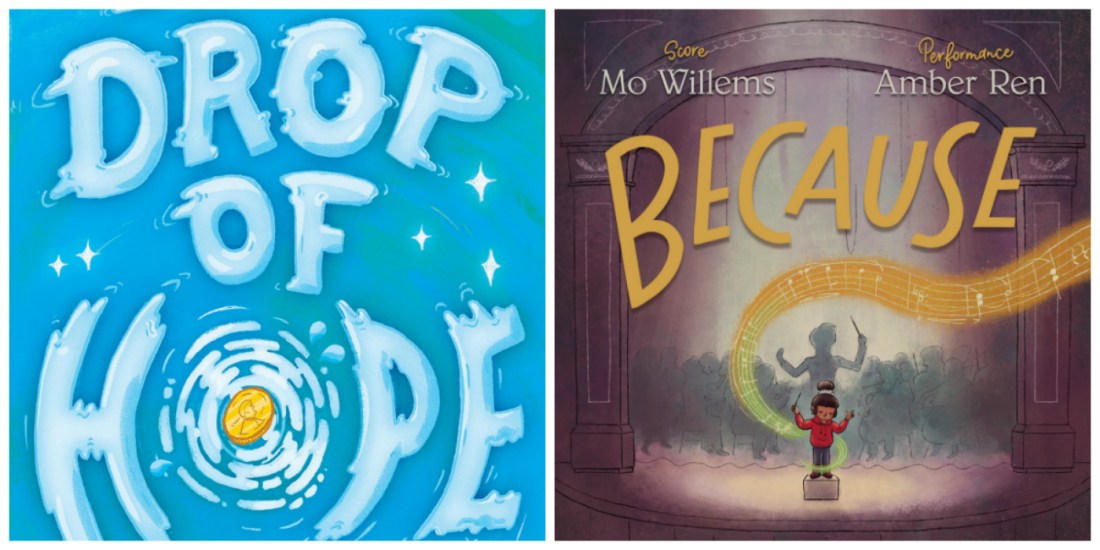
First up is a charming debut middle school book, A Drop of Hope(Scholastic, 2019) by Keith Calabrese. Take a town down on its luck, a boy new in town who has made his dying grandfather a promise, a girl whose family has come unglued, and a boy who secretly does chores for his neighbor. Add the town legend of a wishing well, a chance eavesdropping, and a spur-of-the-moment decision and watch what can happen to an entire town from one act of kindness.
Calabrese’s intricate plot traces the ripple effect of seemingly unrelated actions and individuals on the fortunes of an entire town. It’s a little like watching a Rube Goldberg invention: wacky, convoluted, highly entertaining, and it leaves you cheering at the result. There is a large cast of characters to keep track of but Calabrese manages to give them all a separate voice and readers will care about them all. Told in short individual vignettes, the story moves quickly, gaining speed as the connections begin to multiply.
I was given this arc at ALA and the publisher rep said it was a story of “hope that wasn’t cheezy,” and she was so right! It’s also a story of the mysterious forces that connect us all. Give this to a good reader looking for something really different.
Cindy: Because a 4th grader was ahead in her work and because an elementary school librarian gave her jobs and because the girl had a hard time choosing between many subjects she loved, she became a librarian so she could dabble in them all. And over time, because she worked very hard, and she was lucky, she was chosen to serve on award committees and to review and blog for Booklist magazine. Because of that, books like Because (Hyperion, 2019) by Mo Willems and Amber Ren arrive on her doorstep waiting for her to read and promote. Mo writes the “score” here, telling the story of how chance, fate, coincidence, passion, hard work, and serendipity and, yes, perhaps a touch of mystery, results in a young girl finding her passion in a career as a musician and conductor. Amber Pen provides the “performance,” the illustrations, to this moving story of how small moments can result in life-changing opportunities. A colorful trail of musical notes winds through the pages that start and end with musical scores. The opening piece is Franz Schubert’s Symphony no. 8 in B-minor, and the closing piece was composed for the book by Hilary Purrington. Have a listen.
Cindy: I’ve long been a fan of Rube Goldberg’s crazy impractical inventions but knew little about his path to producing them. Just Like Rube Goldberg: The Incredible True Story of the Man Behind the Machines (Simon & Schuster/Beach Lane, 2019) by Sara Aronson delivers the goods, and with much less meandering than Goldberg might have used. Children who know nothing about Rube Goldberg or the game of Mousetrap that his work spawned, will still be attracted to the book by the zany cover art that turns the inventor’s name into one of his own silly inventions.
Rube’s childhood interest in art and desire to grow up to be a cartoonist met with dismay and horror from his German immigrant parents who feared for his future. He earned an engineering degree from the University of California, Berkeley and became a city engineer but quit after six months, hating the work. He kept drawing while he did grunt jobs at the San Francisco Chronicle but he never quit drawing. After the 1906 Earthquake, he ended up moving to New York City where his cartooning career took off. His favorite comic work was perfectly timed with the industrial revolution as machines took over many jobs. Goldberg invented nothing useful as he used absurd pulleys, levers, and other more oddball additions to make a simple task very complicated. For instance, a machine to put holes in doughnuts starts with a goat chewing a carrot, that moves a ghost to scare a bird to lay an egg that eventually results in a cannon blasting a ball up through a lump of dough tossed above it by “Professor Lucifer Gorgonzola Butts,” Rube’s cartoon alter ego.
While aimed at a younger audience, older readers (and STEAM teachers) will delight in this introduction to Rube’s work.
Lynn: Sarah Aronson does a wonderful job of bringing readers a sense of Goldberg’s personality, his curiosity, and clear-eyed appreciation of the ridiculous. As he said, machines were a “symbol of man’s capacity for exerting maximum effort to achieve minimal results.” I love illustrator Robert Neubecker’s colorful humorous illustrations that do such a terrific job of capturing Goldberg’s manic style. Kids will be captivated and motivated to create their own Goldberg-type designs.
We can’t resist concluding our post on this engaging picture book by mentioning another tribute to Goldberg and his spirit. The Rube Goldberg Machine Contest is a competition held annually at Purdue University. The history of the contest dates back to the 1930s when it began as a competition between two engineering fraternities. Today the contest has been expanded beyond just the university level to include elementary, middle, and high school students and can be done either as a physical or online creation. The competition is meant to celebrate Goldberg’s spirit as well as to encourage and develop an interest in engineering, design, problem-solving, and having fun.
This year’s challenge is to put money in a piggy bank – in as complicated a Goldberg way as possible. Take a peek at this video of the Purdue University team’s solution to the 2017 challenge of putting on a band-aid!
But, wait! There’s more...check out these other titles to extend the learning and the fun:
Ruby Goldberg’s Bright Idea (Simon & Schuster, 2014) by Anna Humphrey. A middle grade novel about a 5th grader who builds a Rube Goldbergesque machine for her school science fair.
Cindy: Want a laugh? Just read the title of this book: How to Give Your Cat a Bath in Five Easy Steps (Tundra, 2019) by Nicola Winstanley. Despite the calm cover art, anyone who has owned a cat knows there is nothing, and I mean, nothing, easy about bathing a cat. The young girl in this book learns that very quickly, although she tries to follow the “five easy steps.” Once she gets the water just right, an effort that takes many tries, the next hurdle is finding the cat. Children and adults will be giggling at the escalating antics illustrated by John Martz’s humorous scenes as the hiding and chasing unfold. Simple repetitive text, spacious layout, and a cookie break will keep children reading and laughing through this story again and again.
Lynn: In Julia Sarcone-Roach’s story, There Are No Bears in This Bakery (Knopf, 2019) Muffin is the “whiskers” of his neighborhood and he takes his job seriously. So when a mysterious noise disturbs the night, he investigates. None of the usual mice, raccoons, or bats are to be seen but a “grrrrrrr” seems to be coming from the bakery. Inside is the biggest mouse Muffin has ever seen – or was it the smallest bear?
The little bear’s belly is rumbling but fortunately, Muffin knows just what to do and it turns out bears really like sprinkles. But the little bear isn’t alone and by the morning there is a big surprise waiting for the sleepy baker!
Muffin’s noir-detective tale is filled with over-the-top funny figures of speech and Muffin’s observations make this a hoot to read aloud.
Sarcone-Roach’s page-filling illustrations are done in acrylic paint, cut paper, and marker. Muted tones wash the pages making the orange of Muffin’s fur the visual focus of this very funny cat tale.
After 10 years of blogging for Booklist Online, we are moving the Bookends blog to this new home. We’re happy you’ve found us and hope you will continue to read our book reviews of children’s and teen literature drawing on well over a half-century of combined experience in the field.
Cindy Dobrez is currently a middle school librarian in Holland, Michigan, serving 1600 students in two large buildings. She has reviewed for School Library Journal, Voice of Youth Advocates, the Chicago Tribune and Booklist in over three decades of work as a public and school librarian.
Lynn Rutan is a retired middle school librarian and past reviewer for VOYA and Booklist, and past editor of The Media Spectrum, the journal of our Michigan Association for Media in Education.
Both Cindy and Lynn and have served on or chaired numerous book award committees for the American Library Association, including the Newbery, Printz, Sibert, BBYA, and Margaret A. Edwards awards. We have both chaired the L.A. Times Book Award YA Jury as well. We bring years of youth literature knowledge, experience working in school libraries, and a love of the literature to our reviews.
Bookends Blog includes solo posts but most often features both Cindy and Lynn’s critique of a single book. We usually feature books we recommend…but an occasional rant is to be expected. Look here too for display ideas, cover trends, author interviews, and our own annual eccentric book awards—fun things book and library related.
Two heads are better than one! Thanks for reading Bookends!
 Cindy: We love debut books. It’s fun to read an offering by a brand new author. What has the experience been like for you to BE the brand new author?
 What I know about Rap music I mostly learned by listening in the car as I drove my teen daughters to high school each morning a decade ago. I let them pick the music every day—”I Do It for Hip Hop.” Last year I listened to a delightful debate between my middle schoolers and visiting author
  I’ll be adding this book as a choice in our 7th-grade nonfiction picture book research multimedia project and it makes a great pairing with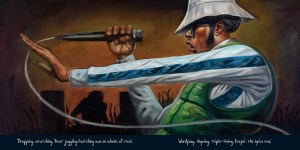
 First up is a charming debut middle school book,
 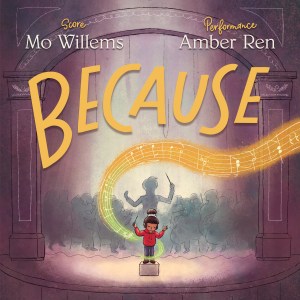 Cindy: Because a 4th grader was ahead in her work and because an elementary school librarian gave her jobs and because the girl had a hard time choosing between many subjects she loved, she became a librarian so she could dabble in them all. And over time, because she worked very hard, and she was lucky, she was chosen to serve on award committees and to review and blog for
 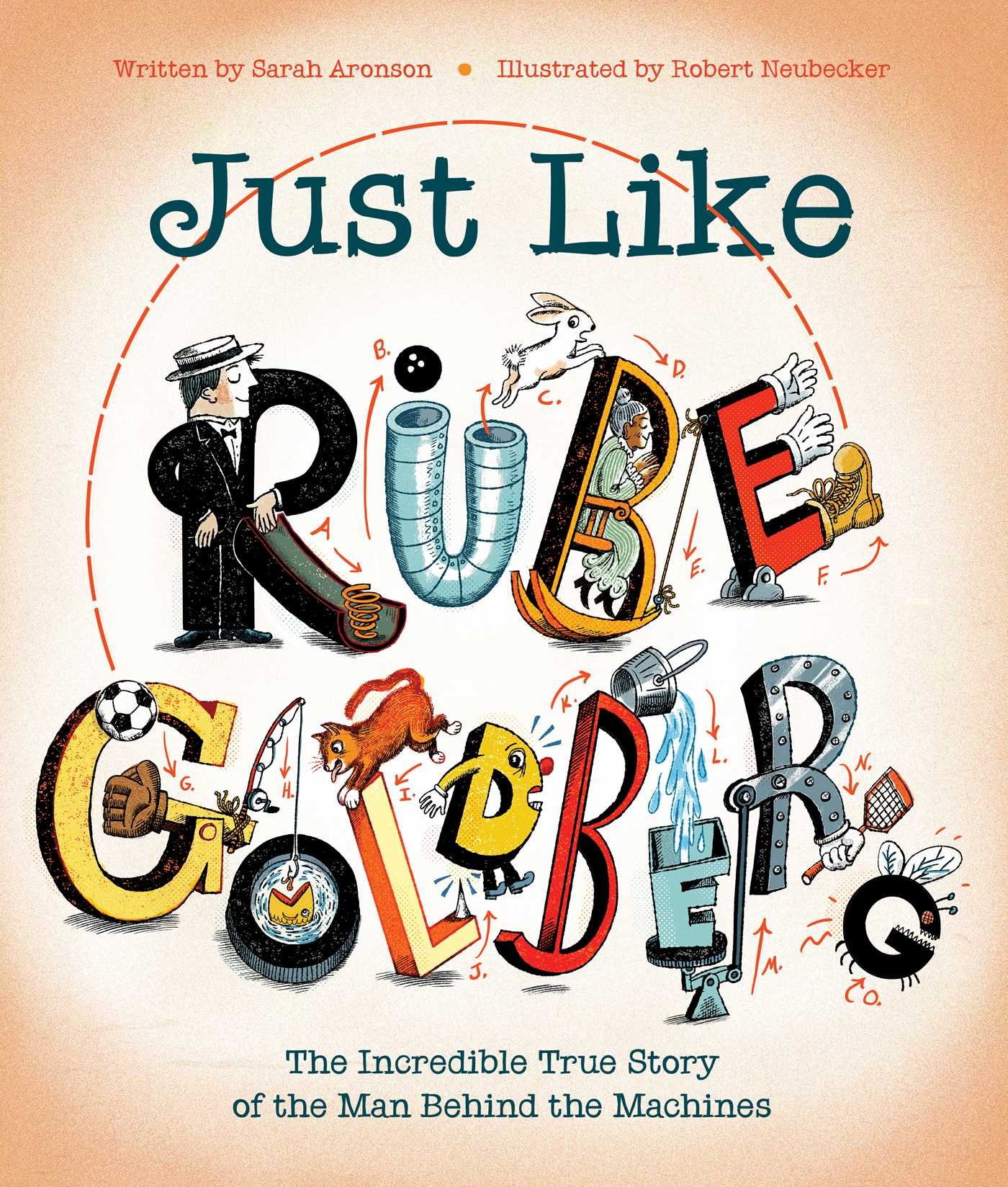 I’ve long been a fan of Rube Goldberg’s crazy impractical inventions but knew little about his path to producing them.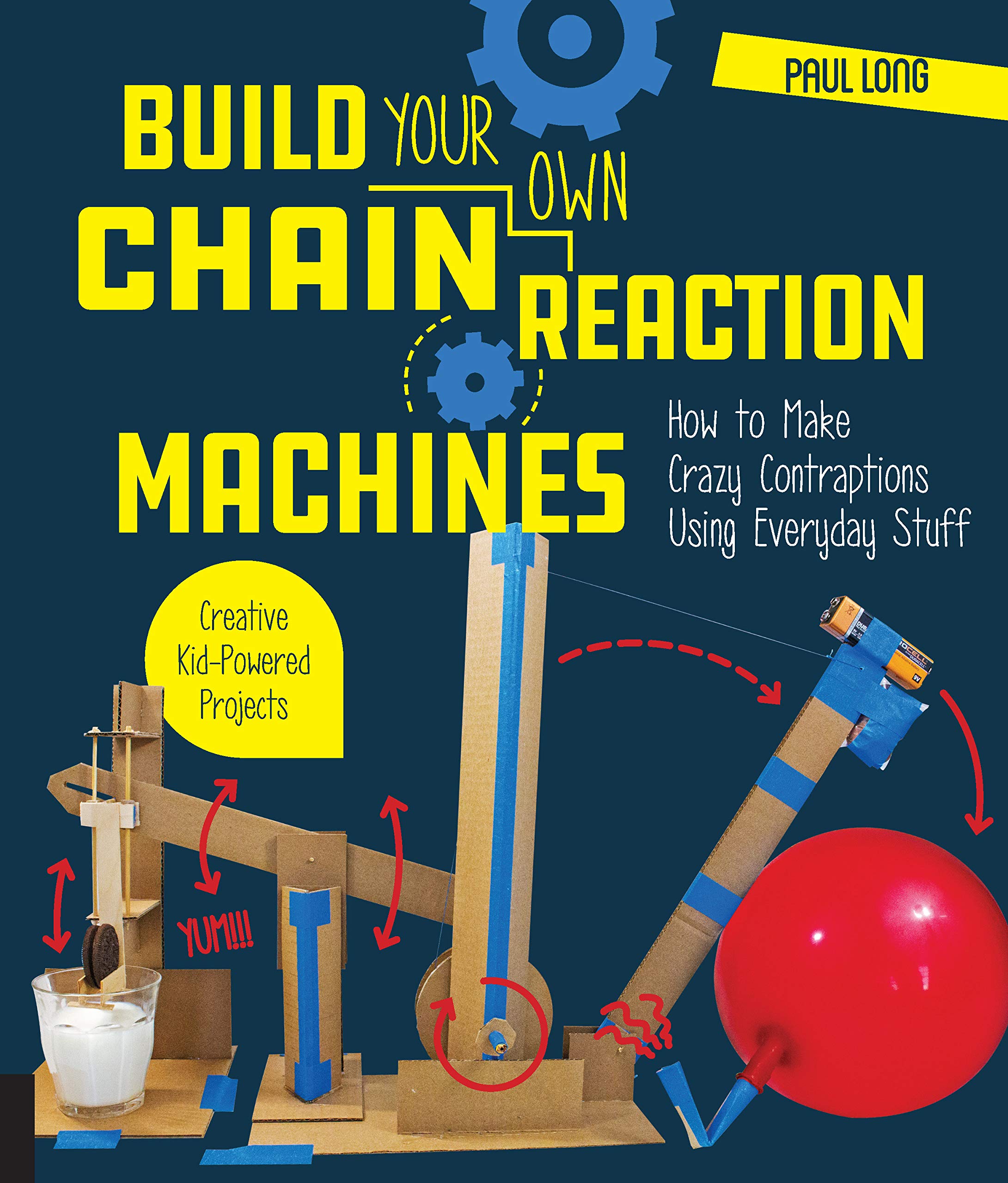
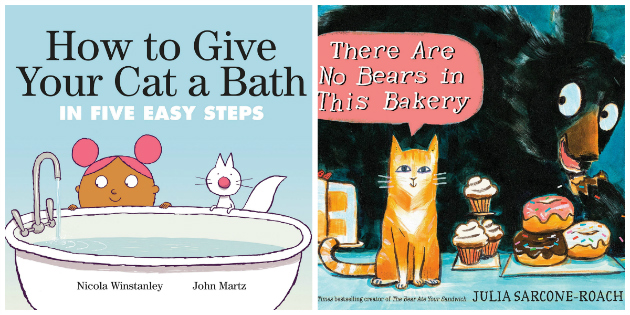
 The young girl in this book learns that very quickly, although she tries to follow the “five easy steps.” Once she gets the water just right, an effort that takes many tries, the next hurdle is finding the cat. Children and adults will be giggling at the escalating antics illustrated by John Martz’s humorous scenes as the hiding and chasing unfold. Simple repetitive text, spacious layout, and a cookie break will keep children reading and laughing through this story again and again.
 Muffin’s noir-detective tale is filled with over-the-top funny figures of speech and Muffin’s observations make this a hoot to read aloud.
 bookendsblog.net