Lynn: Do you think you’ve added enough dinosaur books to your collections and don’t really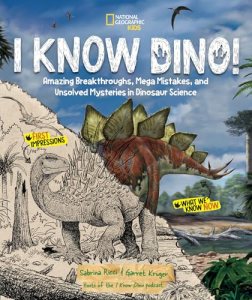 need another? Think again! This new National Geographic book by Sabrina Ricci and Garret Kruger is not only great for dinosaur enthusiasts, but it is also an outstanding book for STEM and classroom use to illustrate the process of scientific inquiry. I Know Dino!: Amazing Breakthroughs, Mega Mistakes, and Unsolved Mysteries in Dinosaur Science (National Geographic Kids, 2025) is a roaring success in many ways.
Organized into 6 chronological periods, each chapter introduces the history of that period, the discoveries made, and the evolution of theories about dinosaurs. Each chapter then features a series of 2-page spreads, each about a particular dinosaur. One page, First Impressions, discusses what scientists thought the dinosaur looked like, how it behaved, and even how the bones were positioned. The facing page, What We Know Now, shows what we understand now and how our knowledge has changed. And boy, have most of our first impressions changed!
The oversized book is beautifully designed and features illustrations by Franco Tempesta, period and contemporary photographs, and plenty of sidebars and charts with additional information. It is a dinosaur-lover’s treasure trove. And, importantly, readers will come away with a rock-solid grasp of how the nature of science is always changing as new information is discovered. The book ends with pages featuring “unsolved mysteries,” a Dino-Map, and a Glossary.
It is full of kid-appealing topics such as “Big Weapons Aren’t Just for Predators.” There is also “Majestic Crests” and “Dino Animation” that has a list of dinosaur animated movies. Young readers will delight in poring over the pages, but it would also be a terrific way to illustrate the scientific process in a classroom by featuring and discussing some of the pages.
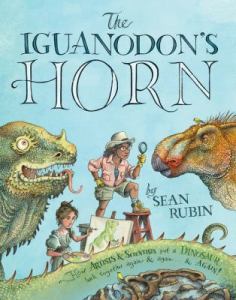 If you describe a book as being a terrific educational book, most kids will RUN the other way! Happily, for all of us who hope kids will love science and learning, there are a lot of deeply educational books that are so much fun that kids will demand to read them over and over – even in the summer! Sean Rubin’s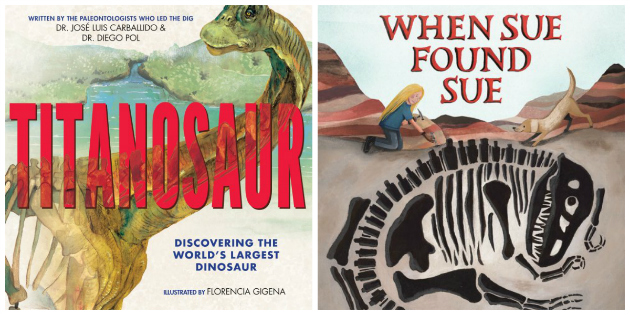
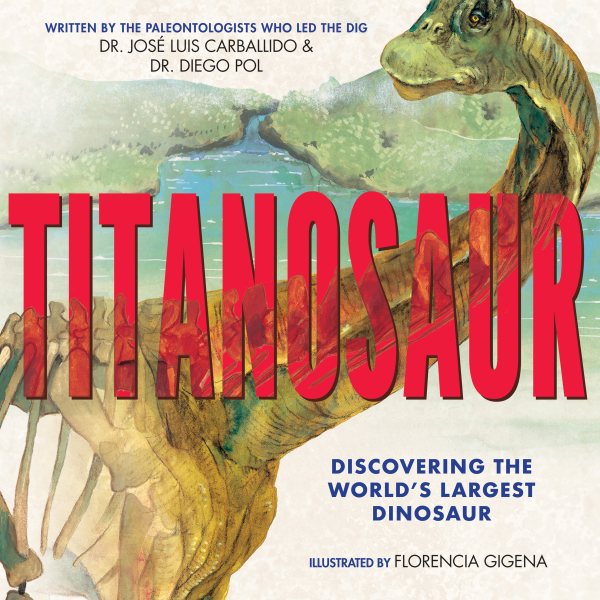 Lynn: Kids are fascinated by dinosaurs as librarians can attest just by pointing to the decimated shelves of 567.9s. Today we have two new books that are not only about dinosaurs, they are also about the discovery and excavation of two HUGE and important sets of bones.
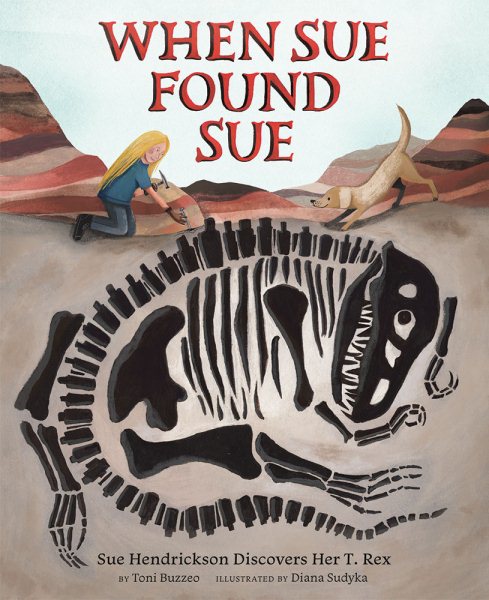 yrannosaurus rex skeleton found to this date. Sue’s fascination with finding things began in childhood and she became a collector of curiosities while she fueled her curiosity for learning. This led her on adventures diving in oceans, searching mines, fossil hunting in Peru and finally searching for dinosaur fossils in North Dakota where, after several years, a hunch led her to a cliff where she discovered three backbones. The bones would eventually be excavated and named
  bookendsblog.net