The Enigma Girls: Teens, Ciphers and War

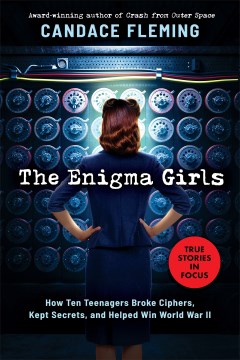
Lynn: DecadEnigma girlses after the secret work at Bletchley Park, its long-hidden stories finally started to be revealed. I’ve read several accounts of pivotal people involved in cryptography but here, wonderfully, in The Enigma Girls: How Ten Teenagers Broke Ciphers, Kept Secrets, and Helped Win WWII (Scholastic, March 2024) veteran author Candace Fleming focuses on the ordinary young women who made it all happen.

Stressing the extreme youth of the girls, most of whom were still teenagers, Fleming weaves together the stories of 10 young women in particular. They were listeners, translators, Colossus operators, cryptographers, and more. They did the everyday grinding work in terrible conditions with long hours and enormous stress. Sworn to secrecy, they shared the story of their work with no one—not even each other.

Going into fascinating detail, Fleming describes the numerous small parts of the work that required many steps, many people, and meticulous attention to detail. A mistake could kill and they all knew how crucial, if often mind-numbing, their work was. Interspersed with the girls’ stories are the steps to codes, ciphers, and the art and science of breaking them. Using short chapters and clear straight-forward text, Fleming creates an accessible and vivid portrait of an amazing effort by so many.

Careful research and documentation are provided along with archival photographs. Read in galley, so some of the back matter was not finished. This is a must-purchase for middle school collections. Also recommended for high school collections to offer an excellent WWII nonfiction for readers needing simpler text.

The Labors of Hercules Beal and Grief

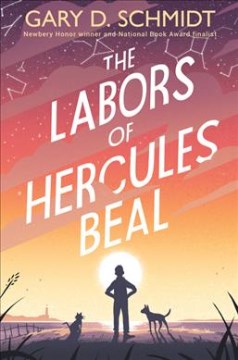
Lynn:Labors of Hercules Beal What, you might ask, do the Labors of Hercules, grief, and middle-grade books have to do with each other? Everything, if it’s in the hands of masterful author Gary Schmidt. In his new book, The Labors of Hercules Beal (Clarion, 2023),12-year-old Hercules Beal is laboring under a heavy burden of grief and loss after the hit-and-run accident that killed his parents. His older brother has returned from his dream job to take over the Beal Brothers Farm and Nursery and care for Hercules. Neither brother can talk about their pain and daily life is a question of survival. To add to Hercules’ burdens, his brother switches him to a new school he can walk to AND his new teacher, ex-marine, Lt. Col. Hupfer’s assignment of the Classical Mythology year-long project is to consider the Twelve Labors of Hercules and how they would be performed today.

As Hercules labors over the project, life adds much more to his burdens but he also discovers the powers of friendship, love, trust, and being able to heal—and the ability to write in ways that satisfy his demanding teacher.

Hercules and all the characters around him on Cape Cod won my heart and half the fun was seeing how he tackled the 12 Labors and how that affected him. Hercules is a kid that young readers can relate to and his voice is wonderfully authentic. Schmidt understandably writes often of grief and. sadly, its heavy weight is carried by many of today’s kids. Hercules’ struggles to manage that burden are deeply moving and accessibly depicted. His ultimate management of that pain is one every reader can cheer for.

Another reviewer I read has dismissed Schmidt and his books because the readers in her library won’t pick them up to read. That is a criticism of books that I have heard often over the years and while that may be true, it is also true that there are many readers for whom this book will be a truly memorable and enjoyable experience. We live in a world where young people often have little experience with books that take some time or are of places and people far different from their own. Part of our role as teachers and librarians is to open those doors for kids and help them to experience different worlds. Schmidt’s books beg to be read aloud in a classroom, to be discussed and to enable readers to walk in other people’s shoes. I feel it has always been crucial and, especially so today where focus and empathy are lacking, all the more important.

Libraries should have a wide range of popular books and formats and they should also have masterfully written stories that are deeply rewarding and that take time to unfurl. Gary Schmidt’s newest is one of those. Will a lot of kids know anything about the Labors of Hercules? Not at the beginning, but do they know about grief and sadness and the daily struggle to get through a day? Absolutely! And here, a wonderful writer reflects on those issues in ways that will make young readers laugh and cry and perhaps help them in their own struggles. I think this is a must-purchase and a wonderful book to share.

The Mona Lisa Vanishes – the REAL Story for Kids about the Theft of the Lady with the Mysterious Smile

Lynn: Mona Lisa VanishesDid you know that the Mona Lisa is painted on wood and that it weighs over 200 pounds and that the thief could barely carry it down the stairs? Or that a locked and jammed door knob nearly stymied the thief—until a helpful Louvre plumber came along and opened it? Or that Da Vinci carried the Mona Lisa with him on the back of a mule on his journey over the Alps into France?

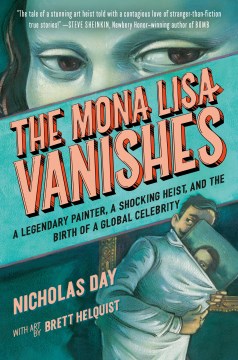
All this and much much more await readers of The Mona Lisa Vanishes: A Legendary Painter, a Shocking Heist, and the Birth of a Global Celebrity (Random Studio/Sept. 2023) by Nicholas Day. This nonfiction book for middle graders is as fascinating as its enticing cover suggests. Readers will love the flip and breezy style while inhaling a vast amount of history, science, biography and art information along the way. Day does an outstanding job of working so much important historical background into what may seem on the surface to be simply a caper/art theft plot.

The culture of Renaissance Italy, the history of policing, painting techniques, biographies of Da Vinci, Lisa Gherardini (as much as possible), Paris detectives, and even Pablo Picasso are woven into this fascinating tale. Told in thoroughly engaging text, the story is utterly compelling and kids will absorb information on every page. This is a “listen to this!” book, packed with facts to be shared.

Brett Helquist illustrates the book with black and white, slightly comedic drawings that perfectly match the tone of the text and they are as irresistible as the story.

Conspiracy theories and the ongoing belief in the most sensational theories (despite any facts to the contrary) and the issue of celebrity are serious and important threads that run through the entire book. These are timely themes in our world of social media gullibility and instant fame and hopefully ones that will have young readers thinking.

All the stars and more for this must-purchase!

Cindy: This is my first encounter with author Nicholas Day, but any author recommended by Mary Roach is going to get an audience with me. Roach is right, this book is “perfect” for its audience and funny to boot. I learned so much about Leonardo da Vinci, including the fact that he and I are kindred spirits—we much prefer learning something new and starting the adventure of a new project rather than finishing said projects! I don’t have his talent, but I resemble his method. Day handles the switches between the heist’s time period and Leonardo’s with aplomb and teens will be able to follow along easily. Who doesn’t love a heist caper and learning about the development of criminal ID from body measurements to fingerprints was fascinating. Lynn is so right about the “listen to this” moments in the book. I was reading it on a car trip and my husband heard half of the book! If I were an art teacher. Or a history teacher. Or a science teacher….I’d be reading this aloud to my students.

Do Images Tell the Truth? Seen and Unseen Takes on that Question for Kids

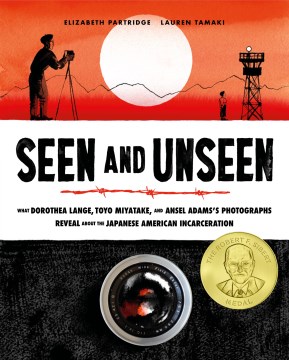
Lynn: Seen and UnseenDo photographs always tell the truth about history? I believe most students will answer yes to that question but Elizabeth Partridge’s brilliant book Seen and Unseen: What Dorothea Lange, Toyo Miyakaki, and Ansel Adams’ Photographs Reveal about the Japanese American Incarceration (Chronicle, 2022)  explores just how misleading photographs can be. Partridge presents a shameful part of American history as seen through the lenses of 3 outstanding photographers, each seeing those historic moments in a different way. Are any of them wrong? It is an extraordinarily effective way to help students look with a critical eye at images—historic and current—and one of the most necessary skills young people need to develop today.

Partridge chose three period photographers: Dorothea Lange, Toyo Miyatake, and Ansel Adams. All three took photographs at Japanese American Incarceration camps during WWII. Each brought a different focus to their work. Lange despised the whole concept of the incarceration of Japanese Americans. Famous for her Depression-era photos, the U.S. Government hired Lange to show that the program was being carried out in a “humane and orderly” way. Lange saw it differently, believing that what was happening was unfair and undemocratic. But the officials in charge disapproved of most of Lange’s photographs and from early in the project a soldier trailed her and she had to work within strict parameters. When she turned in her photographs, many of them were impounded and disappeared into archives for 50 years.

Toyo Miyatake was a professional photographer and after being incarcerated at Manzanar, he built his own camouflaged camera and took secret photos of the conditions of the camp. His photos showed much that Lange had been forbidden to photograph but those photos were rarely seen at the time and are still held in a private collection.

Ansel Adams, known for his incredibly beautiful landscape photography, was also hired to reassure the public. He came into the project not particularly opposed to the incarceration. Now close to the end of the war, there was great concern about how the Japanese Americans would be treated on release. Adams was asked to record images of hard-working, loyal, and cheerful people, which was how he saw them. Posing his subjects, Adams’ photographs concentrated on smiling people against a stunningly beautiful desert setting.

The work of all three photographers is used throughout the book but the book is also beautifully illustrated by the work of Lauren Tamaki, who is of Japanese descent. I wished strongly for more photographs to have been used but the book is nevertheless deeply effective and thought-provoking. It is the rare reader who won’t come away thinking about this book and the many issues it raises.

There is extensive and important back matter included too, with essays on issues such as the violation of rights of the Japanese Americans incarcerated, the issue of the official language used and its impact on the public, information on what happened to those incarcerated after the war, and biographies of the 3 photographers.

While understanding and evaluating images is the major focus of the book, Partridge also takes on other important issues such as the incarceration of Japanese Americans and the issues surrounding that action and its long impact. Seen and Unseen received many well-deserved accolades including the Robert F. Sibert Informational Book Medal for 2023.

Dealing with Trauma – Erin Bow’s New MG Book about Life After the Tragedy

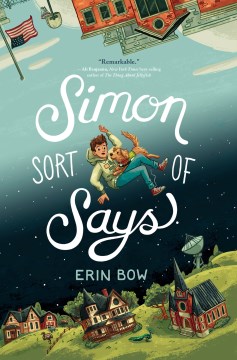
Lynn:Simon sort of says Students and teachers across our country have seen active shooter drills become a regular event. All of us have reeled with the reality of school shootings in our nation and most of us cannot understand the senseless deaths of the innocents who have fallen to this epidemic. Why the issue of guns cannot be dealt with is a gaping wound. But here’s another important question to ponder. What happens AFTER the tragedy to the children who somehow survive it? Erin Bow addresses this tragically relevant question in her newest book, Simon (Sort of) Says (Disney/Hyperion, 2023).

Twelve-year-old Simon is the lone survivor of a horrific school shooting and after a year of therapy and home-schooling, is returning to school. But this school is in the town of Grin and Bear It, Nebraska where Simon and his family are making a fresh start. Simon wants to put the shooting behind him and he also wants to put the incessant media focus behind him with the looks, the whispers, and the sympathy. He just wants to fly under the radar and be a normal kid.

Grin and Bear It is the ideal place because it is a National Quiet Zone where internet, cell phones, TV, and all media are banned in order to not interfere with the Radio Telescope arrays and the astrophysicists listening for signals from space. It couldn’t be more perfect. He makes friends, acquires a service dog puppy to socialize and things are looking good. Simon is a bit concerned about his friend Agate’s intentions of providing an alien message to encourage the scientists whose funding may be in jeopardy and he suspects his teacher may know about his past from the sorrowful looks she gives him. Mostly life seems to be going as he hoped. But Simon should know from experience that life seldom does what you expect.

This is an extraordinary character-driven story with moments of hilarity and a cast of characters so richly developed that they feel like family. The humor is perfectly dialed in for tween readers and some of the action is rather manic—also perfect for the tastes of young readers. But the core of this story is a subject tragically timely and handled with masterful sensitivity and ringing with truth. What is it like to live with such terrifying trauma and what is it like to be the object of overwhelming pity? What does it feel like to be reminded every minute of the past by the reactions of strangers to your very presence? Through Bow’s skillful and sensitive prose, readers experience what Simon feels and the experience is shattering. I know I will never think about trauma and the reactions to trauma in the same way.

On a lighter note—I loved the portrayal of the adults in the story—particularly Simon’s parents who have also suffered trauma and are recovering in their own ways. Simon’s coffee-loving mortician mother and deacon/sackbut playing father are worthy of a book by themselves as are his friends, Agate and Kevin. The cover of this book picks up on the humor in the story but I think it misses the deeply empathetic focus of the book.

This is an early-in-the-year publication but I think it will reside firmly at the top of my best list this year. Brilliantly written and immensely entertaining as well as perception-changing, this incredible story deserves awards.

“A Double Dose of Hard” – a New Middle Grade Book About Figuring Out the Rules of Life

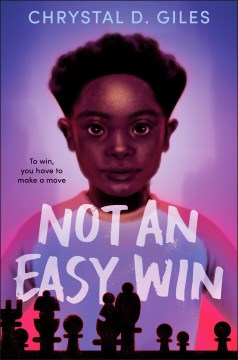
Lynn: Not an easy winLawrence and his family have had a “double dose of hard” lately. In Chrystal D. Giles new book, Not an Easy Win (Random, 2023), Lawrence’s dad is in prison, he, his mom and sister have had to move three times since and now are staying with their unwelcoming grandmother. In his new school, where Lawrence is a rare boy of color, the bullies line up to beat him up and as the story opens he is expelled for fighting. His mother negotiates his finishing 7th grade in an online program and he has to spend the day working at the rec center, an after-school program for kids. There, Lawrence discovers a chess program, a group of friends, and an enemy who might have been a friend..

Giles puts readers squarely in the shoes of 12-year-old Lawrence, doing a masterful job of walking us through the painfully authentic emotions of this endearing tween struggling to understand his upside down world and find his way. Lawrence feels that somehow everything that has happened to his family is his fault while at the same time, he is sure he is being blamed unfairly for everything – a feeling that will connect with 6th graders everywhere. Fascinated by the game of chess, Lawrence develops not only the skills for the game but for managing his temper and dealing with the issues in his life. It is done with great finesse and Lawrence’s progress and set-backs feel true.

The entire cast of characters is vivid and fully rounded from his stressed cranky grandmother, to the kids at the rec center and even to his absent father. Lawrence and his hard-fought wins are as heart-warming as they are believable. I was rooting for him from page one and so will very reader! Check!

Moira’s Pen – Revisiting a Fantasy Classic World

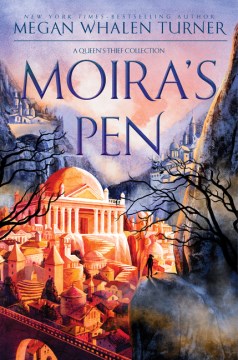
Lynn:Moira's Pen Just before the holiday, a package arrived from a publisher—a not unusual and yet always exciting event. Moira’s Pen (Harper/Greenwillow, 2022) by Megan Whelan Turner was inside. I saved it to savor till the quieter days of January and I’ve been sauntering blissfully through. It is a true gift for all readers who love the series, The Queen’s Thief.

Moira’s Pen is a collection of short stories, musings on past real-life experiences, and reflections by the author about some of the inspirations for the elements in the books. None of the new stories change the overall satisfying conclusion of the series but rather they provide more insight into the events and characters readers have loved. Turner’s writing is so evocative that I was instantly able to settle back into the world of the Thief and I enjoyed every word. This IS a gift to readers who know the world and love the series.

What prompts me to write about this book though is a complaint I read on Goodreads from a young reader who had not read the series and was more than a little confused by this collection. There are masses of fantasies being published and I am sure there are many readers who have not read Turner’s award-winning series. It began with The Thief (Harper/Greenwillow, 1996). It won a Newbery Honor and the Mythopoeic Fantasy Award for Children and it set the stage for a remarkable series of seven books, each one building on the last and expanding the reader’s understanding of the world and its memorable characters. There isn’t much that Megan Whalen Turner doesn’t do well in her writing: complex plots, richly developed characters, and superb world-building. As the series moved along, its themes and character studies deepened. Each new book was a gem and never once did Turner underestimate her readers.

So—if this series is one you’ve missed, FIND it and begin reading. If you have read it, get Moira’s Pen and revisit it. Like me, I’m sure your next step will to be start again at the beginning of the series and read it all over again. If you miss me, I’m busy with Gen and the world of Attolia!

Making Their Voices Heard – Playing Through the Turnaround

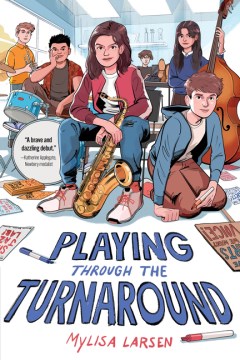
Lynn: Are you looking for something a bit different for the middle school set? Mylisa Larsen’splaying through the turnaround debut novel, Playing Through the Turnaround (Clarion, October 2022) is a great selection.

A group of students who haven’t all traveled in the same social circles, come together in an audition-based elective, Jazz Lab. It is a musical experience guided by an extraordinary teacher that changes the students and their appreciation of each other and of the music they play. When the teacher abruptly leaves and rumors of school budget cuts circulate, the group decides to unite to save their class. As their battle against an uncaring principal and school board escalates, the teens discover that many of them are struggling with the same basic issue at home: the adults in their lives do not listen to them or take their ideas and wishes seriously. This is a theme that will truly resonate with young readers and their actions both at the political levels and the personal levels are compelling to follow.


One of the major highlights of this book is the character development. Larsen has crafted 5 vivid and distinct individuals here and the characters truly carry the story. Told in alternating chapters, each voice is strong and authentic, revealing vulnerabilities and growing strengths. The resolution is somewhat ambiguous but readers will come away confident that this group of teens will move on together, providing support and deep friendship to each other.

This is a debut novel and I was really impressed with Larsen’s writing. She frames her story with a somewhat unusual setting – a Jazz Lab – and one that is welcome. The process of making their voices heard is especially timely. The uniting theme of the book and the endearing and authentic voices make this truly something special.


Rust in the Root: An Alternate History to Savor

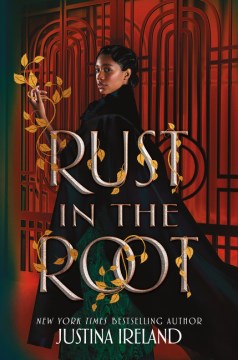
Lynn:Rust in the Root We keep mentioning the Covid period reading struggles but they remain a difficult issue for us both. As a life-long fantasy reader, I’ve struggled especially to find fantasies that hold my attention. Somehow they all seem the same, including the covers which all seem to have shadowy girls holding swords. In Justine Ireland’s newest, Rust in the Root (Harper/B+B, 2022), I found a fantasy that is extremely clever and unusual with a compelling plot and satisfying conclusion.

So what stands out? First and foremost is the skillful writing, intricate plot, and exquisite world-building. This is an alternate history in a reimagined 1937 America that is dependent on the magical workings based on the force called “the Dynamism.” The ruling classes believe in industry and technology based on the art of Mechomancy while a suppressed group of mostly Black Americans are practitioners of the Mystic arts. Ireland has seamlessly woven many of the events of the history of our own world into this one, creating a world that feels utterly plausible, each careful detail supporting the whole.

The main character called the Peregrine, is a young Floramancer who has come to New York with a dream of becoming a great baker. But her dream has run aground on the prejudice and repression of the city and, down to her last penny, she applies to the Bureau of the Arcane where a corps of Black practitioners ply their trade for the country. The Bureau is deeply engaged in a desperate battle against the Blights that have sprung up around the country – strange mysterious manifestations that poison the land and kill all living things. FDR has promised to repair the Blights and move the country forward and the Peregrine finds herself quickly recruited and sent into a nearby Blight to train and test her. Mentored by the powerful Skylark, the Peregrine discovers a surprising number of powers within her she knew nothing of. Soon they join a team of top mages and their trainees being sent to tackle the Great Blight of Ohio where previous teams of mages have disappeared.

The richly varied band of characters are well developed and instantly intriguing and their fates add intensity to the plot. Ireland never loses track of a detail or a thread yet pulls imaginative surprise after surprise into the story. Terrific dialogue, some welcome humor, and a completely satisfying resolution make this a memorable winner for me.

Ireland is at the top of her game here and this is a book to make readers cheer—even readers suffering their own sort of reading blight. Huzzah!!!

King and Levithan on Censorship for Kids

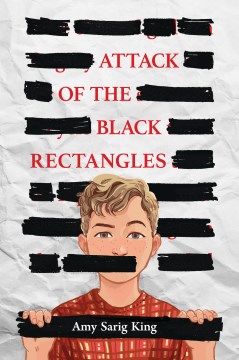
Lynn:attack of the black rectangles Censorship is a hot and timely subject, especially now. We all hear the news and read about politicians’ rhetoric. For librarians, authors, publishers, and teachers, this is not a new issue although it is especially front and center now. But how do you address censorship with kids? Amy Sarig King has written a terrific new book that does just that for middle-grade students. Attack of the Black Rectangles (Scholastic, Sept. 2022) approaches the subject through the eyes of 6th grader, Mac Delaney.

Mac already has a lot going on in his life. Mac lives with his mom and grandfather, with his erratic dad making occasional visits. Mainly during those, he works on a classic car that belongs to Mac’s grandfather. Increasingly, Mac’s dad tells him that he is really an alien from another world and an anthropologist studying Earth’s culture. Fortunately, Mac has great support from his mom, grandfather, and a close set of friends.

Mac is excited about 6th grade and he thinks his new teacher is “the kind of teacher I’ve wanted my whole if-it’s-not-interesting-I-don’t-care life.” For one thing, their lit circle is starting Jane Yolen’s intriguing book, The Devil’s Arithmetic. But strangely, when Mac gets his book and starts to read, he discovers words in the book that are covered over with black rectangles! What is going on? What are these words, who did this, and why?

King skillfully shows us Mac’s first encounter with censorship, his thought process, and the actions he and his friends undertake. Mac’s voice is wonderfully authentic and very engaging as this important issue is threaded into a compelling story of Mac’s struggles to understand his father, himself, his own coming of age, as well as the wider issues in the world. Interestingly, King has found a way to deal with censorship in a way that largely avoids the various political issues that are currently front and center without diluting the basic issue. This is a perfect book to use in a 6th-grade classroom and is guaranteed to generate discussion and thought.

Cindy: I’m late for my part here, having spent Banned Books Week finally reading The Handmaid’s Tale for my local library’s banned books reading challenge. Now, perhaps, I can finally check out the video series, if I can bring myself to do it. What a chilling read. 

As for King’s novel, I was sold by the cover art. It’s perfect and will certainly draw in young readers and will grace Banned Books Week displays for years. Once inside the pages, it is King’s mastery with characters that brings this story to life. She doesn’t shy from including the adults, and they are well done again here, especially Mac’s grandfather and their important relationship. And Jane Yolen’s surprise entrance at the school board meeting was a delight. Jane is everyone’s hero. Mac and his friends come up against adults who don’t want to admit there’s a problem and those who, instead, listen and support them when they take action. 
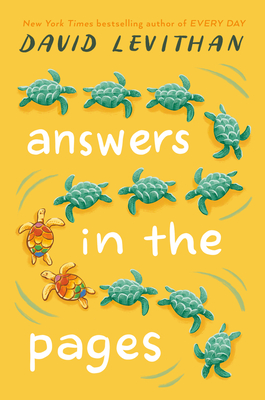
Answers in the Pages by David LevithanThe students in Answers in the Pages (Knopf, 2022) by David Levithan, are in the same situation when the parent of one student decides that the class science fiction novel is “inappropriate” for unstated reasons. The book’s structure features the current challenge to the book, alternating with excerpts from the challenged book, and another storyline from the previous generation in this town. The stories all merge at the end and will raise as many questions as answers as readers ponder what is “inappropriate,” how people read texts differently, and the importance of supporting a diversity of readers.

The majority of the challenges in our area, as well as across the country, focus on LGBTQIA+ issues, so books like Levithan’s will provide some food for thought for the younger readers who may wonder what all the fuss is about, while King’s book sheds bright light on the misguided efforts to protect children from words and ideas. My thoughts are with the educators and librarians who are striving to provide books for all of their readers despite the many attacks against them.