Do You Know Dino…and the Scientific Process?

Lynn: Do you think you’ve added enough dinosaur books to your collections and don’t really need another? Think again! This new National Geographic book by Sabrina Ricci and Garret Kruger is not only great for dinosaur enthusiasts, but it is also an outstanding book for STEM and classroom use to illustrate the process of scientific inquiry. I Know Dino!: Amazing Breakthroughs, Mega Mistakes, and Unsolved Mysteries in Dinosaur Science (National Geographic Kids, 2025) is a roaring success in many ways.
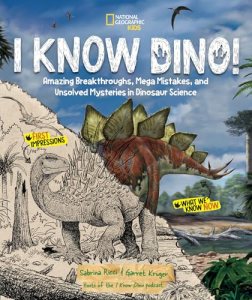
Organized into 6 chronological periods, each chapter introduces the history of that period, the discoveries made, and the evolution of theories about dinosaurs. Each chapter then features a series of 2-page spreads, each about a particular dinosaur. One page, First Impressions, discusses what scientists thought the dinosaur looked like, how it behaved, and even how the bones were positioned. The facing page, What We Know Now, shows what we understand now and how our knowledge has changed. And boy, have most of our first impressions changed!

The oversized book is beautifully designed and features illustrations by Franco Tempesta, period and contemporary photographs, and plenty of sidebars and charts with additional information. It is a dinosaur-lover’s treasure trove. And, importantly, readers will come away with a rock-solid grasp of how the nature of science is always changing as new information is discovered. The book ends with pages featuring “unsolved mysteries,” a Dino-Map, and a Glossary.

It is full of kid-appealing topics such as “Big Weapons Aren’t Just for Predators.” There is also “Majestic Crests” and “Dino Animation” that has a list of dinosaur animated movies. Young readers will delight in poring over the pages, but it would also be a terrific way to illustrate the scientific process in a classroom by featuring and discussing some of the pages.
Can Composting be Fun?

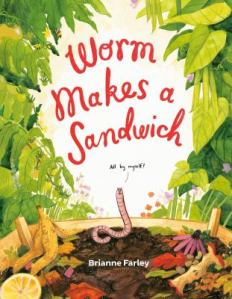
Lynn: I would have thought composting would be one of the last subjects that could make an engaging picture book but Brianne Farley has done just that with Worm Makes a Sandwich (Putnam/Penguin Random, 2025). Farley comes at the subject somewhat sideways but this approach takes a potentially muddy subject and makes it funny and appealing to a young audience.
Pink and very polite, little worm asks readers if he can make them a sandwich.

“I know what you’re thinking…Worms don’t have hands. Worms cannot make sandwiches!”

Worm starts making the sandwich with delectable garbage, Sorry – NOT for your sandwich, the garbage is for me he tells us. And over the next pages, worm narrates while a little girl goes through the processes of adding garbage to a compost pile, then insect poop and the resulting dirt to the garden. Seed planting is next, and a lot of waiting for the plants to grow.

At one dark moment, worm has deep self-doubts about the success of this sandwich, but a red ripe tomato on the vine saves the day. And, indeed, the child makes a delicious sandwich with the tomato, allowing the worm to preen. A comic little touch at the end is a perfect dessert to follow.

Kids will love the story and the illustrations, which are created in watercolors, gouache, and colored pencils, and have wonderfully varied perspectives. Along the way with all the giggles, kids will learn a LOT about composting and how to do it.

Helpful back matter includes more information on composting, how to do it, what to use, the equipment needed, and why we should all be doing this.

The story is a fun read-aloud for classrooms, story hours, and laptime reading, and is an ideal STEM book. If you had no hands, could you make a sandwich?

A Touch of Fun Helps the Learning Go Down – in The Iguanodon’s Horn

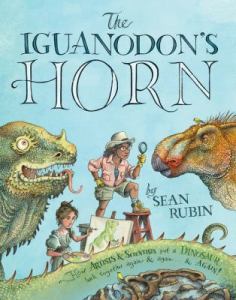
Lynn: If you describe a book as being a terrific educational book, most kids will RUN the other way! Happily, for all of us who hope kids will love science and learning, there are a lot of deeply educational books that are so much fun that kids will demand to read them over and over – even in the summer! Sean Rubin’s The Iguanodon’s Horn (Clarion, 2024) is a wonderful example of such a treasure. That it is about dinosaurs is a special bonus.
Author/illustrator Rubin examines a critically important issue in this appealing book: how does scientific thought work? In a time when so many people disdain science and the scientific process, this understanding is crucial for humankind. Rubin uses a child-favorite subject to illustrate the topic and kids will learn so much and hopefully come away with a firm grasp of the fact that science is a process that never ends.

In 1822  – not THAT long ago – Mary Ann Mantell was strolling the beach with her husband and she stumbled over a curious bone. Her husband shared the odd bone with other scientists and they concluded it came from something unusual, which they called an Iguanodon. As they found more bones, they wondered what a whole iguanodon would look like. Their guesses were wildly wrong as were the many scientists who tried to solve the puzzle. As more bones were found and more information gained over the years, theories about Iguanodons – and dinosaurs in general – changed drastically.

Rubin fills his pages with a glorious array of the many ways iguanodon’s appearance changed over time as scientists gained more information that altered their ideas. Full of comedic details, the illustrations are a delight that will entrance kids for hours. Rubin used graphite pencil, digital and physical watercolor washes, and paint splatter to great effect. Author Endnotes provide more information about what is featured on each page and is as much fun to read as the book itself. Rubin concludes the book with challenges to young readers to think about how what we know about the Iguanodon and other dinosaurs could change in the future. 

The book’s overall appearance is an irresistible kid magnet and is sure to fly off the shelves. I think kids will absorb the important teaching of the book while enjoying every page! This is a must purchase for libraries, STEM classrooms, and for little dinosaur-enthusiasts everywhere. 

Become a Spider with Jumper and Jessica Lanan

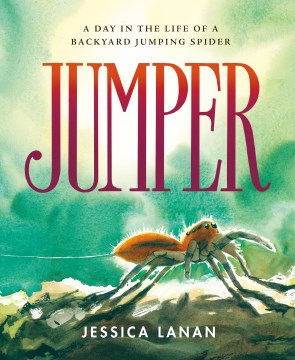
Lynn: Can you imagine ever being a spider? Many of our young readers would shout yes to thatJumper question. Author/Illustrator Jessica Lanan is right here to help with her new book, Jumper: A Day in the Life of a Jumping Spider (Roaring Brook, 2023) where readers can spend the day with Jumper, an impossibly cute Regal Jumper as she hunts in a backyard garden. A human child and her family work in the garden while Jumper also goes about her life, hunting and avoiding being hunted.
Jumper is a completely engaging little creature only the size of a bean but with some extraordinary abilities that Lanan demonstrates in brilliant and beautiful illustrations, giving young readers context and comparisons that make the little spider’s talents fully understandable. Jumper is shown, for example, making a leap after prey while in the background, the little girl also jumps. A double-page spread dramatically reveals what it is like to see with Jumper’s 8-eyed vision. Some scenes are spider-size perspectives and some are from the child’s perspective. Lanan has used ink, watercolor, and gouache and the illustrations are truly beautiful as well as being accurate, and extremely effective, helping children to comprehend a spider’s world.

Extensive back matter provides a plethora of additional information, including a 6-part guide for locating and observing spiders. Science has never been so fun! This is an ideal choice for a STEM classroom or to use as a writing prompt.

Sy Montgomery Introduces Kids to Turtles

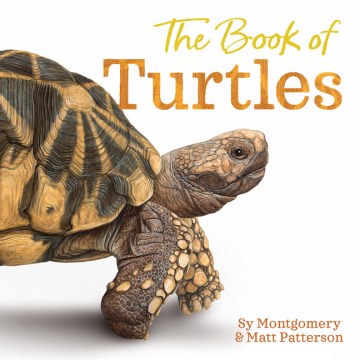
Lynn: book of turtlesThe publisher blurb for Sy Montgomery’s new book describes her as “part Emily Dickinson, part Indiana Jones” and I think that is not wrong. I am a huge fan of Montgomery’s many books and look forward to each new one. Often her books are filled with stunning photographs but this time, she teams up with wildlife painter Matt Patterson to bring one of my favorite creatures to kids with The Book of Turtles (Clarion, 2023).
Montgomery and Patterson take the basic concept of a nonfiction information book to a new level with this wonderful book. Excellent writing provides fascinating facts on turtles in a captivating way. Did you know that by 220 million years ago, turtles looked the way they look today—flourishing alongside dinosaurs? Different types of turtles are introduced along with many did-you-know additional facts. Did you know that Eastern Box Turtles can climb fences or that turtles are as smart as laboratory rats?

The Celebrity Turtle Profiles were my favorite part of the book. Here you meet some famous turtles such as Lonesome George, Myrtle the green sea turtle in the New England Aquarium who loves to photobomb film shoots, and the couple at the Austrian zoo, Poldi and Bibi, who after 115 happy years together, finally couldn’t stand each other. An excellent section on how to help turtles provides practical advice.

Matt Patterson’s beautiful and carefully accurate paintings illustrate the book. Turtles come to life with his skillful brush and the book is so visually enticing that it won’t stay long on the shelves.

All the stars for this must-purchase! Kids will love this one!

The Mona Lisa Vanishes – the REAL Story for Kids about the Theft of the Lady with the Mysterious Smile

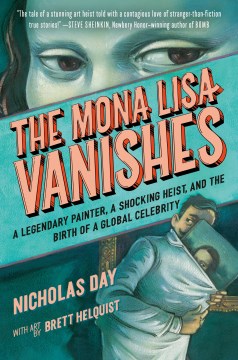
Lynn: Mona Lisa VanishesDid you know that the Mona Lisa is painted on wood and that it weighs over 200 pounds and that the thief could barely carry it down the stairs? Or that a locked and jammed door knob nearly stymied the thief—until a helpful Louvre plumber came along and opened it? Or that Da Vinci carried the Mona Lisa with him on the back of a mule on his journey over the Alps into France?
All this and much much more await readers of The Mona Lisa Vanishes: A Legendary Painter, a Shocking Heist, and the Birth of a Global Celebrity (Random Studio/Sept. 2023) by Nicholas Day. This nonfiction book for middle graders is as fascinating as its enticing cover suggests. Readers will love the flip and breezy style while inhaling a vast amount of history, science, biography and art information along the way. Day does an outstanding job of working so much important historical background into what may seem on the surface to be simply a caper/art theft plot.

The culture of Renaissance Italy, the history of policing, painting techniques, biographies of Da Vinci, Lisa Gherardini (as much as possible), Paris detectives, and even Pablo Picasso are woven into this fascinating tale. Told in thoroughly engaging text, the story is utterly compelling and kids will absorb information on every page. This is a “listen to this!” book, packed with facts to be shared.

Brett Helquist illustrates the book with black and white, slightly comedic drawings that perfectly match the tone of the text and they are as irresistible as the story.

Conspiracy theories and the ongoing belief in the most sensational theories (despite any facts to the contrary) and the issue of celebrity are serious and important threads that run through the entire book. These are timely themes in our world of social media gullibility and instant fame and hopefully ones that will have young readers thinking.

All the stars and more for this must-purchase!

Cindy: This is my first encounter with author Nicholas Day, but any author recommended by Mary Roach is going to get an audience with me. Roach is right, this book is “perfect” for its audience and funny to boot. I learned so much about Leonardo da Vinci, including the fact that he and I are kindred spirits—we much prefer learning something new and starting the adventure of a new project rather than finishing said projects! I don’t have his talent, but I resemble his method. Day handles the switches between the heist’s time period and Leonardo’s with aplomb and teens will be able to follow along easily. Who doesn’t love a heist caper and learning about the development of criminal ID from body measurements to fingerprints was fascinating. Lynn is so right about the “listen to this” moments in the book. I was reading it on a car trip and my husband heard half of the book! If I were an art teacher. Or a history teacher. Or a science teacher….I’d be reading this aloud to my students.

The Joy of Curiosity – New Nature Picture Books

Lynn: One of the great traits of humanity is curiosity. It blossoms in childhood as we absorb and wonder about the world around us. Encouraging and nurturing that ability is a focus of two new and outstanding picture books that I am reviewing today.

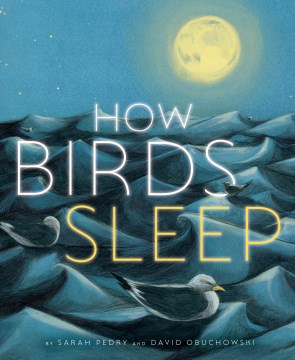
Howhow birds sleep Birds Sleep (Astra/Mineeditionsus, 2023) by Sally Pedry and David Obuchowski.
How DO birds sleep? It’s a question I’ve often thought about myself as the night settles in and the world quiets. Obuchowski was also curious about this question, later stumbling on a book in a used book store that examined the science around the question. Like most things about birds, it varies from species to species. This is a fascinating exploration of a question that many children ask too and done in a lovely bed-time book style. Sarah Pedry’s illustrations are beautiful and soothing. Using familiar and unfamiliar birds labeled on each page, the book takes readers through the world of sleeping birds and their fascinating ways of sleeping. Some sleep in huddles, some hanging upside down and some even fly in their sleep.

Back matter includes much more information about the subject, how the book came to be and suggestions of how to help birds being affected by climate change.

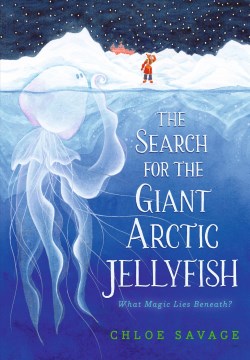
The search for the giant arctic jellyfishSearch for the Giant Arctic Jellyfish: What Magic Lies Beneath? (Candlewick, 2023) by Chloe Savage. This charming picture book celebrates the magic of following your curiosity.
Dr. Morley has always yearned to discover the truth about the fable of the Giant Arctic Jellyfish. Is it real or just a lovely sailor’s yarn? While this scientific journey is an imaginary tale, much about such a research effort is true. As Dr. Morley and her crew search the Arctic seas they encounter Narwhals, a pod of Belugas, freezing temperatures, monotony, frustration and even a Polar Bear. And, of course, there is something under the water all the time that trails the scientists.

Chloe Savage’s intricate whimsical illustrations reveal a cutaway view of the research vessel from top to bottom. The scientists and crew, clad in matching red and white sweaters, go about their tasks in labs, engine rooms, kitchens and bathrooms or out on ice flows and scuba diving into the icy seas. Each page is a delight, filled with small touches of humor that reward careful perusing. The book is one of those delightful gems that provides more each time it is read.

Dealing with Trauma – Erin Bow’s New MG Book about Life After the Tragedy

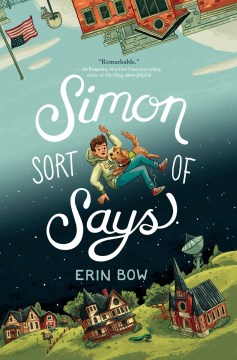
Lynn:Simon sort of says Students and teachers across our country have seen active shooter drills become a regular event. All of us have reeled with the reality of school shootings in our nation and most of us cannot understand the senseless deaths of the innocents who have fallen to this epidemic. Why the issue of guns cannot be dealt with is a gaping wound. But here’s another important question to ponder. What happens AFTER the tragedy to the children who somehow survive it? Erin Bow addresses this tragically relevant question in her newest book, Simon (Sort of) Says (Disney/Hyperion, 2023).
Twelve-year-old Simon is the lone survivor of a horrific school shooting and after a year of therapy and home-schooling, is returning to school. But this school is in the town of Grin and Bear It, Nebraska where Simon and his family are making a fresh start. Simon wants to put the shooting behind him and he also wants to put the incessant media focus behind him with the looks, the whispers, and the sympathy. He just wants to fly under the radar and be a normal kid.

Grin and Bear It is the ideal place because it is a National Quiet Zone where internet, cell phones, TV, and all media are banned in order to not interfere with the Radio Telescope arrays and the astrophysicists listening for signals from space. It couldn’t be more perfect. He makes friends, acquires a service dog puppy to socialize and things are looking good. Simon is a bit concerned about his friend Agate’s intentions of providing an alien message to encourage the scientists whose funding may be in jeopardy and he suspects his teacher may know about his past from the sorrowful looks she gives him. Mostly life seems to be going as he hoped. But Simon should know from experience that life seldom does what you expect.

This is an extraordinary character-driven story with moments of hilarity and a cast of characters so richly developed that they feel like family. The humor is perfectly dialed in for tween readers and some of the action is rather manic—also perfect for the tastes of young readers. But the core of this story is a subject tragically timely and handled with masterful sensitivity and ringing with truth. What is it like to live with such terrifying trauma and what is it like to be the object of overwhelming pity? What does it feel like to be reminded every minute of the past by the reactions of strangers to your very presence? Through Bow’s skillful and sensitive prose, readers experience what Simon feels and the experience is shattering. I know I will never think about trauma and the reactions to trauma in the same way.

On a lighter note—I loved the portrayal of the adults in the story—particularly Simon’s parents who have also suffered trauma and are recovering in their own ways. Simon’s coffee-loving mortician mother and deacon/sackbut playing father are worthy of a book by themselves as are his friends, Agate and Kevin. The cover of this book picks up on the humor in the story but I think it misses the deeply empathetic focus of the book.

This is an early-in-the-year publication but I think it will reside firmly at the top of my best list this year. Brilliantly written and immensely entertaining as well as perception-changing, this incredible story deserves awards.

Who Doesn’t Love Sloths? Check Out these New Picture Books

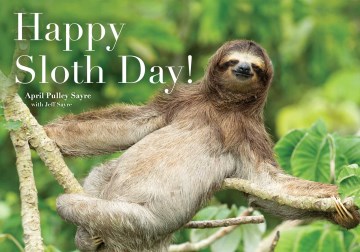
Lynn:Happy Sloth Day I’ve yet to meet anyone who doesn’t smile upon seeing a picture of a sloth and I guarantee the two books in today’s post will spend very little time on the library shelf! There is something about these unique and fascinating creatures that we humans respond to immediately.
Happy Sloth Day (S&S/Beach Lane, 2022) by the acclaimed author April Pulley Sayre and photographer co-author Jeff Sayre. This wife and husband team spent 8 years photographing sloths in the Panamanian rain forest and learning about this truly amazing animal. The book is a terrific blend of poetry, eye-catching photographs and solid factual information. It is wonderfully child-centered in every way. The poetry is a delight to read aloud, loaded with vivid colorful language.

A tree is a sloth salad

Rip! Snip! Chew. Chew”

Jeff Sayre’s photographs are masterful and a real joy to see. Since these creatures live high in the rain forest canopy, the sheer difficulty of the photographic work is especially notable. Sidebars provide extensive factual information about the sloths and the creatures they interact with. In the back matter, two pages of additional sloth science is presented. This is an absolutely delightful book to read for pleasure and equally well suited to non-fiction reading and reports.

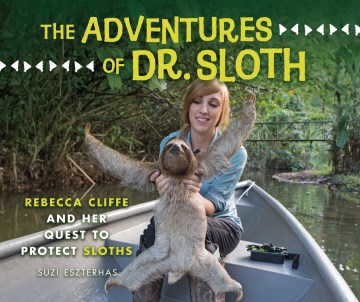
Adventures of Dr. SlothThe Adventures of Dr. Sloth: Rebecca Cliffe and Her Quest to Protect Sloths (Millbrook, 2022) by Suzi Eszterhas.
Another outstanding wildlife photographer and author, Suzi Eszterhas also has a fascinating book with enchanting photographs and solid factual information about sloths. Her book, however, focuses on a scientist who is currently doing ground-breaking work studying this complex animal. Very little was actually known about sloths, partly because studying them is a difficult challenge. Eszterhas and Cliffe have become friends and the book presents an excellent look at what the work of a biologist is really like from examining sloth poo, to scaling giant trees to creating sloth backpacks to track and record daily activities of a wild sloth.

Cliffe, who wanted to be a scientist from a very young age, is also deeply involved in sloth conservation as these amazing creatures are threatened in their habitats.Information is provided on how young readers can help protect sloths and back matter includes a glossary, and list of additional resources.

These two outstanding books are must purchases and will have instant waiting lists!

These Virus Picture Books Are Infectious Reading

Cindy and Lynn: we know, we know. We’re all really tired of hearing about “the virus.” But, after two years of COVID quarantines, infections, shut-downs, mask mandates, and remote work if you still don’t know how to explain what a virus is, how it works, and how scientists study them and try to defeat the bad ones, this round-up of nonfiction picture books may help you focus the microscope. If you have other virus books for a young audience to recommend, leave us a comment. 

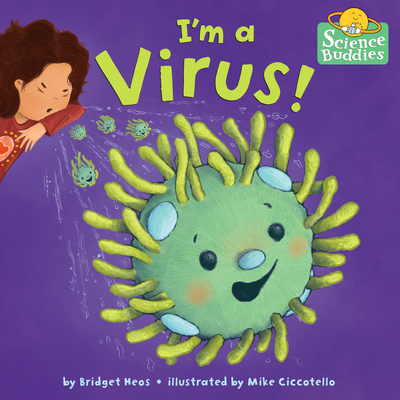
I’m a Virus! by Bridget Heos (Crown, 2022)I'm a Virus by Bridget Heos

From a sick girl’s sneeze to her friend’s nose, a common cold virus explains how it invades, multiplies, and attacks to spread from person to person. The science, which also covers the body’s immune response, is infused with humor and illustrations that help the information go down like a spoonful of sugar! Covid-19 is mentioned, as is Smallpox and Jenner’s first vaccine. A double-page spread introduces the many types of white blood cells and their jobs in defending you from illness. A glossary, suggested reading and bibliography round out this first entry in the Science Buddies Series.

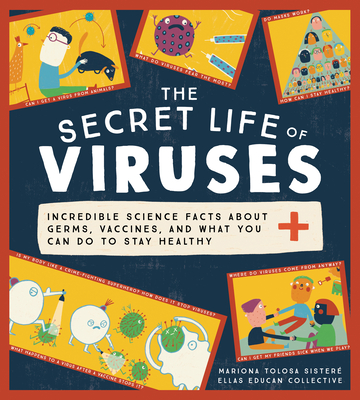
Secret Life of Viruses by Mariona Tolosa SistereThe Secret Life of Viruses: Incredible Science Facts About Germs, Vaccines, and What You Can Do to Stay Healthy by Mariona Tolosa Sisteré Ellas Educan Collective (Sourcebooks, 2021)
Vibrant and humorous illustrations complement solid information written by a women’s science collective about a wide variety of viruses. Topics include how the body defends itself, viruses in history, and the benefits of some viruses. A True/False quiz at the back reinforces important content.

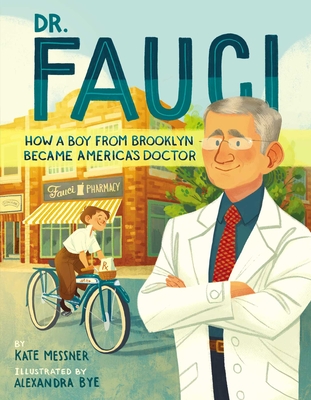
Dr. Fauci by Kate MessnerDr. Fauci: How a Boy from Brooklyn Became America’s Doctor by Kate Messner (Simon & Schuster, 2021)

This picture book biography of the current director of the National Institute of Allergy and Infectious Diseases, begins in his childhood as a curious child of parents who owned a pharmacy and continues through his medical education and his work under seven U.S. presidents. Backmatter includes: How Do Vaccines Work?, Are Vaccines Safe?, and Dr. Fauci’s Five Tips for Future Scientists, a Time Line, Recommended Reading, and Fauci family photos.

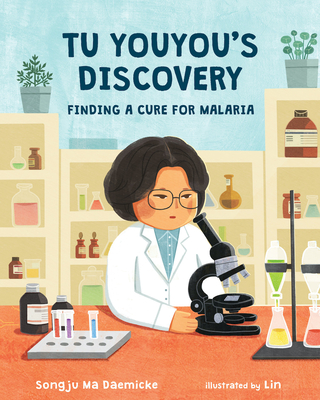
Tu Youyou's Discovery by Songju Ma DaemickeTu Youyou’s Discovery: Finding a Cure for Malaria by Songju Ma Daemicke (Albert Whitman, 2021)

Like Dr. Fauci, Tu Youyou was interested in medicine and research from a young age, partially due to her own struggle with tuberculosis as a teen. In 1969, an illness called Malaria, spread by mosquitoes, was killing people worldwide and became the focus of her research and experiments. This nonfiction biography picture book emphasizes the persistence needed in medical research as doctors search for answers and cures, and highlights the scientific process as well as gender discrimination. For her work, Youyou was honored with a Nobel Prize in 2015, the first Chinese woman to receive one.