“Following the Bend in the Road” – Michael Morpurgo and WWII in the Camargue

Lynn: One of the things I love most about the world of books—and children’s books in particular—is the way authors keep crafting new stories from the past that connect deeply to the events of the present. There is no better way for readers to learn about history and its driving forces and to realize that those same forces impact us still. Michael Morpurgo’s new book, The Day the World Stopped Turning, (Feiwel, 2019) is a shining example of that. There have been thousands of books written about WWII (and we have read a LOT of them) but Morpurgo tells a story that is fresh and unique and one that shines a beam on today’s issues in a way that will resonate with young readers.

Morpurgo uses an unusual structure for a book for middle schoolers. The framing story is that of Vincent Carter, an adult over 50, looking back briefly at his youth and then at his decision as an 18-year-old to leave home and travel to the south of France, following the path of the artist who inspires him, Vincent Van Gogh. He is further motivated by a childhood story about the wisdom of following the bend in the road to wherever it takes him. While walking in the isolated marshy area of the Camargue, Vincent falls seriously ill and collapses. He is rescued by an autistic man, Lorenzo, and taken back to a farm by the beach where Lorenzo and his companion Kezia nurse Vincent back to health. It is here that that heart of the story lies. As Vincent gradually regains his health, he becomes curious about his rescuers and their mysterious history. The narration then shifts to Kezia as she slowly relates their story that begins in 1932, of Lorenzo and his farmer parents and of Kezia only child of Roma parents who moved from town to town with their beautiful carousel. As Kezia grew older, her parents decided to stay in the town near the farm so she could go to school. The war is on, France has been defeated and the Vichy government rules the Camargue but for the most part, the war has left the area relatively untouched. All that ends one day when the Germans roll into town to set up fortifications on the beach and to stay. Lorenzo’s parents know that Roma people are being rounded up and they offer to hide Zezia and her family on the farm. This decision will forever change the lives of the two children, their families, and the town. And the story, as Kezia tells it, will forever change Vincent’s life as well.

This is a quiet tale and although there are great tension and suspense, the story allows time for readers to absorb and to reflect. It is a story about the issues of racism and hatred, of war and fear. But it is also an uplifting story of the greater power of friendship, kindness and love, courage, and the enduring nature of doing what is right. The setting will be unfamiliar to most American students but the lyrical writing brings this remote and beautiful place to life. The narratives are an interesting blend of adult and child perspectives with the framing voice adult and the WWII sections of the book in young Kezia’s voice. This device brings added emphasis to the central story and puts readers firmly in the shoes of the children experiencing the events of the occupation.  The parallels to issues in the headlines today are stark and kids will readily make the comparisons and come to their own conclusions.

This book is not for every kid but it offers rich rewards for a mature and curious reader ready to try something different.
“Children Deserve Important Books!” Thank You, Margaret Wise Brown.

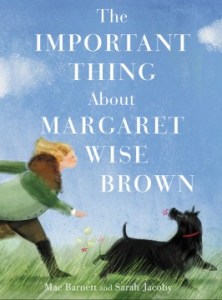
Lynn: As a young librarian I was taught to honor Margaret Wise Brown and as a parent I loved to read her books to my boys. But with all that, I knew very little about the life of this iconic author. Mac Barnett steps up to help me with that glaring error in his new stellar picture book biography, The Important Thing about Margaret Wise Brown (Harper/Balzer+Bray, 2019)
Right from the start, Margaret was a different soul and Barnett does an outstanding job of bringing that difference forward and letting readers know that it was more than okay. I LOVE Barnett’s writing in this book. He speaks directly to the reader, is conversational, blunt and refreshingly honest with kids, acknowledging some of Brown’s strange actions. Kids probably won’t know of many other authors who skinned a dead pet rabbit and wore its pelt around her waist, swam naked, or blew her entire first book earnings on an entire flower cart and threw a big party! And, Barnett goes on to say, Brown also wrote strange books, at least strange for her time although not so dissimilar, kids will note, to the very book they are reading.

What comes through wonderfully here is that it is OK to be strange and Margaret Wise Brown was strange in some truly important ways. Brown believed that children deserve important books and as Barnett again points out, life is strange and books that reflect that may seem strange but they also “feel true.” Margaret Wise Brown was a champion for children and books and after reading this amazing book, I think Mac Barnett is too.

Cindy: Maybe the reason we knew so little about Margaret Wise Brown is that she thought the stories were more important than the author! Here is the quote that Barnett opens with:

“It did not seem important that any one wrote these stories. They were true. And it still doesn’t seem important! All this emphasis today on who writes what seems silly to me as far as children are concerned.”

No matter, we know a little bit more now about the author of Goodnight Moon, The Runaway Bunny, The Important Book, The Little Fur Family, and so many more. While Barnett spins the tale, we get to immerse ourselves in Sarah Jacoby’s watercolor and Nupastel paintings. There are bunnies, and dogs, and many flowers and trees, and bunny children reading books or being read to by librarians like Anne Carroll Moore. The scenes are at once familiar and fresh.

And then, Mac Barnett slices into our hearts with his truthful pen, or computer, and says:

“Lives don’t work the way most books do.
They can end suddenly,
as fast as you kick your leg in the air.”

And it goes on and is beautiful and is a tribute that Margaret would have liked, I think. But you’ll have to buy the book and read the rest yourself because I am crying just a little and the words are blurring.

Gondra’s Treasure – Dragon Lore History and Blended Families in a Picture Book

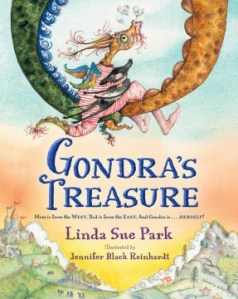
Lynn:  Readers might be surprised if we described a new picture book for the PreK-Gr.2 set as an introduction to dragon lore, its history and cultural differences, a story about biracial families and a sweet bedtime tale all in one. But if we then revealed that the author is the talented Linda Sue Park, all would be explained. Park’s new picture book, Gondra’s Treasure (Clarion, 2019), is all of those unusual elements and more and the result is completely charming.
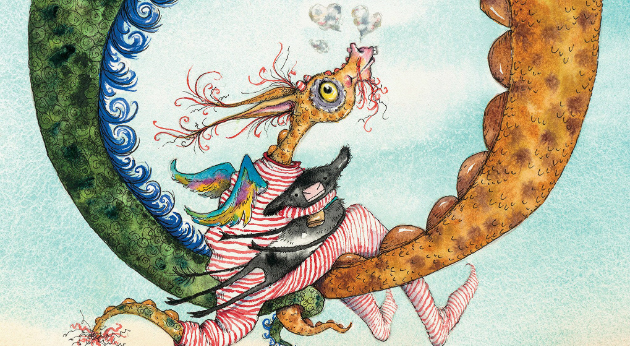
Gondra, a small dragon, confides that her mom’s family is from the West and her Dad’s is from the East. As Gondra goes on to describe her family, readers get an introductory lesson in dragon folklore and the cultural differences in the traditional stories. Gondra’s mother breathes fire and her father breathes mist. Her mother’s ancestors lived in caves with treasure and her father’s had a single magical pearl that could control the weather. Gondra herself is a charming mix of both and this blend is presented along with a loving banter between the parents that is both humorous and reassuring. In what is clearly bedtime routine, Gondra brushes her teeth, dons striped pajamas (with her tail sticking out)  and hauls her stuffed toy and a stack of books off to bed, asking on the way, “What happened to the magic pearl and all the treasure?”

“Oh, that’s right. We don’t need them

anymore – because I’m your treasure.”

While the simple dragon lore is front and center here, the subtle message of loving acceptance and biracial families is the sweetly told heart of this dragon tale.

Cindy: Linda Sue Park’s story is warm and tender and encouraging to children living in many types of blended families. The humor in the tale is brought to life brilliantly in Jennifer Black Reinhardt’s whimsical illustrations. Created in ink, watercolor and collage paper, they are bright and expressive and Gondra made me snort in almost every scene. Unfortunately, I produced neither flames nor mist. Sigh.

Gondra’s attempts to fly and the caution to only breathe fire with an adult present will be familiar to the intended audience who are learning new things or having to wait to learn them. Gondra’s imagination shines as she takes to a swing to soar in the air while she waits for her magic to unfold.

An author’s note explains the lore behind dragons from different regions and some theories related to dinosaur fossil beds as to how people on different continents imagined dragon stories. Or perhaps, dragons are real? Gondra makes me wish it were so.


The Field Guide to the North American Teenager – YA Snark with a Sighting of Sweetness

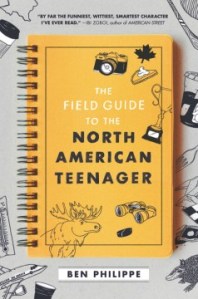
Lynn: Opening the pages of Ben Philippe’s debut book, The Field Guide to the North American Teenager (Harper/Balzer+Bray, 2019) was like opening my own front door to hear the voices of my sons and grandsons. No, they aren’t Black Haitian hockey-loving Canadians like Norris Kaplan but they were/are smart, snarky, and cynical but with a sweet vulnerability and sometimes a little too clever for their own good. Seventeen-year-old Norris’s recently divorced mother has taken a rare tenure-track position in her obscure field at the University of Texas in Austin. Dragged metaphorically kicking and screaming from his home, friends, father and beloved Habs to attend high school in Austin, Norris knows just what to expect from watching American sitcoms: mean brainless cheerleaders, bullying jocks, clueless nerds and loners! Assigned to keep a writing journal in class, Norris records his observation of the “species” in his field guide and his entries are hilarious but also smugly dismissive.
Norris plans to keep his head down, get through the year and get home to Montreal as soon as possible but despite himself, Norris makes a friend, meets a stunning girl, takes a part-time job, and begins to realize it is not all that easy to lump people into neat stereotypes. Could his field observations be wrong?

This was laugh-out-loud funny with spot-on snarky dialog and such a clever premise. The endearing cast of characters was the real highlight of this book and Norris especially stole my heart. He is working so hard at being cynical but Philippe does a stellar job of giving readers revealing glimpses of Norris’s basic sweetness and the vulnerability he works so hard at concealing. As Norris matures through the course of the story, he begins to see beyond his own assumptions and so does the reader’s understanding of the real depth of all the characters. Early on, I settled in, happy to follow the plot of what I thought was going to be a predictable trajectory. But a surprise twist took the story in an unexpected direction. This was still satisfying but it made the book that much more intriguing for me.

Don’t miss this clever “field guide” and stay tuned for Ben Philippe’s next observation of the teen species.

Updated: Want more? Check out this All Things Considered NPR interview with Ben.

Royal Reads for Teens

Lynn: American fascination with the British Royals is strong and authors for teens have brought the subject across the pond. So if Meghan Markle watching is hot at your library, here are two 2019 titles that will rate the royal wave:

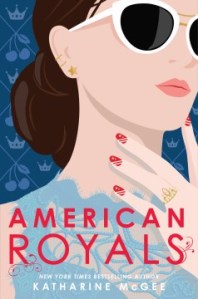
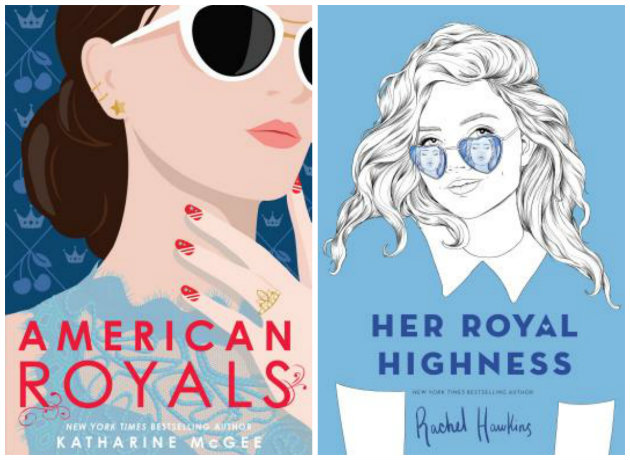
American Royals (Random, Sept. 2019) by Katharine McGee asks why the Brits should have all the fun? This story posits that back in 1781 at the Battle of Yorktown George Washington accepted the offer to become King of America. Jump forward 250 years and the colonial monarchy is still going strong. Beatrice Georgina Frederika Louise of the House of Washington is Princess Royal of America and next in line to the throne. And there are not one but two spares, her younger twin siblings, Prince Jefferson and Princess Samantha. Beatrice has taken her royal role seriously but now she is faced with the need to marry for the future of the kingdom. Can she do this when her heart is taken by a commoner?

McGee has loads of fun with this concept, providing an alternate history and an American aristocracy. The Duke of Boston and the Earl of Huron anyone? She also works in the pre-requisite wild younger royals, noble mean girls, “prince poachers,” and duty vs the heart debate. Stay tuned for the next installment.


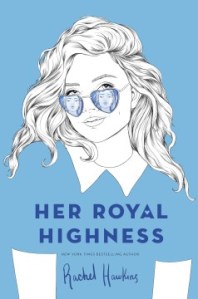
Next up is Her Royal Highness (Penguin/Putnam, 2019) by Rachel Hawkins, a companion novel to one of my favorites from last year. Originally titled Royals (Penguin/Putnam, 2018) it has been re-titled as Prince Charming. This story features Flora, daughter of the current Scottish king and sister to Andrew, heir to the throne. Like the first book, this story follows an American girl whose life becomes embroiled with the Scottish royals. Here, Millie Quint is a scholarship student from Texas to the illustrious boarding school, Gregorstoun. Millie is thrilled to be part of the first-ever female class at the previously all-male prep school. Her new roommate, however, sees attendance there as a penance! The two girls are as different as two people can be and dislike each other on sight. But as the term proceeds, the irritation between the two turns to attraction. Does this romance between a geeky geologist and a royal fashionista stand a chance?

This installment is just as much fun as the first one and many characters from Royals add to the fun by joining the story. Sweet and witty, this one will please old fans and make new ones.


Cindy: For more royal fun, check out Lynn’s post at our previous blog home of ten years, this royal post at the Booklist Reader.


Adorable New Pet Guides from National Geographic

Lynn: Some of the most popular nonfiction books in our middle school libraries over the years have been pet books and especially books about the different breeds of dogs and cats. So it is always exciting to see new ones come out. National Geographic is publishing two in September that are going to make youth librarians and their pet-crazy patrons very happy!

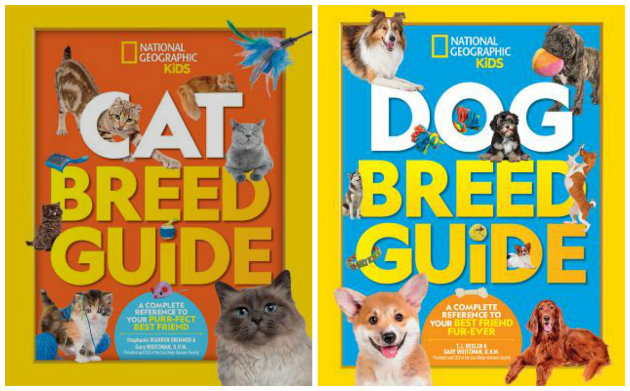
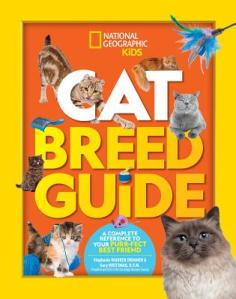
First up is Cat Breed Guide: A Complete Reference to Your Purr-fect Best Friend  (National Geographic, Sept. 2019). The book begins with a chapter titled, “What Is a Cat?” that discusses the history of domesticity, family tree, anatomy, and terms for coat and configuration and an explanation of breeds. Next, is the main focus of the book: two page spreads defining and depicting the many breeds of cats. Each explanation provides information about the individual breed and their characteristics. And, of course, each example features outstanding full color, full-page photographs of each breed as well as other smaller photos and an insert called “Cat Stats.”

Anyone who likes cats or who just loves terrific animal photographs is going to be mesmerized. The information and vocabulary are geared to a young audience but use appropriate terms and still respect the knowledge of the reader.

Our family has had many cats and dogs over the years and the cats have all been strays or shelter cats but this book makes me want to add some of these gorgeous breeds to the family! A final chapter provides excellent information on owning a cat, how to care for them, and what to consider before you add one of these furry personalities to your life!

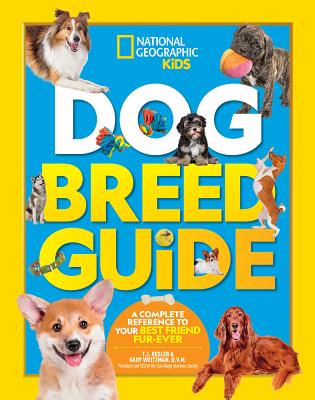
Cindy: The, ahem, “companion” book, Dog Breed Guide: A Complete Reference to Your Best Friend Fur-Ever by T. J. Resler and Gary Weitzman, D.V.M. features a similar format. The breeds are arranged in categories like Primitive Dogs, Herding, Scent Hounds, Designer Dogs, and others. Inserted between those categories are double-page spreads about varied topics such as “On The Job,” which features police and military K-9s, Detection Dogs, Search-and-Rescue Dogs, and Therapy and Service Dogs. There’s a great flowchart for how to select the right dog for you, including the suggestion to not select a dog at all if it doesn’t fit your lifestyle. Other backmatter similar to the cat guide is helpful, but truly, you need this book in your library or pet-loving home just for its great dog photographs and browsing fun. In fact, libraries should probably buy multiple copies of both of these titles…they’ll be that popular. Promise.


Hello, I’m Here!: A Sandhill Crane Family

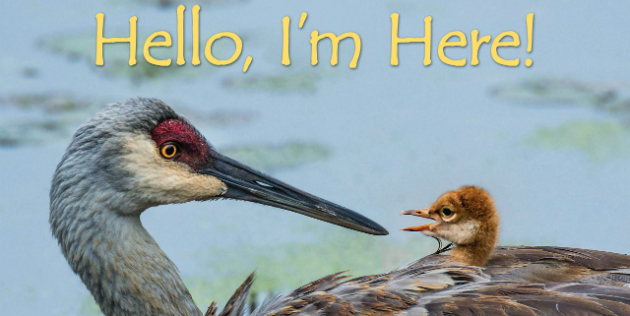
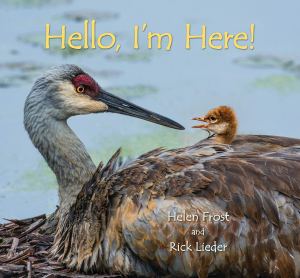
Cindy: Author Helen Frost and photographer Rick Lieder have teamed up again to create another gorgeous and informative nature book, this time about a Sandhill Crane family. Hello, I’m Here! (2019) is told in Frost’s rhyming verse from the view of the chick, starting with his imminent hatching:

It’s getting crowded
inside this egg.
I can’t flap a wing
or stretch out a leg.

The young chick has much to learn before it becomes a colt but mama and papa and a sibling are there to help in the journey. Habitat, food, and dangers like the threat of snapping turtles are presented in the verse and Lieder’s intimate photography.  The journey of the crane chick mirrors the growth and learning of a young child with all of its new adventures and challenges making this a great choice to read aloud in large groups, or within the comforting nest of a caregiver’s lap. Sandhill Cranes are frequent fliers over the bayou behind my house. Listening to their prehistoric sounding call as the mist rises from the water in the early hours is a favorite treat, while a friend down the way usually has a nesting pair in her yard each spring. Frost and Lieder provide an even closer look for those of us who aren’t so lucky to see them in the wild.
Lynn: Frost’s first-person text uses simple vocabulary that is immediate and engaging and yet manages to pack in all sorts of interesting information about cranes including what they eat and what poses a danger to the chicks. A full page of additional information is provided in the back matter as well.

Rick Lieder’s remarkable photographs give young children an on-the-nest look at this enchanting family. Close-up views of the chicks fill the pages, making this one a joy to use with a group or as a lap book. Few children, or adults for that matter, have ever seen a nesting crane family and Lieder’s skill and patience provide this gift to everyone. Be prepared for demands for multiple readings!

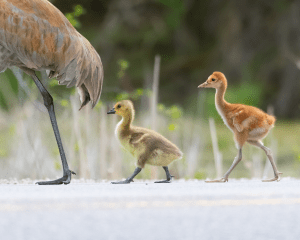
On a personal note, Cindy and I belong to the Michigan Bird Watching group on Facebook where other gifted photographers have been posting pictures of a Sandhill Crane family at the Kensington Metro Park that includes an adopted Canada Goose gosling that is being lovingly raised along with their own chick. Here is what some are calling the “Abbey Road” photo of the family, by photographer, Jocelyn Anderson. She has more looks at this incredible family on her website. Thank you, Jocelyn, for allowing us to share your photo with our readers. Heart melting!

Photo courtesy of Jocelyn Anderson Photography, all rights reserved.

ALA Exhibits: Books, Books, Books

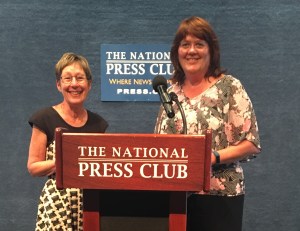
Cindy and Lynn: Bookends Blog here, reporting from the National Press Club in Washington, D.C.

Yeah, we know the exhibit hall included technology and furniture vendors, library suppliers, and a food court, but our favorite aisles are the ones with booth after booth of youth books and our familiar school and library marketing reps. While we tried to follow our own advice about not being greedy in the aisles, we are delighted that these books made it into our suitcase:


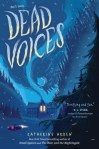
Dead Voices, by Katherine Arden (Penguin/Putnam, Aug. 2019)

We raved about Small Spaces last year, and it has become a middle school favorite. Its sequel, Dead Voices, was one of the books we most wanted to get and it was the arc that we read on the flight home. If you want middle grade creepy, this is your series. Dead Voices finds Ollie, Coco, and Brian who survived the scarecrows and spooky cornfields of the first book now snowed-in at a haunted ski lodge that did remind us a little of the setting of Stephen King’s The Shining. We gotta believe he would love this book, too.


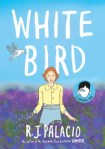
White Bird, by R. J. Palacio (Random, Oct. 2019)

Palacio, the author of the wildly popular Wonder, has written and illustrated her first graphic novel, White Bird. We were so excited to receive a gorgeous color galley and cannot wait to read it! This story is about a young Jewish girl who is hidden from the Nazis in occupied France during WWII.


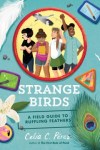
Strange Birds: A Field Guide to Ruffling Feathers, by Celia C. Perez (Penguin/Kokila, Sep. 2019)
One of our favorites of 2018 was Perez’s debut, The First Rule of Punk (Penguin, 2018). We stood in a very long line to get our hands on her new book and it sounds fabulous. The cover blurb says, “When three very different girls find a mysterious invitation to a lavish mansion, the promise of adventure is too intriguing to pass up.”  See, you’d stand in line too!


Free Lunch by Rex OgleFree Lunch, by Rex Ogle (Norton, Sept. 2019)

Rex Ogle was looking forward to starting sixth grade. Things are tough at home, though, with his mom and her boyfriend out of work and so she signs Rex up for free lunch. Then Rex discovers he has to announce that fact out loud every day to the lunch lady. Our school district has almost 60% of our students on a free lunch program and we think this is one that is truly important for them and everyone else in the district as well.


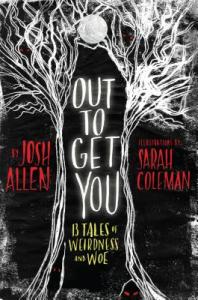
Out to Get You: 13 Tales of Weirdness and Woe, by Josh Allen (Holiday, Sept. 2019)

A debut author collection, blurbed by Gary Schmidt: Wonderful and weird, compelling and unsettling…These stories are scary because they are so very true.” We’re in!


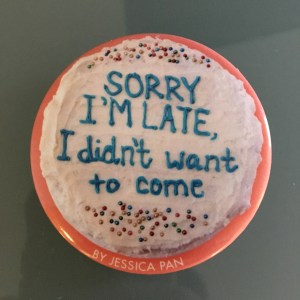
While there was no lack of swag at the booths, our favorite item this year was a button promoting Jessica Pan’s new book, Sorry I’m Late, I Didn’t Want to Come (Andrews McMeel, 2019). We can think of lots of places to sport this…staff meetings, anyone?


allthe rest of our student population.

ALA Exhibits: The Ones That Got Away

Cindy and Lynn: We picked up many great upcoming youth books at the recent ALA Exhibits and publisher events, but even so, there were a few that got away either because they went fast or won’t have an arc. The early bird gets the worm, and the hot new books. We try not to be greedy as we receive a bounty of books on our doorsteps throughout the year, but here are a few we are still eager to clutch in our hands.


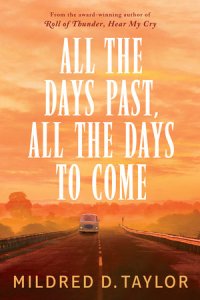
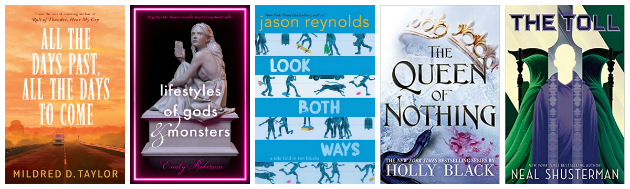
All the Days Past, All the Days to Come, by Mildred Taylor (Penguin, Jan. 2020)

The 10th and final book in the wonderful Logan Family Saga that began with Newbery Medal Winner, Roll of Thunder, Hear My Cry. If you haven’t seen the repackaging of this series, with new cover art by Kadir Nelson, check it out.


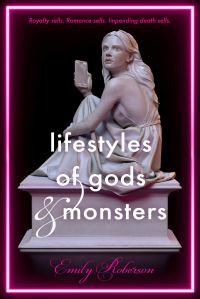
Lifestyles of Gods & Monsters, by Emily Roberson (Farrar, Oct. 2019)

This one sounds like the Minotaur meets Hunger Games! A debut book we really wanted to find!


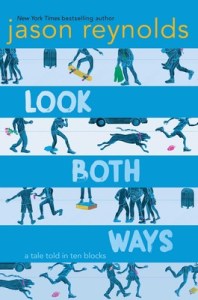
Look Both Ways: A Tale Told in Ten Blocks, by Jason Reynolds (S&S/Atheneum, Oct. 2019)

Reynolds crafts ten tales, one per block, about what happens on the walk home after the dismissal bell rings. We would have been heroes for sure if we’d scored this arc!


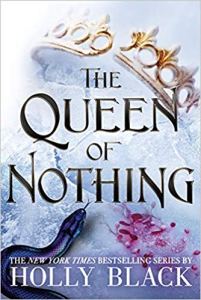
The Queen of Nothing, by Holly Black (Little, Brown, Nov. 2019)

Book 3 of the Folk of the Air series! Need I say more? We’re grateful that this publishing two months earlier than previously scheduled.


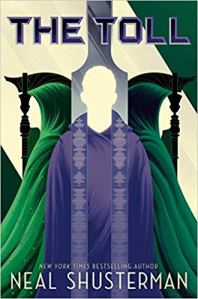
The Toll, by Neal Shusterman (S&S, Nov. 2019)

This concluding volume was probably the most begged-for galley from the older focus group and our Best Books Book Club.
(We wanted it too!)


Conference Exhibit Hall Manners, or, Greed in the Aisles

Cindy and Lynn: Exhibit halls full of new books and publisher events make attendees giddy but they can strain the patience and goodwill of even the most generous publisher marketing rep. We’ve been regularly attending ALA’s Midwinter Meetings and Annual Conferences and a few Book Expo events since 2000 and we’ve seen some ugly behavior. In Seattle at Midwinter, this exchange was overheard as an attendee tried to take a hardcover book from a publisher’s booth display:

Attendee: Oh, my Grandson will love this book.

Publisher Rep: That is our only display copy, but it’s published now, and available for purchase at bookstores and online.

Attendee: Why would I buy a copy when I can get one here for free?

The reps have heard it all, we’re sure, but we were astonished. So here are a few tips. They probably won’t be seen by the right people, but you can help spread the word if you know someone who needs a dose of Miss Manners for Library Conferences.

  1. Advance Reader Copies (arcs) cost more to produce than a finished hardcover book. It’s a privilege to get one, and if you do, you should commit to reading it and promoting it if you find it worthy.
  2. The one who picks up the most arcs does not win. And taking handfuls of the same arc, not cool at all.
  3. Exhibit Hall guidelines prohibit wheeled carts. Leave them at home. Strollers and scooters are allowed as long as they are in use at all times (we don’t believe that means “in use” to haul your books and conference swag!)
  4. The Publisher booths should not be treated like the Hunger Games Cornucopia, although it would be fair to let the reps pick off the attendees who behave badly.

We’re sure you’ve experienced similar acts of greed and ill manners. Leave us a comment with the worst exhibit hall behavior you’ve seen. If you’re a publisher and want to remain anonymous, feel free to email one of us and we’ll add your story to the post while protecting the innocent. And, tune in after ALA for a follow-up post about what you can and cannot do with those treasured arcs you nabbed.