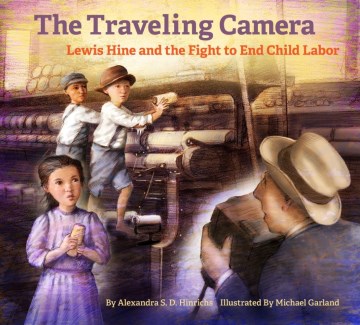
 Lynn: My introduction to Lewis Hine came through Russell Freedman and his memorable book, Kids at Work: Lewis Hine and the Crusade Against Child Labor (Clarion, 1994). It was a book we used constantly in our middle school collection and the photographs in it have always stayed in my mind. I have seen very few if any books for students since Freedman’s book and the issue of child labor is still a problem in the world today. So I was truly excited to learn about a new book about Hine, this time a picture book, The Traveling Camera: Lewis Hine and the Fight to End Child Labor (Getty, 2021) by Alexandra S. D. Hinrichs.
Basing her text on Hine’s letters, reports, and photo captions, Hinrichs introduces young readers to Lewis Hine and his pivotal work, photographing child workers all across America in the early 1900’s. Hired by the National Child Labor Committee in 1908 to take pictures to bring awareness of the horrendous conditions children worked in. His jarring photographs helped to bring about legislation to protect children in this country. Having worked himself as a child, Hine became a teacher, then a photographer, eventually working for the Red Cross. His work was critically important in changing public opinion but sadly it was gradually forgotten until long after his death.
Hinrichs does an excellent job of bringing Hine and his work to life for kids today. As an amateur photographer myself, I especially appreciate the background she provides on the awkward and heavy equipment Hine had to use. For kids used to point and click cameras, the process will be eye-opening as is the information about Hine having to disguise himself in order to get into work places to get his pictures. Well written, and beautifully illustrated by Michel Garland, this is a terrific book to add to all collections.
Cindy: On the opening page of the book is a quote by Hine under his own portrait photograph defining his goals with photography. He met them both:
There are two things I wanted to do.
I wanted to show the things that had to be corrected;
I wanted to show the things that had to be appreciated.
Illustrator Michael Garland does a beautiful job with his combination of digital and traditional pastel and sepia-toned paintings, many of which are “snapshots” of the scenes behind Hine’s photographs. A sliver of each page spread holds the free verse poetry that tells “a big story/in a small space” as did the photographs of these children at work. The rest of the page is given to the visual story, in a design that is very appropriate for the subject.
For readers who haven’t seen Hine’s work, the story ends with a spread of some of his photographs. Others are sprinkled throughout the backmatter. There’s a Note to the Reader with information about child labor and other topics related to the book. A Time line of Hine’s life and child labor in the US is included as well as a good list of selected sources and quotation sources.
Older students interested in the subject should also get their hands on Susan Campbell Bartoletti’s child labor books, Growing Up in Coal Country (Houghton Mifflin, 1996) and Kids on Strike! (Houghton Mifflin, 1999). This is a world-wide problem that isn’t going away. I’m grateful for the photographs and the books that help “show the things that (have) to be corrected.”
 Cindy: Have we got a new series for you to put on standing order!
 Lynn: The team of Jan Greenberg and Sandra Jordan have brought a wonderful array of artists to the attention of young readers in their many books including Andy Warhol, Louise Bourgeois, Frank Gehry, Martha Graham and Vincent Van Gogh. I’ve found all the team’s books fascinating but their new book has to be my favorite yet. World of Glass: The Art of Dale Chihuly (Abrams, 2020),
 some are historical from his early life but most are of the gorgeous glass artwork in sites, installations, and museums. To see something created by Dale Chihuly is an unforgettable experience and this book will delight those already familiar with his work and will surely create new admirers. I learned a lot and esteem this artist all the more. I will never forget the
 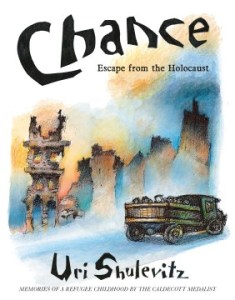 Lynn: Survival in desperate times is often a matter of chance as Uri Shulevitz says in his new book,
  Lynn:
Lynn: 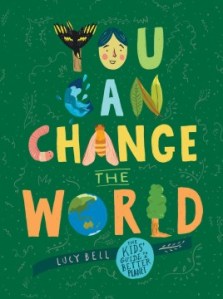 Lynn: Let’s set politics aside and admit that our world is in big trouble. Kids know it and are motivated to do something about it. But many also feel overwhelmed by the size of the problems and don’t know how to start. Happily, we have a book to help!
 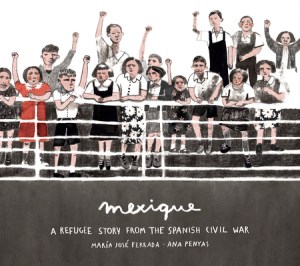 Cindy: When my middle school students and I read Alan Gratz’s novel,
 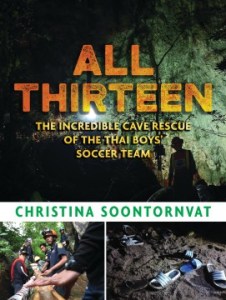 Lynn: Thai-American author Christina Soontornvat was visiting her family in Thailand not far from the Cave of the Sleeping Lady when the news broke about the trapped soccer team. She and most of us throughout the world watched with our hearts in our mouths as the 18-day rescue event dominated the news. Soontornvat, a mechanical engineer and science educator, realized after the rescue that she wanted to know more about this incredible effort and to share the story.
 Cindy: Shortly after the Wild Boars were rescued I was booktalking
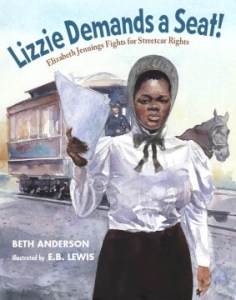 Lynn: Decades before Rosa Park refused to sit in the back of a bus, another brave determined woman demanded her rights on a streetcar in New York. Beth Anderson tells her inspiring story in
 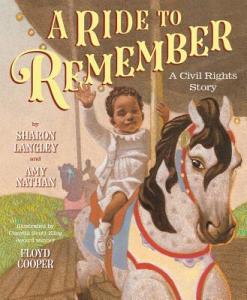 Cindy: Another African American girl who took an important seat is featured in
  bookendsblog.net